




How to Do Dry Cleaning at Home — 5 Proven Easy Methods
Have you ever looked at the “Dry Clean Only” tag on your favorite blazer and sighed? You’re not alone. Professional dry cleaning can cost a small fortune — and honestly, not every garment needs a trip to the cleaner.
Learning how to do dry cleaning at home is easier than most people think. With the right tools, a little patience, and a few smart techniques, you can safely clean delicate fabrics right in your own bedroom or laundry room.
In this guide, you’ll discover proven, step-by-step methods to clean your clothes at home — without damaging them. Whether you’re dealing with a silk blouse, a wool coat, or a formal suit jacket, we’ve got you covered.
What Does “Dry Cleaning” Actually Mean?
Before we dive into the how, let’s quickly cover the what. Dry cleaning is a process that cleans clothes using chemical cleaning solvents instead of water. The word “dry” is a little misleading — the clothes do get wet, just not with water.
Why Some Clothes Need Dry Cleaning
Certain fabrics are water-sensitive. Water can cause them to shrink, stretch, or lose their shape. Common fabrics that typically require dry cleaning include:
- Silk
- Wool
- Cashmere
- Velvet
- Linen blends
- Structured suit jackets and blazers
These materials have delicate fibers that react badly to regular washing machines and heat. That’s why fabric care at home for these items requires a gentler approach.
Can You Really Do It at Home?
Yes — with some caution. While home methods won’t replicate an industrial dry cleaning machine perfectly, they work surprisingly well for light cleaning, odor removal, and spot treatment. For heavily soiled or very expensive garments, a professional is still your best bet.
How to Do Dry Cleaning at Home: Tools You’ll Need
One of the best things about learning how to do dry cleaning at home is that you probably already own most of the supplies. Here’s what you’ll need to get started:
Basic Supplies List
- A fabric steamer or steam iron with a towel
- Dry cleaning solvent or a gentle stain remover
- Clean white cloths or microfiber towels
- A mesh laundry bag
- Baking soda (for odor absorption)
- A home dry cleaning kit (optional but helpful — brands like Dryel are popular)
- Cold water and mild detergent for hand-washing
- A well-ventilated space
Having the right tools makes the process faster, safer, and more effective. Think of it like cooking — the right ingredients matter!
Step-by-Step Guide: How to Do Dry Cleaning at Home
Now let’s get into the main event. Here’s the proven process, broken down into simple, easy-to-follow steps.
Step 1: Read the Care Label
Always start here. The garment care label tells you exactly what the fabric can handle. Look for symbols that indicate whether the item is safe to spot-clean, steam, or hand-wash. Never skip this step.
Step 2: Spot-Test First
Before applying any cleaning solvent or solution to your garment, test it on a hidden area — like an inner seam or the underside of a hem. Wait a few minutes. If there’s no discoloration or damage, you’re good to go.
Step 3: Treat Stains Before Cleaning
Apply a small amount of dry cleaning solvent or stain remover to the stained area. Use a clean white cloth and gently blot — never rub — from the outside of the stain toward the center. This prevents the stain from spreading.
Step 4: Use a Home Dry Cleaning Kit
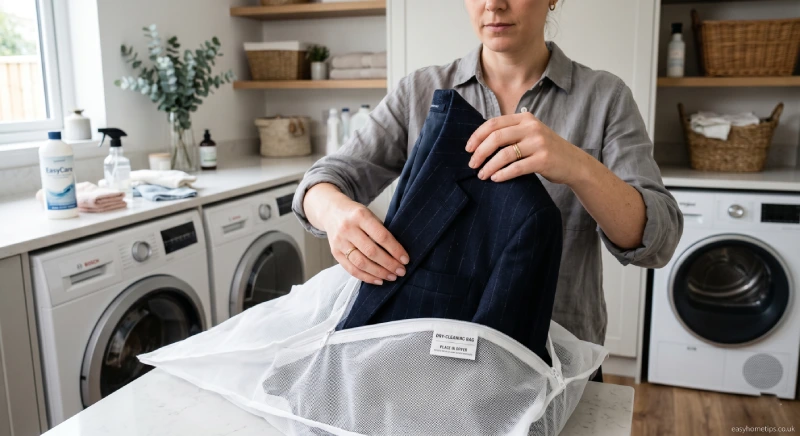
Products like Dryel or Woolite At-Home Dry Cleaner are excellent tools. You place your garment in a dryer bag with a cleaning cloth, toss it in the dryer on low heat, and let it tumble for 15–30 minutes. The cleaning cloth releases a gentle cleaning solvent that freshens and cleans the fabric.
Step 5: Steam the Garment
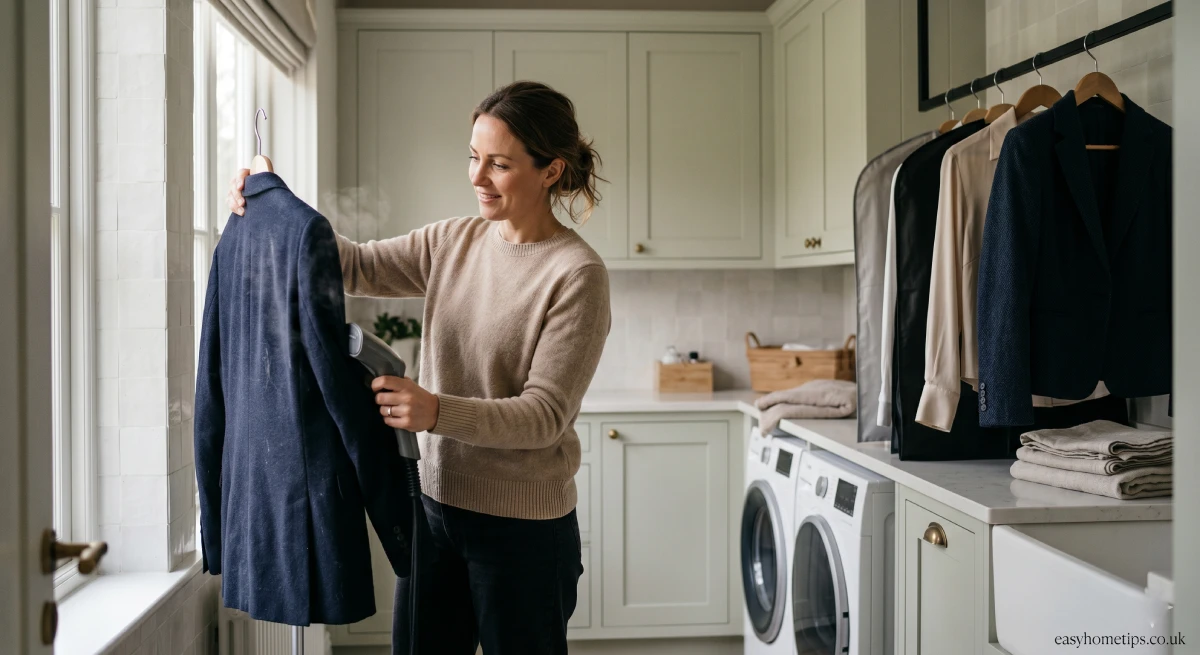
A fabric steamer is your best friend here. After cleaning, steam the garment lightly to remove wrinkles and kill any remaining odor-causing bacteria. Hold the steamer 1–2 inches from the fabric and move it slowly downward.
Step 6: Air Dry Properly
Lay the garment flat on a clean, dry towel or hang it on a padded hanger. Keep it away from direct sunlight or heat. Allow it to air dry completely before wearing or storing.
Smart Methods for Different Fabrics
Not all fabrics are the same, and that’s why it’s important to tailor your approach. Here’s a handy comparison:
| Fabric Type | Best Home Method | Key Caution |
|---|---|---|
| Silk | Hand wash in cold water + mild detergent | Never wring or twist |
| Wool | Steam + home dry cleaning kit | Avoid heat — it shrinks |
| Cashmere | Hand wash gently, flat dry | Do not hang when wet |
| Velvet | Steam only, brush gently | Never press with iron directly |
| Linen | Hand wash or steam | May wrinkle easily |
| Structured Blazer | Home dry cleaning kit + steam | Avoid soaking the lining |
| Polyester blend | Hand wash in cool water | Check care label first |
This table makes it easy to match your fabric to the right method. The golden rule? When in doubt, start with the gentlest option.
Proven Tips to Freshen Clothes Without Washing
Sometimes, your garment isn’t really dirty — it just needs a little refresh. Here are some smart fabric care tricks that don’t involve any washing at all:
Use Baking Soda for Odors
Sprinkle baking soda lightly inside the garment or place it in a bag with baking soda overnight. It absorbs odors naturally without damaging fibers. This works great for wool sweaters, blazers, and dress shirts.
The Freezer Trick
This one sounds odd, but it works. Place your garment in a sealed plastic bag and freeze it for several hours. The cold temperature kills odor-causing bacteria. It’s especially effective for denim, cashmere, and structured jackets.
White Vinegar Spray
Mix one part white vinegar with two parts water in a spray bottle. Lightly mist the garment (don’t soak it) and hang it in a well-ventilated area to dry. The vinegar smell fades as it dries, taking other odors with it.
Cedar Balls and Lavender Sachets
These won’t clean your clothes, but they’re great for keeping stored garments fresh. Place them in your closet or storage box near your delicate fabrics.
Common Mistakes to Avoid When Dry Cleaning at Home
Even with the best intentions, people make mistakes. Here are the most common ones — and how to dodge them:
- Using too much solvent — A little goes a long way. Over-saturating can damage fibers or leave residue.
- Rubbing stains aggressively — Always blot, never scrub. Rubbing spreads stains and weakens fabric.
- Skipping the spot test — This one step can save you from ruining a garment entirely.
- Using hot water on delicate fabrics — Heat causes shrinkage and color fading in silk and wool.
- Drying in direct sunlight — UV rays can fade colors, especially on dark fabrics and delicate materials.
- Ignoring the care label — The label is there for a reason. Follow it.
Avoiding these pitfalls will make your home garment care routine much more successful.
When Should You Still Go to a Professional?
Home methods are great — but they do have limits. Here are situations where you should still visit a professional dry cleaner:
- The garment has deep set stains (red wine, oil, ink) that haven’t responded to spot treatment
- The item is extremely valuable or irreplaceable (wedding dress, vintage coat)
- The care label says “Dry Clean Only — Do Not Steam”
- The garment has complex structure, like boning, padding, or heavy embellishments
- The fabric is very delicate or antique (some vintage fabrics can’t handle even steam)
Think of home dry cleaning as maintenance. For deep cleaning or serious damage, trust the pros.
FAQ: How to Do Dry Cleaning at Home
1. Is it safe to dry clean “Dry Clean Only” clothes at home?
Yes, in many cases it is safe to do dry cleaning at home on clothes labeled “Dry Clean Only,” especially for light refreshing and spot treatment. However, be cautious with very delicate or structured garments. Always start with a spot test, use gentle cleaning solvents, and follow the care label closely. For high-value or heavily soiled items, a professional cleaner is still the safest option.
2. What household products can I use as a dry cleaning solvent?
Several common household items work well as gentle dry cleaning alternatives. White vinegar diluted with water is effective for odors and light stains. Baking soda absorbs odors beautifully. A small amount of dish soap or baby shampoo mixed with cold water can be used on some fabrics for spot cleaning. Commercial products like Dryel or Woolite also provide excellent home dry cleaning results without harsh chemicals.
3. Can I wash silk at home instead of dry cleaning it?
Yes — silk can often be hand-washed at home very gently. Use cold water and a tiny amount of mild detergent or baby shampoo. Gently swirl the garment, never scrubbing or twisting. Rinse carefully and lay flat to dry. Avoid heat entirely. This method works well for lightly worn silk blouses and scarves, making it a smart alternative to expensive professional cleaning.
4. How do home dry cleaning kits work?
Home dry cleaning kits typically include a dryer-safe bag and one or more cleaning cloths infused with a gentle cleaning solvent. You place your stained or soiled garment in the bag along with the cleaning cloth, then run it in your dryer on low heat for 15–30 minutes. The heat activates the cleaning solution, which gently removes light dirt and odors from the fabric. They’re a convenient, affordable, and easy way to freshen delicate garments at home.
5. How often should I dry clean clothes at home?
It depends on how frequently you wear the item. Blazers and suit jackets typically need freshening every 3–5 wears, while wool coats might only need cleaning a few times per season. Between deep cleans, use a fabric steamer, baking soda, or the freezer trick to extend freshness. Over-cleaning — even at home — can gradually wear down delicate fibers, so less is often more when it comes to garment care at home.
Conclusion
Learning how to do dry cleaning at home is one of the smartest money-saving skills you can pick up. With the right tools and techniques, you can safely clean, freshen, and maintain your favorite delicate fabrics — all without leaving your home.
To recap: always check the care label, spot-test your cleaning solution, treat stains by blotting gently, use a home dry cleaning kit or steamer, and air dry properly. Avoid hot water, rubbing, and direct sunlight.
Start small — pick one garment you’ve been nervous to clean — and try the steps in this guide. You might be surprised just how easy and effective home dry cleaning can be. Your wardrobe (and your wallet) will thank you.