




Introduction
Do you have a pile of “dry clean only” clothes and dread the trip to the cleaners? You’re not alone.
Learning how to do dry cleaning clothes at home can save you real money and time. Many delicate garments don’t actually need a professional cleaner every single time.
With the right methods and a little care, you can clean delicate fabrics safely and confidently right in your own home. This guide walks you through everything you need to know, step by step.
What Does “Dry Clean Only” Actually Mean?
Before diving into the steps, it helps to understand what dry clean only really means on a care label.
The term doesn’t always mean water will destroy the fabric. It often means the garment is too delicate for a regular machine wash cycle.
Dry cleaning uses chemical cleaning solvents instead of water to lift stains and refresh fabrics. At home, you can replicate much of this process using gentle alternatives.
Why Do Clothes Get the Dry Clean Label?
Manufacturers use the dry clean label for several reasons:
- The fabric structure may shrink or warp when wet
- Dyes may bleed or fade with water
- Embellishments like beading or lining may get damaged
- Delicate fabrics like silk, wool, and rayon need extra care
Understanding this helps you decide when it’s truly safe to clean at home — and when to visit a professional.
How to Do Dry Cleaning Clothes at Home: Tools You Need
The good news? You don’t need fancy equipment. Most of what you need is already in your home.
Here’s a quick table of tools and their uses:
| Tool | Purpose |
|---|---|
| White clean cloth or towel | Blotting stains without spreading |
| Mild liquid detergent or dry cleaning solvent | Gently lifting dirt and grease |
| Garment steamer or iron with steam | Removing wrinkles and refreshing fabric |
| Soft-bristle brush | Brushing off dry debris from fabric surface |
| Mesh laundry bag | Protecting fabric during gentle machine wash |
| Home dry cleaning kit | All-in-one solution for spot cleaning and freshening |
Having these tools ready makes the process smooth. You’ll feel more confident tackling delicate garments once everything is at hand.
How to Do Dry Cleaning Clothes at Home Step by Step
Now let’s get into the actual process. Follow these proven steps carefully, and your clothes will come out looking fresh and clean.
Step 1: Read the Care Label First
Always start with the care label instructions. This small tag tells you the fabric type and what cleaning methods are safe.
Look for symbols like a circle (dry clean), a hand in water (hand wash), or a crossed-out machine (no machine wash). These symbols guide every decision you make next.
Step 2: Spot Test Before Cleaning
Never skip the spot test. Apply a tiny amount of your chosen cleaner to a hidden area of the garment.
Wait 5 minutes. If the color doesn’t bleed and the fabric doesn’t change texture, you’re safe to continue. This step protects your clothes from accidental damage.
Step 3: Remove Loose Dirt and Debris
Use a soft-bristle brush to gently sweep away any dry dirt, lint, or dust from the fabric surface. Work in the direction of the fabric grain.
For garments like wool sweaters or structured blazers, this step alone can make a noticeable difference before any liquid touches the fabric.
Step 4: Treat Stains with a Dry Cleaning Solvent
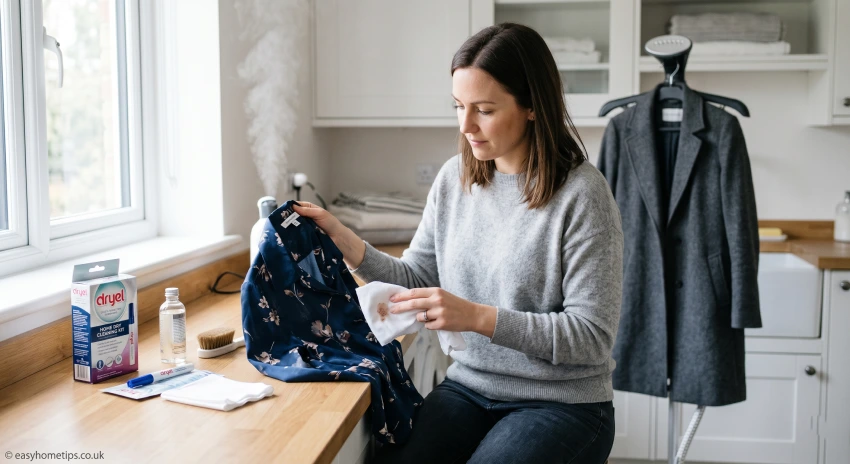
Apply a small amount of dry cleaning solvent or a mild stain remover directly to the stained area. Use a clean white cloth to blot — never rub — the stain outward.
Rubbing spreads the stain and pushes it deeper into the fabric fibers. Blotting lifts it gently to the surface instead.
Step 5: Use a Home Dry Cleaning Kit
A home dry cleaning kit typically includes a cleaning sheet and a reusable dryer bag. Place the garment and sheet in the bag and run it in the dryer on low heat for 15–30 minutes.
The heat activates the cleaning solution in the sheet, which refreshes the fabric care and removes light odors and wrinkles. This works especially well for suits, blouses, and dresses.
Step 6: Steam for a Final Refresh
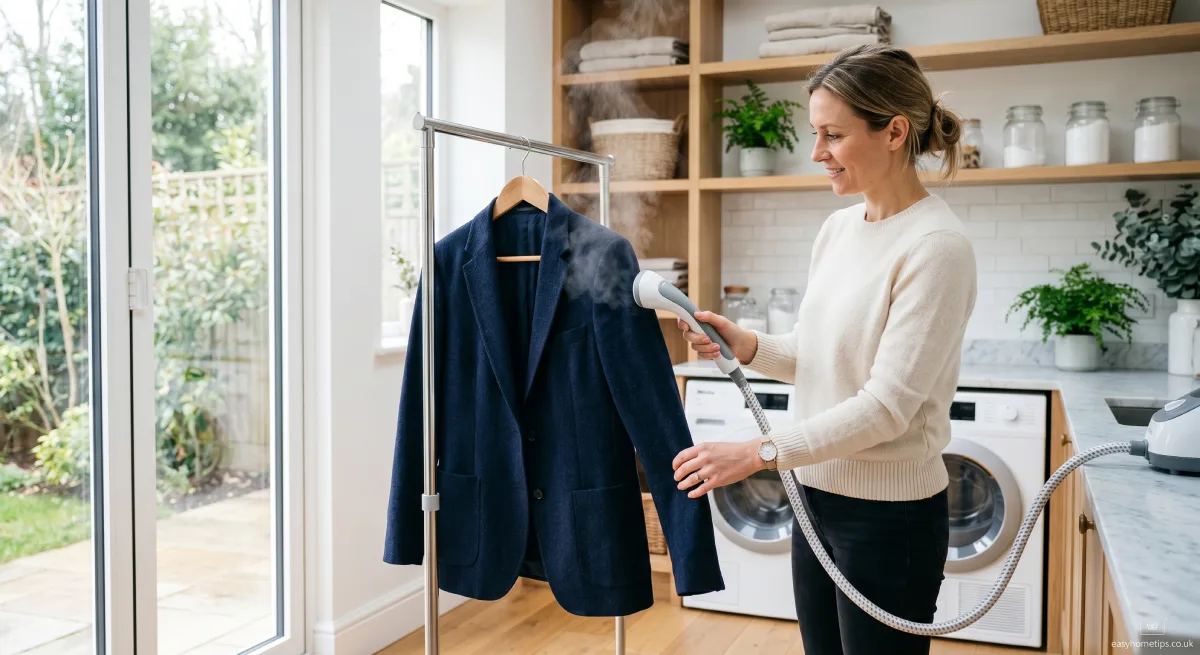
After cleaning, use a garment steamer to smooth out wrinkles and restore the garment’s shape. Hold the steamer 1–2 inches from the fabric and move it slowly downward.
Steaming also kills bacteria and neutralizes odors — two major benefits for delicate garment care. It’s a gentle, water-free finishing step that professionals swear by.
Step 7: Air Dry and Store Properly
Lay the garment flat on a clean dry towel or hang it on a padded hanger away from direct sunlight. Avoid wire hangers, which can distort the fabric structure.
Once fully dry, store in a breathable garment bag to keep it fresh until next wear.
Which Fabrics Can You Safely Dry Clean at Home?
Not every “dry clean only” fabric carries the same risk. Some are much more forgiving than others.
Generally safe to clean at home:
- Polyester — Very resilient; handles gentle hand washing well
- Acetate — Spot clean with care; avoid excess moisture
- Nylon — Durable; use cool water and mild soap
- Linen — Can be hand-washed if pre-tested
Requires extra caution:
- Silk — Highly sensitive to heat and agitation; always spot clean first
- Wool — Can shrink; use cool water and very gentle motion
- Rayon — Weakens when wet; minimal moisture only
Always send to a professional:
- Embellished or beaded garments
- Heavily structured jackets or tailored suits
- Leather or suede items
- Vintage or antique clothing
Knowing your fabric puts you in control of smarter garment care decisions.
Smart Hacks vs. Benefits: Home Dry Cleaning Comparison
Sometimes a quick visual comparison helps you decide which approach to use. Here’s a simple breakdown:
| Hack / Method | Best For | Key Benefit |
|---|---|---|
| Home dry cleaning kit | Suits, blouses, light odors | Easy, no-mess, time-saving |
| Steam cleaning | Wrinkles, bacteria, light dirt | No chemicals, fabric-safe |
| Spot cleaning with solvent | Fresh stains, isolated spots | Targeted, prevents spreading |
| Hand washing with mild soap | Lightly soiled delicates | Gentle, cost-free |
| Baking soda treatment | Odor removal, deodorizing | Natural, chemical-free |
| White vinegar spray | Deodorizing silk or wool | Inexpensive, effective |
Each method serves a different purpose. Using the right hack for the right garment gives you the best results every time.
Common Mistakes to Avoid When Dry Cleaning at Home
Even with the best intentions, small mistakes can ruin delicate clothes. Here are the most common ones — and how to avoid them.
Using Too Much Product
More cleaner does not mean better results. Excess solvent or detergent can leave residue, cause stiffness, or even discolor delicate fabrics. Always use the smallest effective amount.
Rubbing Stains Aggressively
Rubbing a stain feels instinctive, but it’s one of the worst things you can do. It pushes the stain deeper and can damage fabric fibers. Always blot gently instead.
Skipping the Spot Test
Skipping this step is gambling with your garment. Even “safe” products can react unexpectedly with certain dyes or finishes. Always test in a hidden area first.
Using High Heat
High heat is the enemy of delicate fabrics. It can cause shrinkage, warping, or permanent damage — especially to silk, wool, or rayon. Stick to low heat or air dry whenever possible.
Ignoring the Care Label
The care label instructions exist for a reason. Ignoring them — even once — can permanently damage a beloved garment. Take 10 seconds to read it every single time.
How to Do Dry Cleaning Clothes at Home and Save Money
One of the biggest reasons people learn how to do dry cleaning clothes at home is the cost savings. Professional dry cleaning can cost $10–$30 per garment. That adds up fast.
By handling most items at home, you can easily save $200–$500 or more per year. Here’s a quick cost comparison:
| Method | Average Cost Per Garment |
|---|---|
| Professional dry cleaning | $10 – $30 |
| Home dry cleaning kit | $1 – $3 |
| Steam cleaning at home | $0.10 – $0.50 |
| Spot cleaning at home | Nearly free |
Beyond money, home cleaning also saves time. No more drop-off and pick-up trips. No waiting days for your favorite blazer. Your clothes are ready when you need them.
With a small upfront investment in a quality garment steamer and a few home dry cleaning kits, you’ll recover the cost in just a few uses.
FAQ: How to Do Dry Cleaning Clothes at Home
Q1. Can I really dry clean clothes at home without a kit?
Yes, you can! Many delicate garments can be freshened using a garment steamer, a mild cleaning solvent, or even a mix of white vinegar and cool water. A kit makes it easier and more consistent, but it’s not strictly required for light refreshing and spot cleaning tasks.
Q2. Is it safe to use a dryer when doing dry cleaning at home?
Using a dryer on a low-heat setting is generally safe when following a home dry cleaning kit method. The key is low heat — high temperatures can damage delicate fabrics like silk, wool, and rayon. Always check the care label before putting anything in the dryer.
Q3. How do I dry clean a wool coat at home?
Start by brushing the coat to remove surface debris. Spot treat any stains with a dry cleaning solvent and blot carefully. Then use a garment steamer to refresh and de-wrinkle the fabric. Hang it on a padded hanger and allow it to fully air dry before storing.
Q4. What household items can replace dry cleaning solvent?
White vinegar diluted with water works well as a light fabric refresher and deodorizer. Baking soda sprinkled on the fabric and brushed off after 30 minutes can absorb odors. Mild liquid dish soap diluted in water can handle light stains on some fabrics — always spot test first.
Q5. How often should I dry clean clothes at home?
For most garments, light refreshing between wears is enough. A full home dry cleaning treatment every 3–6 wears is usually sufficient. Heavily soiled items or those with strong odors may need more frequent attention. Avoid over-cleaning, as even gentle methods cause gradual fabric wear over time.
Conclusion
Now you know exactly how to do dry cleaning clothes at home — safely, smartly, and affordably.
From reading care label instructions to spot cleaning stains, using a home dry cleaning kit, and finishing with a garment steamer, each step gives your clothes the gentle care they deserve.
You don’t need to spend a fortune at the cleaner’s. With the right tools and techniques, most delicate fabrics can be freshened and maintained right at home.
Start with one garment this week. Follow the steps. You’ll be amazed at how easy and effective it really is.
Your wardrobe — and your wallet — will thank you.