




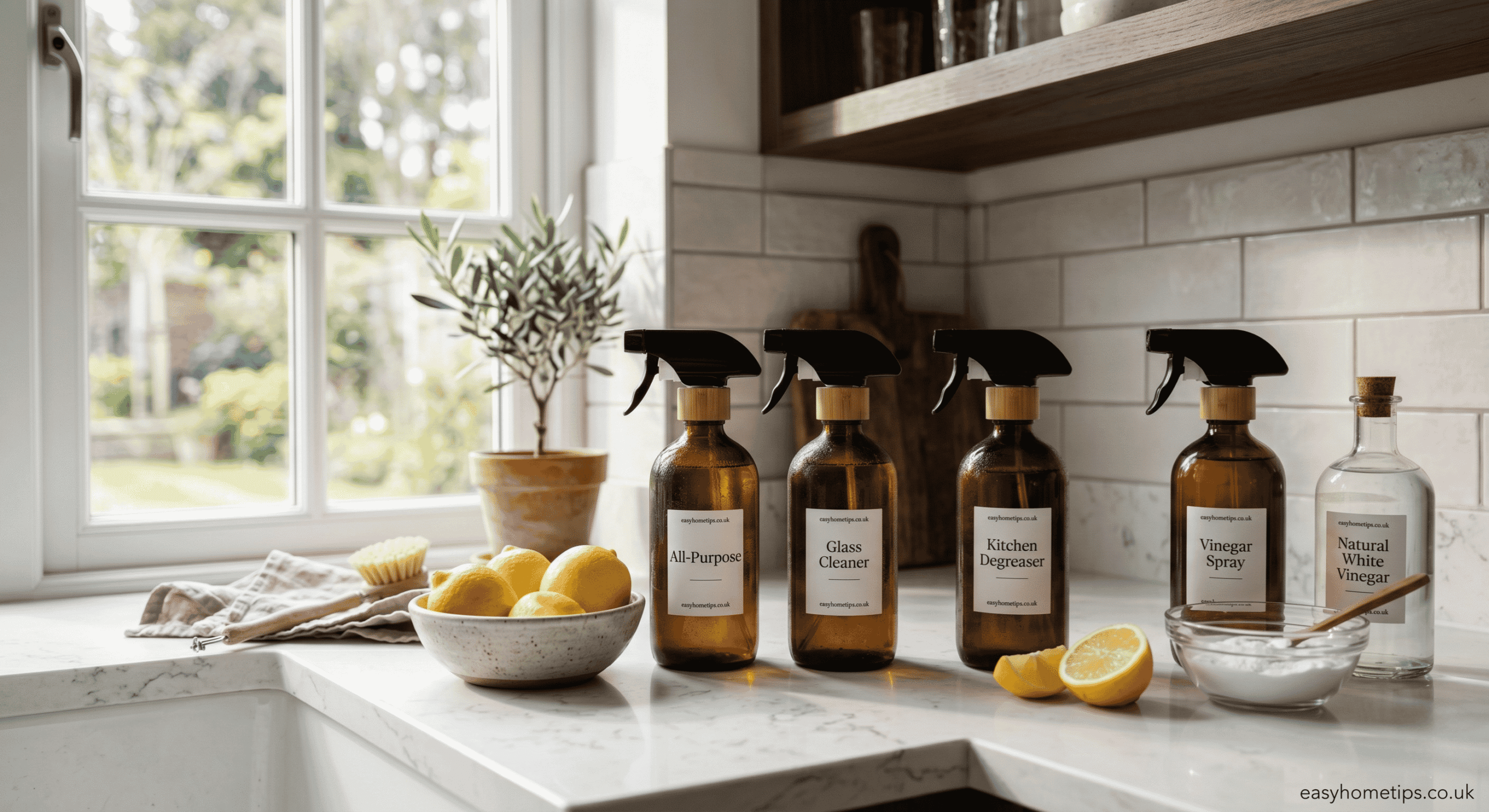
80%
of cleaning jobs done by just 3 ingredients
$600+
average annual savings switching to DIY cleaners
2 min
average mixing time per batch
Why Home Made Cleaning Solutions Actually Work
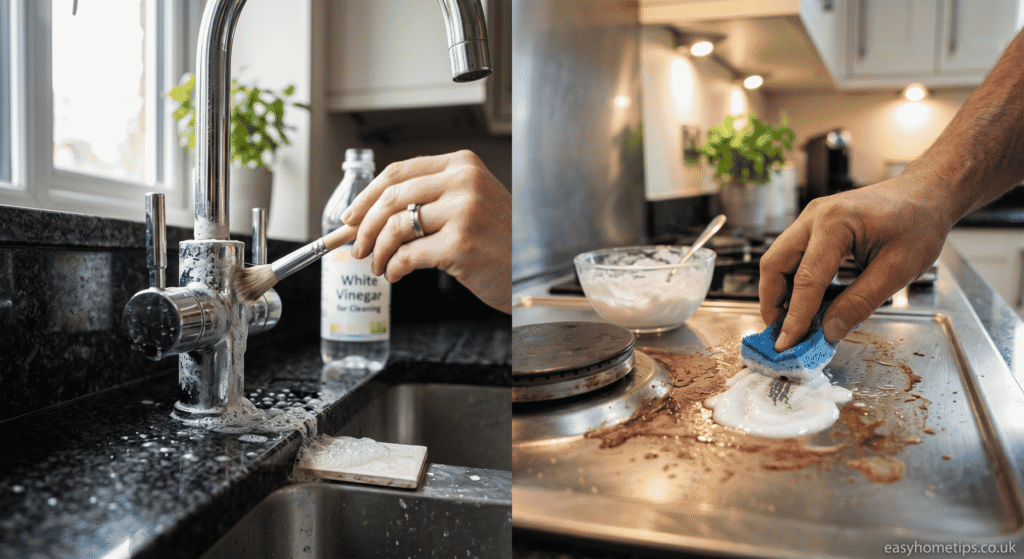
Before mixing your first batch, it helps to understand the simple science behind why these ingredients are so effective. Knowing this makes you a smarter cleaner — you will always know which recipe to reach for.
The Power of Acid vs. Alkaline
Most household messes fall into one of two chemical categories. Mineral deposits (hard water stains, lime scale, soap scum) are alkaline in nature, so they dissolve when attacked with something acidic — like white vinegar or lemon juice. Grease and oil are best cut by alkaline agents such as baking soda or castile soap. This is why mixing both in the same cleaner can sometimes reduce effectiveness: they neutralize each other before they get to the dirt.
Essential Oils Are More Than Just Fragrance
Tea tree oil, lavender, eucalyptus, and peppermint all carry genuine antimicrobial properties. Adding 15 to 20 drops to any natural cleaning solution boosts its germ-fighting ability while leaving your home smelling genuinely fresh rather than chemically sanitized.
Always label your spray bottles with the recipe name, ingredients, and mix date. Most homemade solutions stay effective for 2–4 weeks. Use a piece of masking tape and a marker — simple and reliable.
The Essential Pantry Starter Kit
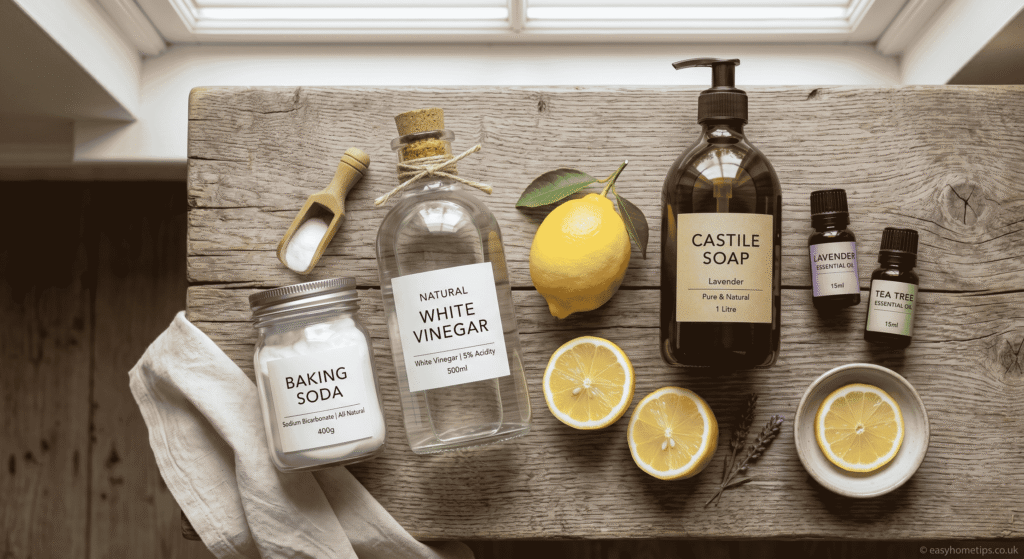
Before you start any natural cleaning recipe, stock these five ingredients. Together they cost less than one bottle of branded multi-surface spray and will last you months.
| Ingredient | Best Used For | Approx. Cost |
|---|---|---|
| White Distilled Vinegar | Glass, grease, odors, mineral deposits | ~$2 / litre |
| Baking Soda | Scrubbing, deodorizing, soft abrasion | ~$1.50 / 500g |
| Castile Soap (liquid) | General surfaces, floors, laundry | ~$6 / 250ml |
| Lemon Juice (fresh/bottled) | Brightening, cutting grease, wood polish | ~$1 / lemon |
| Essential Oils (tea tree, lavender) | Antibacterial boost, fragrance | ~$8 per bottle |
9 Home Made Cleaning Solutions That Actually Shock You With Their Results
1. The Everyday Homemade All-Purpose Cleaner
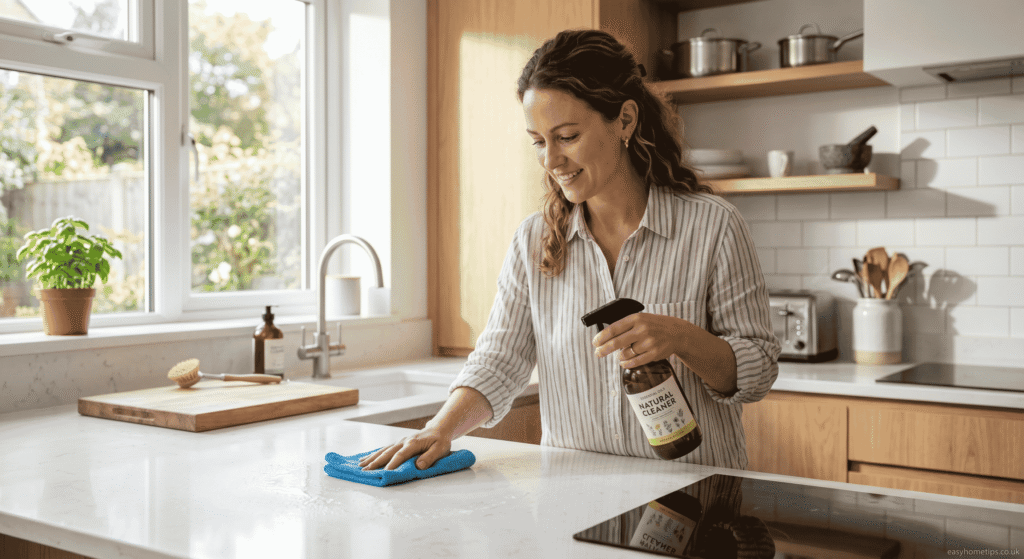
This is the workhorse of any natural cleaning kit. It handles countertops, appliance exteriors, cabinet doors, and light bathroom surfaces without leaving streaks or chemical residue.
🌿 All-Purpose Cleaning Spray
- 1 cup white distilled vinegar
- 1 cup water (distilled or filtered is best)
- 15 drops tea tree essential oil
- 10 drops lavender essential oil
2. Foaming Bathroom Scrub
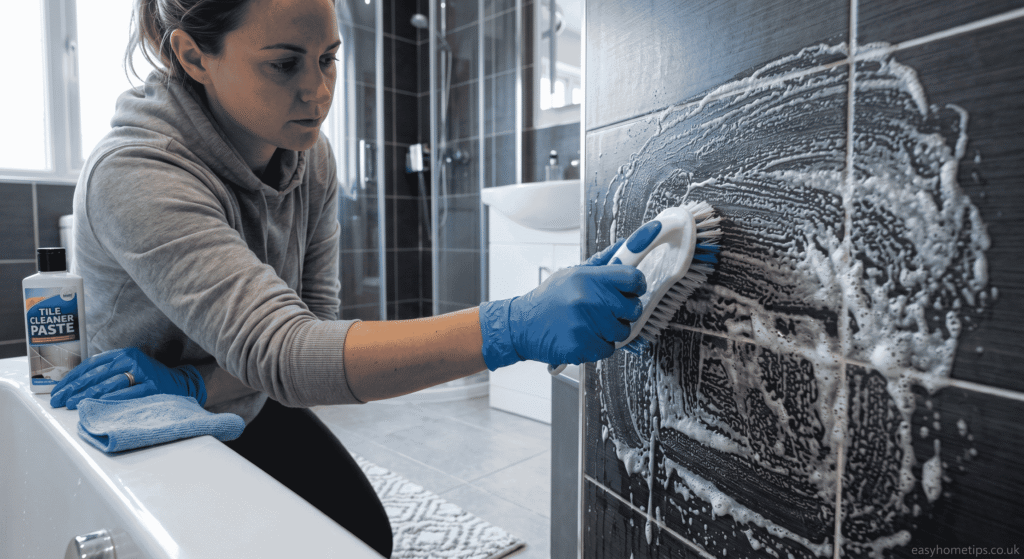
This thick, fizzing paste is one of the most satisfying homemade cleaning solutions to use on grout, tile, and porcelain. The gentle abrasion from baking soda lifts grime while the castile soap emulsifies it.
🌿 Bathroom Scrub Paste
- ½ cup baking soda
- 2 tablespoons liquid castile soap
- 10 drops eucalyptus essential oil
- A few drops of water to adjust consistency
3. Streak-Free Glass and Window Cleaner
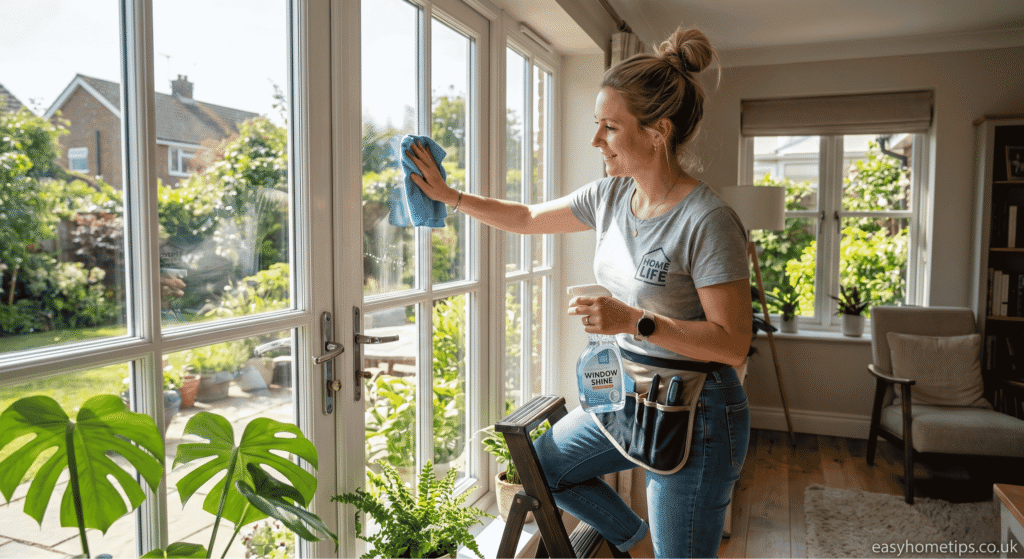
Commercial glass cleaners are mostly water, a touch of alcohol, and blue dye. This homemade version produces the same crystal-clear results — and costs almost nothing.
🌿 Natural Window Spray
- 2 cups water
- ½ cup white vinegar
- ¼ cup rubbing alcohol (70% concentration)
- 1 drop of dish soap (optional, for extra grease cutting)
4. Heavy-Duty Oven and Stovetop Degreaser
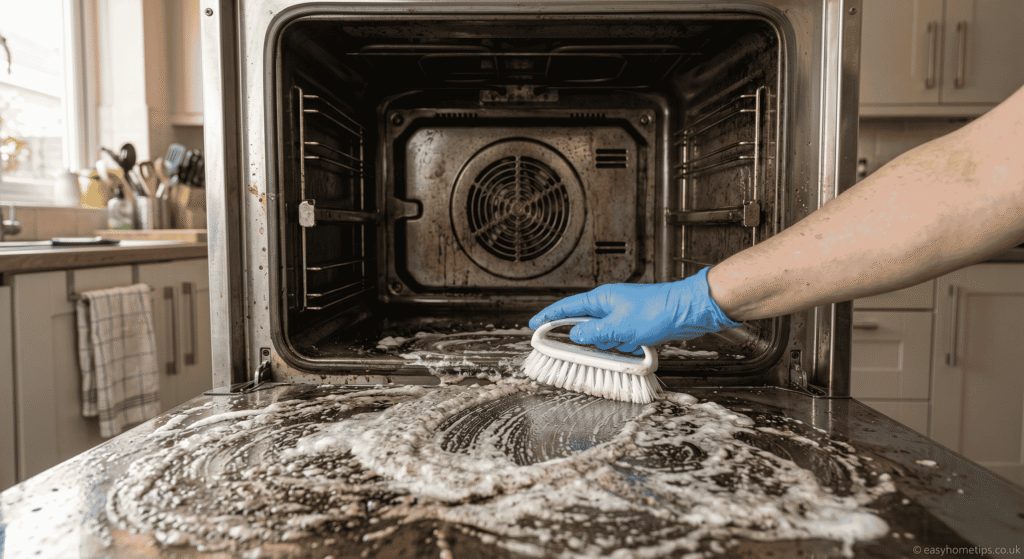
Baked-on grease is no match for this powerful paste. The combination of baking soda’s mild abrasiveness and vinegar’s acidity lifts even months-old grime without scratching surfaces.
🌿 Oven Cleaning Paste
- ½ cup baking soda
- 2–3 tablespoons water (to form a spreadable paste)
- White vinegar in a spray bottle (for activation)
5. Citrus-Powered Wood and Furniture Polish
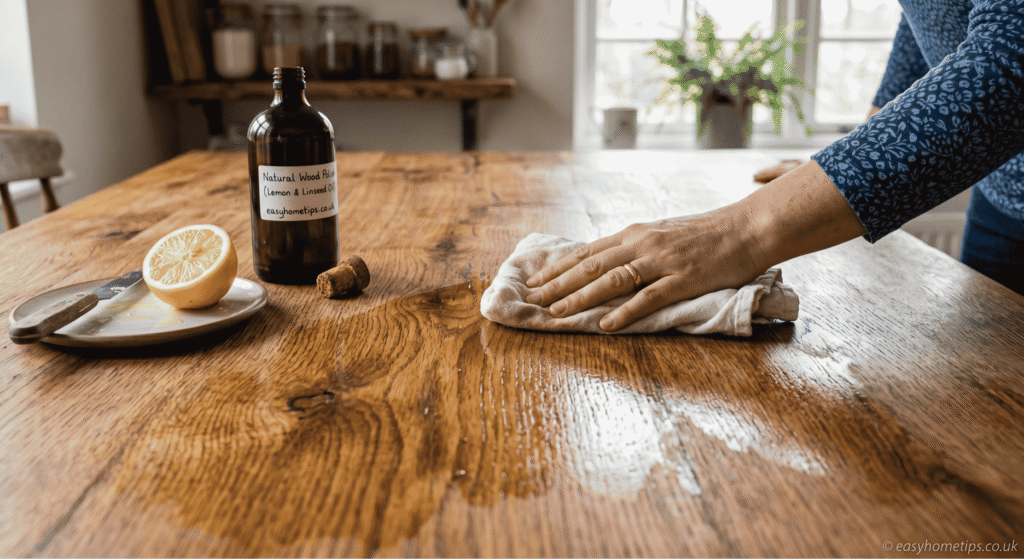
This two-ingredient natural home cleaner nourishes wood while removing light dust and fingerprints. Olive oil conditions the grain; lemon juice cuts grime and leaves a gentle citrus scent.
🌿 Natural Wood Polish
- ¼ cup olive oil
- Juice of ½ a lemon (about 2 tablespoons)
6. Carpet Stain Remover That Actually Works
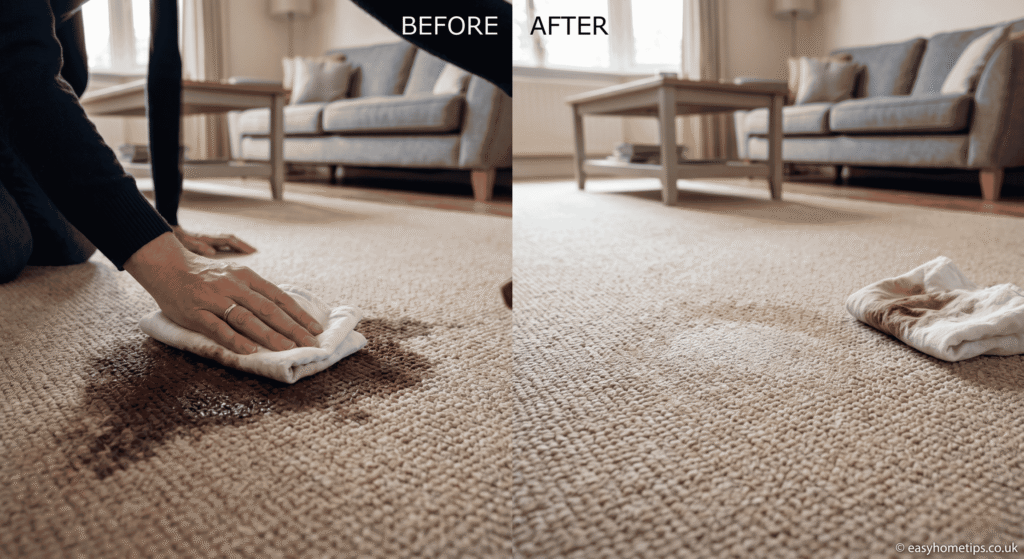
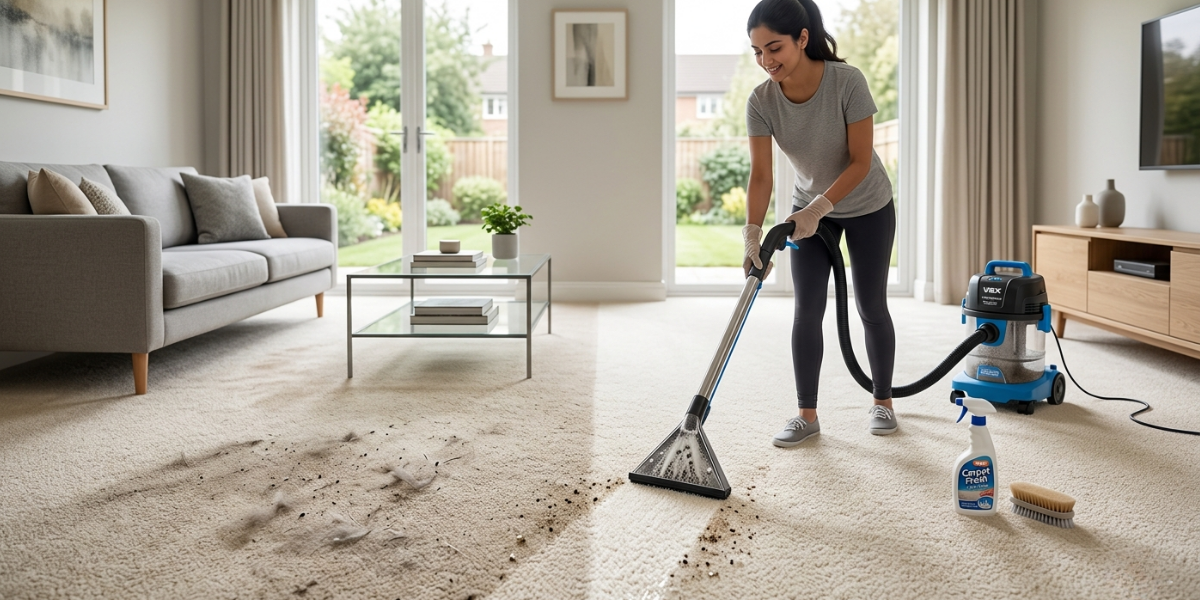
Before calling in a professional for that red wine or coffee stain, try this simple spray. Many people are genuinely shocked at how well it pulls set-in stains from carpet fibers.
🌿 Carpet Stain Spray
- 1 tablespoon dish soap
- 1 tablespoon white vinegar
- 2 cups warm water
7. Toilet Bowl Fizzing Cleaner
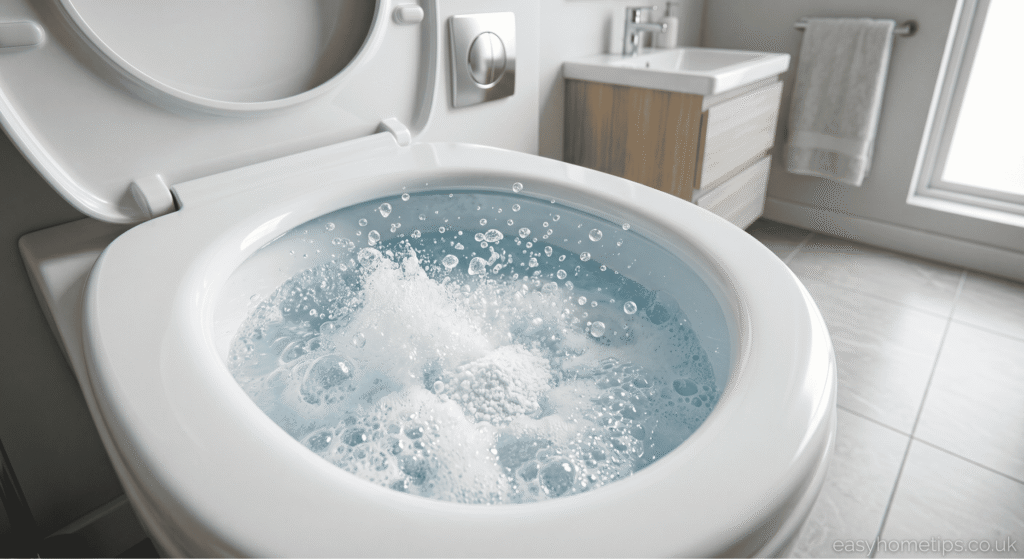
This recipe creates a satisfying fizz that coats the bowl and tackles mineral stains without any harsh bleach fumes. Perfect if you have young children or pets in the home.
🌿 Toilet Fizz Powder
- 1 cup baking soda
- ¼ cup citric acid powder
- 20 drops tea tree essential oil
- 10 drops peppermint essential oil
8. Refrigerator and Cutting Board Deodorizer
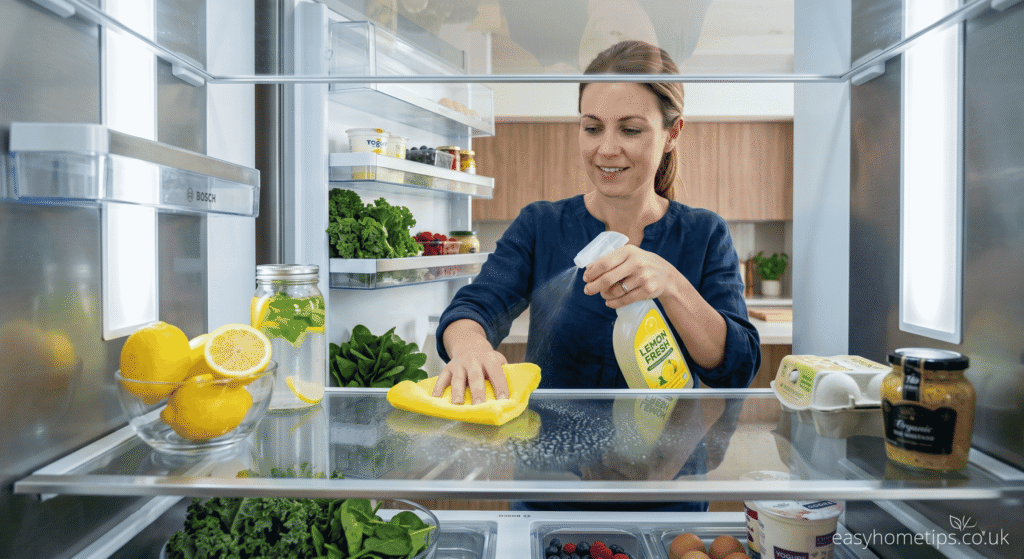
Persistent food odors in the fridge or on wooden cutting boards are neutralized — not just masked — by this simple two-ingredient solution.
🌿 Deodorizing Wipe Solution
- 1 cup water
- ½ cup white vinegar
- 10 drops lemon essential oil
9. Laundry Booster for Whiter Whites
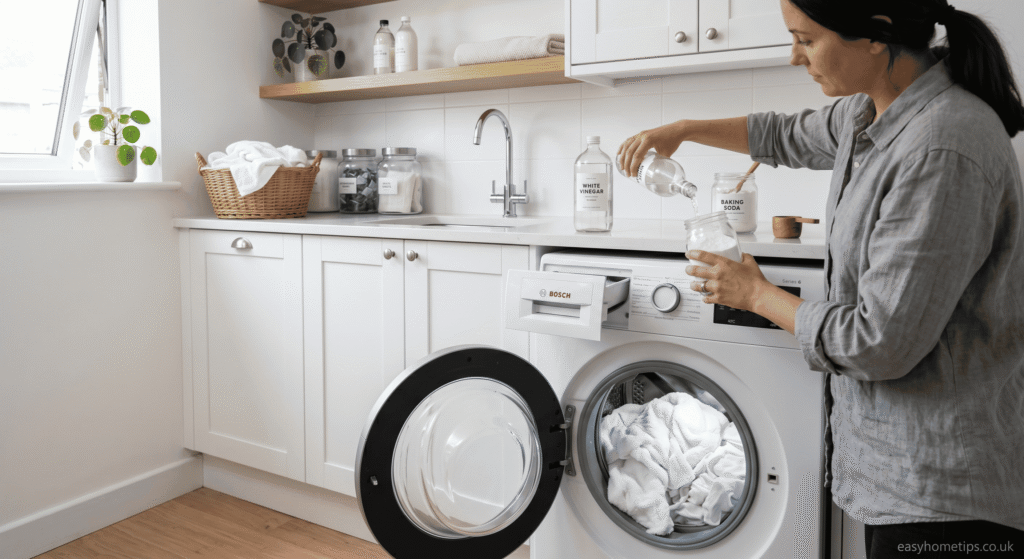
Add this simple boost to any regular wash cycle to brighten whites, neutralize odors from workout clothes, and soften fabrics naturally — no fabric softener needed.
🌿 Natural Laundry Booster
- ½ cup baking soda (add to the drum with clothes)
- ½ cup white vinegar (add to the rinse cycle compartment)
What NOT to Mix: Important Safety Rules
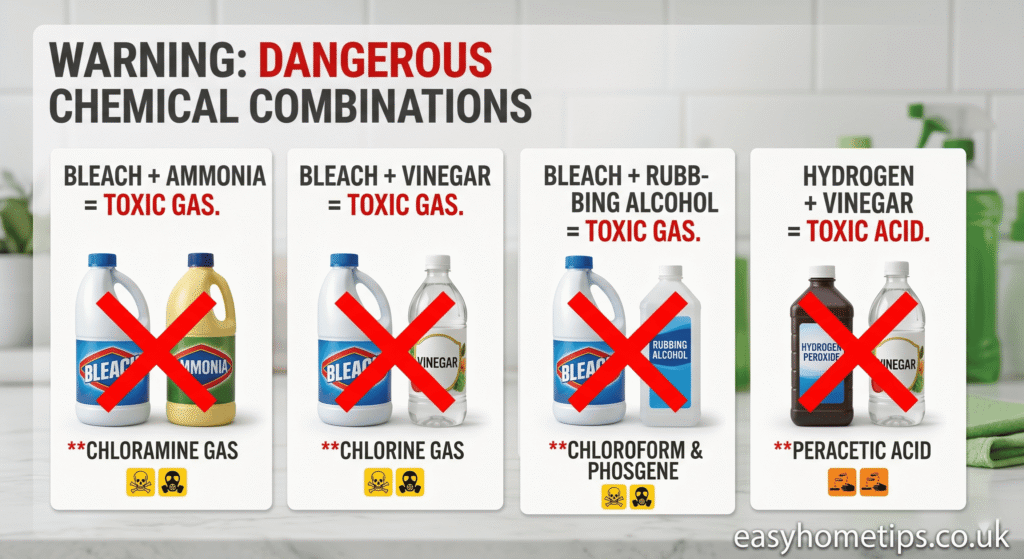
Natural does not automatically mean safe to combine in any quantity. A few combinations produce gases that can irritate your lungs or simply cancel each other out.
⚠️ Never Mix These Together:
- Bleach + Vinegar — produces chlorine gas, which is toxic
- Bleach + Hydrogen Peroxide — produces oxygen at a rate that can cause explosions in enclosed containers
- Vinegar + Castile Soap — the acid breaks down the soap into a curdled, ineffective mess
- Vinegar + Baking Soda in a sealed container — carbon dioxide buildup can burst the bottle
Surfaces Where You Should NOT Use Vinegar
White vinegar is one of the best all-round ingredients in any homemade cleaning spray, but its acidity makes it unsuitable for a handful of surfaces. Avoid using vinegar-based natural cleaners on:
Marble and natural stone — the acid etches the surface permanently over time. Use a pH-neutral castile soap solution instead. Hardwood floors — repeated use can dull the finish; a few drops of castile soap in warm water is safer. Cast iron cookware — vinegar strips the seasoning you have worked hard to build up. Egg-based stains — heat from the egg protein reacts with acid and sets the stain rather than removing it.
How to Store and Maximize Shelf Life
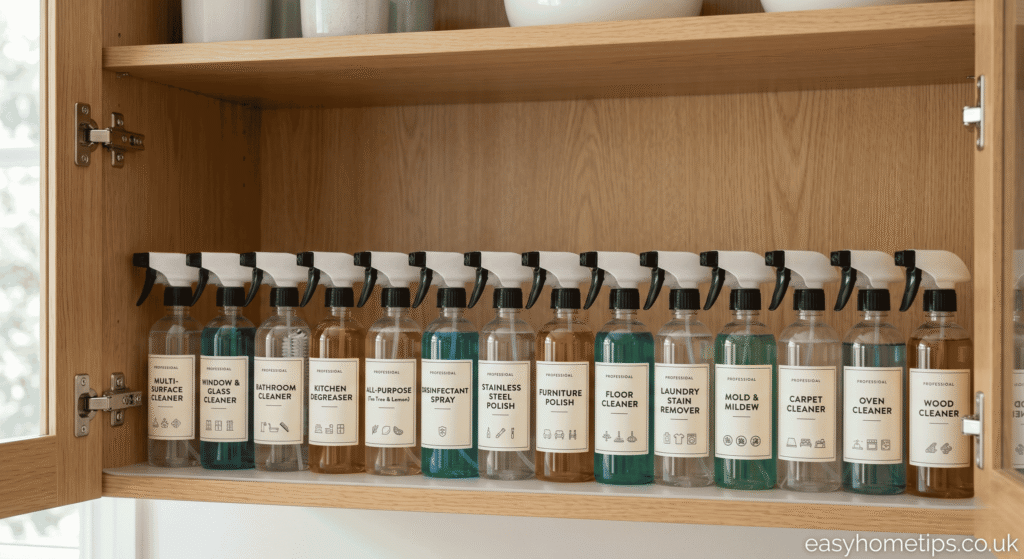
Getting the most from your natural home cleaners is as much about storage as it is about the recipe. Here are the habits that keep your homemade solutions effective for as long as possible.
Store all liquid cleaners in dark-colored or opaque spray bottles, since light degrades essential oils and reduces their antimicrobial potency. Keep bottles in a cool cupboard away from direct sunlight and heat sources. Dry powder blends (like the toilet fizz cleaner) last longest in airtight glass jars — moisture is their main enemy.
Liquid sprays containing essential oils are best used within four weeks. Vinegar-only solutions without oils stay effective for up to three months. If a solution starts to smell off or develops cloudiness, discard it and mix a fresh batch — ingredients are inexpensive enough that this is never a hardship.
Set aside 20 minutes once a month to mix a full set of your most-used solutions. Label each bottle with the name, ingredients, and date. You will always have what you need on hand — no more mid-clean trips to the store.
Frequently Asked Questions
Conclusion: Your Cleaner Home Starts in the Kitchen Cupboard
There is something quietly satisfying about knowing exactly what is in the products you use to clean the surfaces your family eats off, sleeps near, and touches every single day. The nine home made cleaning solutions in this guide are not compromises — they are genuine, effective alternatives that in many cases outperform their commercial counterparts.
Start with the all-purpose cleaner and the bathroom scrub paste. Mix a batch this weekend, use them for a fortnight, and notice the difference — not just in results, but in the air quality of your home, your grocery bill, and the number of plastic bottles under your sink. Natural cleaning is not a trend; it is a return to what worked long before the chemical industry convinced us otherwise.