





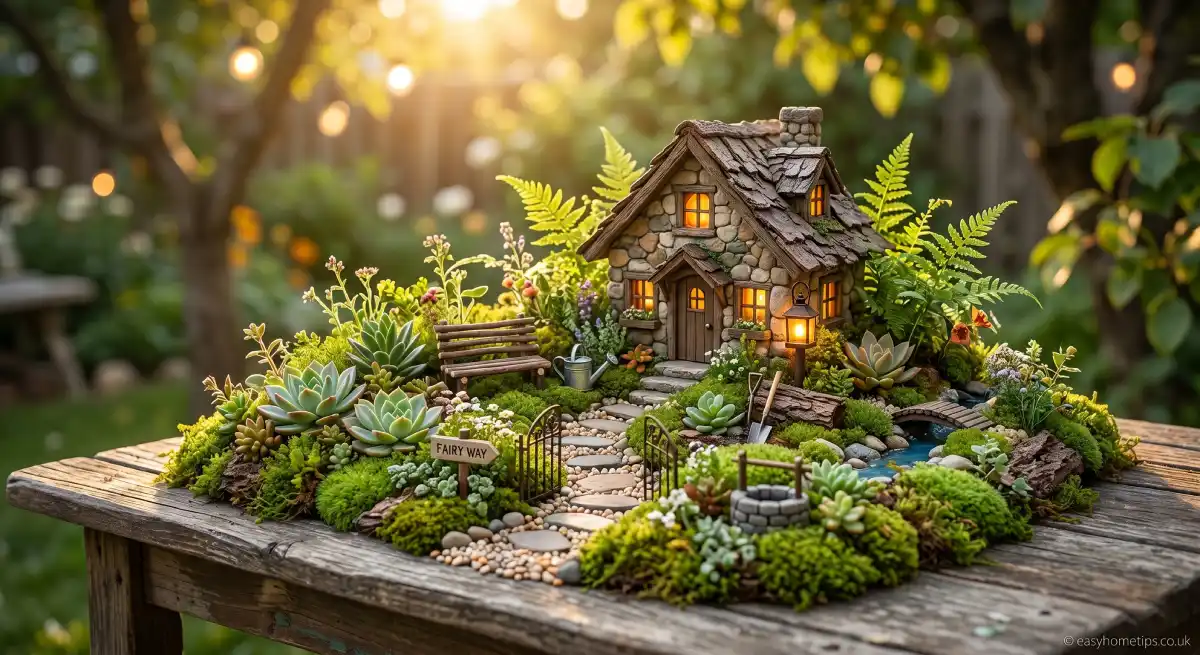
10 Ultimate, Easy Tips: How to Make a Fairy Garden
Have you ever wanted to bring a little bit of magic right into your backyard or living room?
Learning how to make a fairy garden is one of the most delightful and creative projects you can take on.
It is surprisingly simple, deeply relaxing, and an engaging activity that family members of all ages will genuinely love.
When you know how to make a fairy garden, you open the door to a whimsical world of miniature landscapes and tiny, enchanting details.
Whether you want a tiny tabletop display or a lush outdoor arrangement, this guide will walk you through every magical step. Let’s dive in and start creating!
Why You Should Learn How to Make a Fairy Garden
There is something undeniably charming about shrinking a grand landscape down to a miniature scale. If you are wondering why you should take the time to learn how to make a fairy garden, the answer lies in the incredible benefits it offers for both your mind and your home. First and foremost, crafting these tiny worlds is an excellent stress reliever. The focused, creative energy required for creating a magical garden allows you to unplug from daily worries and connect with nature on a highly detailed level.
Furthermore, exploring how to make a fairy garden is a fantastic way to bond with children or grandchildren. It sparks their imagination, teaching them about plant care, patience, and artistic design all at once. Even if you are tackling this project solo, starting a fairy garden offers a rewarding creative outlet that yields beautiful, tangible results. You don’t need a massive backyard to enjoy gardening; these compact projects fit on balconies, desks, and window sills.
Additionally, mastering how to make a fairy garden lets you personalize your living space in a completely unique way. By incorporating whimsical garden decor ideas, you can design a tiny landscape that perfectly matches your personality—whether that’s a rustic woodland retreat, a beachy summer cove, or a classic enchanted forest. The possibilities are truly endless, and once you start, you will find that tending to your miniature world becomes a joyful, highly anticipated part of your weekly routine.
What Do You Need to Start? Essential Supplies
Before you can dive into the fun part of designing, you need to gather the right materials. Understanding how to make a fairy garden successfully means starting with a solid foundation. You don’t have to spend a fortune, either. In fact, finding cheap fairy garden supplies at local craft stores, dollar stores, or even in your own backyard is part of the fun.
To help you organize your shopping list, here is a breakdown of the essential items you will need, along with some practical uses and cost-saving hacks.
| Supply Item | Purpose in Your Garden | Cost-Saving Hack / Benefit |
| Container / Pot | Holds the soil and acts as the foundation. | Upcycle old teacups, broken terracotta pots, or wooden crates. |
| Potting Soil | Provides nutrients and a base for your plants. | Buy in bulk or use leftover soil from other houseplant projects. |
| Gravel / Pebbles | Creates drainage and is used for tiny pathways. | Collect smooth stones from your driveway or local nature trails. |
| Activated Charcoal | Keeps the soil fresh, especially in closed terrariums. | A single bag lasts for multiple projects; prevents mold growth. |
| Miniature Plants | Brings life and scale to your tiny landscape. | Propagate clippings from existing succulents or buy small starter plugs. |
| Fairy Accessories | Adds the magical, whimsical touch to the scene. | Craft your own using twigs, polymer clay, and acorn caps. |
When you are figuring out how to make a fairy garden, following expert miniature garden design tips ensures your setup thrives. Always prioritize drainage. If your chosen container doesn’t have holes at the bottom, adding a generous layer of gravel before your soil is an absolute must. Knowing exactly what supplies you need makes the process of how to make a fairy garden smooth, organized, and much more enjoyable.
Choosing the Perfect Location and Container
Location is everything when you are planning how to make a fairy garden. The spot you choose will dictate what kind of container you use and, most importantly, what types of plants will actually survive in your setup. If you live in an apartment, you might want to look into indoor fairy garden ideas that fit neatly on a sunny windowsill or a cozy coffee table. On the other hand, if you have a spacious yard, creating an outdoor fairy garden layout under the shade of an old tree can be incredibly magical.
Container Ideas for Small and Large Spaces
Selecting the right vessel is a crucial step in how to make a fairy garden. You are not limited to standard plastic plant pots. If you want to create beautiful small space fairy gardens, consider exploring unique fairy garden containers ideas. A wide, shallow terracotta dish is a classic choice because it provides a large surface area for landscaping.
However, you can get incredibly creative. Old wheelbarrows, galvanized metal tubs, vintage suitcases lined with plastic, or even hollowed-out logs make stunning bases. When you learn how to make a fairy garden, you realize that the container sets the entire mood. Just remember that outdoor containers will be exposed to rain and sun, so they need to be durable and feature excellent drainage holes to prevent your tiny plants from drowning.
Sunlight and Environment
Furthermore, consider the light requirements. If you place your garden in a dark corner, your plants will stretch and lose their vibrant colors. Place it in scorching afternoon sun, and delicate mosses will crisp up. Balancing the environment is a key secret in how to make a fairy garden thrive long-term.
Best Miniature Garden Plants to Bring It to Life
The true magic of any garden lies in its greenery. Choosing the right foliage is perhaps the most important part of learning how to make a fairy garden. You cannot just use any plant; you need species that stay small, grow slowly, and share similar water and light requirements. Selecting the best plants for miniature gardens ensures your landscape looks proportional and realistic.
Succulents and Cacti
If you prefer a low-maintenance setup, a succulent fairy garden design is a brilliant choice. Succulents like Jade plants, Echeveria, and Zebra Haworthia look like tiny, exotic trees and bushes. They require very little water, making them perfect for busy beginners learning how to make a fairy garden.
Moisture-Loving Miniatures
For a more traditional, lush, and woodland feel, you will want to explore different mini plants for gardens. Consider using:
Irish Moss or Scotch Moss: Perfect for creating soft, grassy lawns.
Polka Dot Plant: Adds a wonderful splash of pink or red color.
Baby Tears: Spills beautifully over the edges of containers.
Miniature Ferns: Gives a wild, enchanted forest vibe.
When you are mastering how to make a fairy garden, remember to group plants with similar needs together. Do not plant a water-loving fern next to a desert cactus. By following these miniature garden design tips, your tiny ecosystem will flourish beautifully for months and years to come.
Step-by-Step: How to Make a Fairy Garden From Scratch
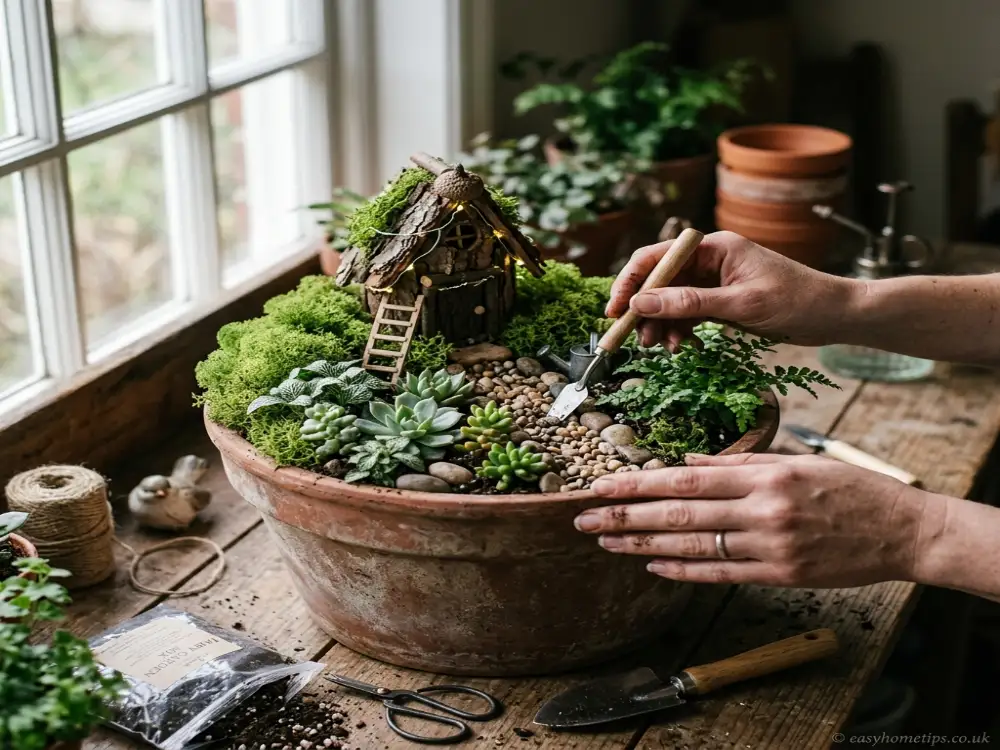
Now comes the exciting part: putting it all together! If you are wondering how to make a fairy garden step-by-step, following a structured process makes it completely foolproof. Learning how to build miniature landscapes is like painting a picture; you start with the background and slowly add the fine details.
Step 1: Prep the Container
Start by cleaning your container. If there are no drainage holes, add a one-inch layer of pebbles or gravel to the bottom. If you are building an easy terrarium fairy garden in glass, add a thin sprinkle of activated charcoal over the pebbles to keep the water fresh.
Step 2: Add the Soil
Fill the container with high-quality potting soil. Leave about an inch of space at the top so water doesn’t spill over the sides. As you learn how to make a fairy garden, you will find that lightly dampening the soil beforehand makes it much easier to work with.
Step 3: Map Out the Layout
Before planting, use your hands or a small stick to draw a rough map in the soil. Plan where the house will go, where the path will meander, and where the “trees” (larger plants) will sit. Fairy garden layout plans save you from having to uproot plants later.
Step 4: Plant Your Greenery
Start with the largest plants first to anchor the design. Dig small holes, gently tease the roots, and press them firmly into the soil. Fill in the gaps with smaller ground-cover plants.
Step 5: Add Hardscaping and Accessories
The final step in how to make a fairy garden is the decoration. Lay down colored sand, aquarium gravel, or crushed glass to create a winding river or a cobblestone path. Place your fairy house, tiny benches, and the fairies themselves to complete the magical scene.
Designing DIY Fairy Houses and Magical Accessories
While store-bought accessories are cute, creating your own decorations adds a layer of personal charm that money just can’t buy. When discovering how to make a fairy garden, crafting your own miniatures is incredibly fulfilling. You can easily brainstorm diy fairy house ideas using materials you already have around your home.
Building Tiny Homes
You don’t need a degree in architecture to build a fairy house. A simple wooden birdhouse from a craft store can be transformed with a little exterior waterproof paint and a hot glue gun. Glue small twigs to the outside to create a log cabin effect, or use overlapping pinecone scales on the roof to mimic wooden shingles. As you dive deeper into how to make a fairy garden, you will start seeing building materials everywhere in nature.
Crafting Furniture and Decor
Creating fairy garden furniture diy projects is another fun step. You can glue small twigs together to make rustic benches, arbors, and picket fences. Use a large, flat pebble as a tabletop and surround it with smaller pebble “stools.”
For the ultimate touch, look into fairy garden accessories diy projects. A thimble can become a miniature planter. A tiny pocket mirror laid flat on the soil and surrounded by moss instantly becomes a magical reflecting pool. The secret to how to make a fairy garden truly special is in these tiny, thoughtful, handcrafted details.
Maintenance Tips for Your Miniature Outdoor Garden Setup
Creating your garden is only half the journey; keeping it alive is the other half. Knowing how to make a fairy garden means also knowing how to maintain it. A miniature outdoor garden setup will face different challenges than an indoor one, including weather changes, pests, and fast-growing weeds.
Watering and Pruning
The most common mistake people make after learning how to make a fairy garden is overwatering. Because the containers are often shallow, they can become waterlogged easily. Always check the soil moisture with your finger before watering. If the top inch is dry, give it a gentle sprinkle using a small watering can or a spray bottle.
Additionally, your plants will eventually grow. To keep the scale of your landscape looking realistic, you must prune regularly. Snip off overgrown leaves and pinch back the stems of wandering vines. This ensures that your carefully planned outdoor fairy garden layout doesn’t turn into an overgrown jungle that hides all your beautiful fairy accessories.
Cleaning and Protecting Accessories
Outdoor elements can cause your tiny accessories to fade or rust. If you are serious about how to make a fairy garden last, spray painted items with a clear, UV-resistant polyurethane sealer before placing them outside. During heavy rainstorms or harsh winter months, it is wise to move delicate accessories indoors to protect your magical backyard garden setups from permanent weather damage.
Creative Fairy Garden Containers Ideas for Small Spaces
If you are tight on space, do not worry. You can absolutely still learn how to make a fairy garden. In fact, some of the most enchanting designs are built inside unusual, compact vessels. Small space fairy gardens force you to be highly selective and intentional with your design, often resulting in spectacular creations.
Repurposed Household Items
One of the best fairy garden containers ideas is to use an old, chipped teacup. A teacup garden can hold one tiny succulent, a pinch of moss, and a single miniature chair. It is the perfect desk companion. Similarly, a glass fishbowl or a large mason jar can be turned into an easy terrarium fairy garden. Just remember that closed glass containers hold a lot of humidity, so choose tropical, moisture-loving plants.
Broken Pot Gardens
Have you ever dropped a terracotta pot and shattered one side? Don’t throw it away! Broken pot gardens are a massive trend for those learning how to make a fairy garden. You can use the broken shards to create tiered retaining walls, building a multi-level landscape that spirals upward.
Ultimately, exploring how to make a fairy garden is about pushing your creative boundaries. Whether you use a massive wooden barrel or a tiny soup bowl, the principles of design, plant care, and magical decoration remain exactly the same. Grab your trowel, gather your tiny props, and start creating your own miniature wonderland today!
Frequently Asked Questions (FAQs)
What is the first step in how to make a fairy garden?
The very first step when learning how to make a fairy garden is to choose your container and location. This decision dictates what kind of soil you will need and the best plants for miniature gardens that will survive in your chosen environment.
Can I learn how to make a fairy garden indoors?
Absolutely! Many people prefer exploring indoor fairy garden ideas because they are easier to protect from harsh weather. Just be sure to place your indoor garden near a bright window and use a container that protects your furniture from water damage.
How much does it cost when figuring out how to make a fairy garden?
It can be incredibly affordable if you use cheap fairy garden supplies and repurpose items from around your home. By utilizing diy fairy house ideas and propagating your own plants, you can build a stunning garden for under twenty dollars.
What are the best plants to use when exploring how to make a fairy garden?
If you want low maintenance, a succulent fairy garden design is best. For a lush, green look, opt for mini plants for gardens like Irish moss, baby tears, and small ferns that thrive in slightly damp soil.
Is it hard to learn how to make a fairy garden for beginners?
Not at all! Learning how to make a fairy garden is an easy, forgiving, and incredibly fun process. By following basic miniature garden design tips like ensuring proper drainage and grouping plants with similar light needs, anyone can succeed.
Conclusion
Learning how to make a fairy garden is a magical journey that blends gardening, art, and storytelling into one relaxing hobby. From selecting the perfect container to crafting tiny, whimsical accessories, every step offers a chance to express your unique creativity. Now that you know exactly how to make a fairy garden, you have all the tools and knowledge needed to bring a miniature enchanted world to life. Don’t wait any longer—gather your supplies, pick out your favorite tiny plants, and start building your very own magical landscape today!