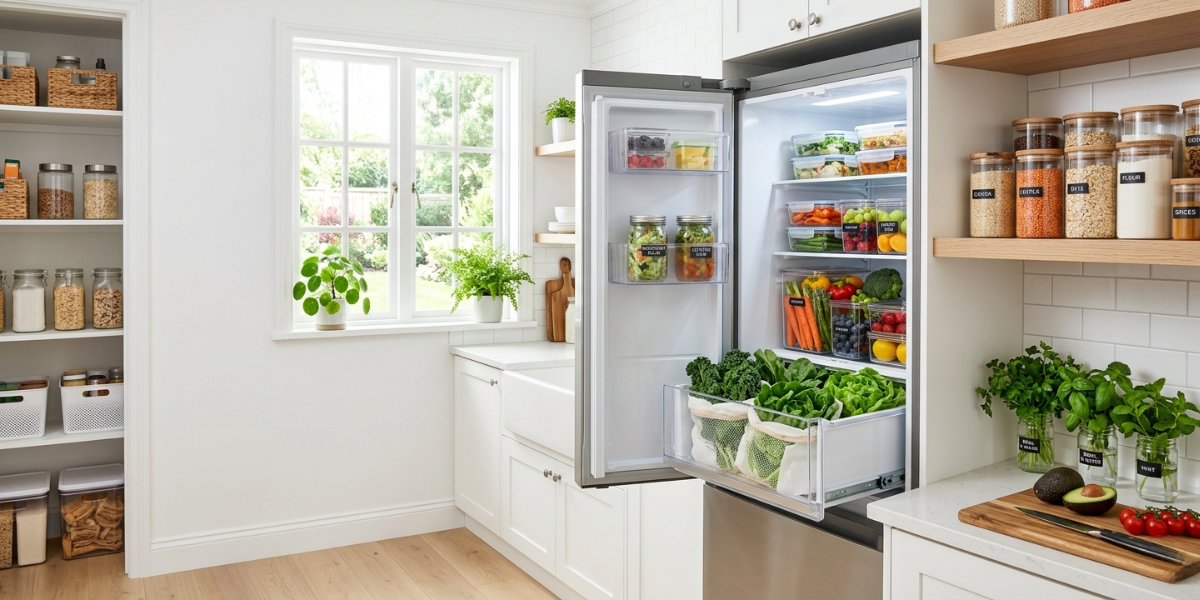





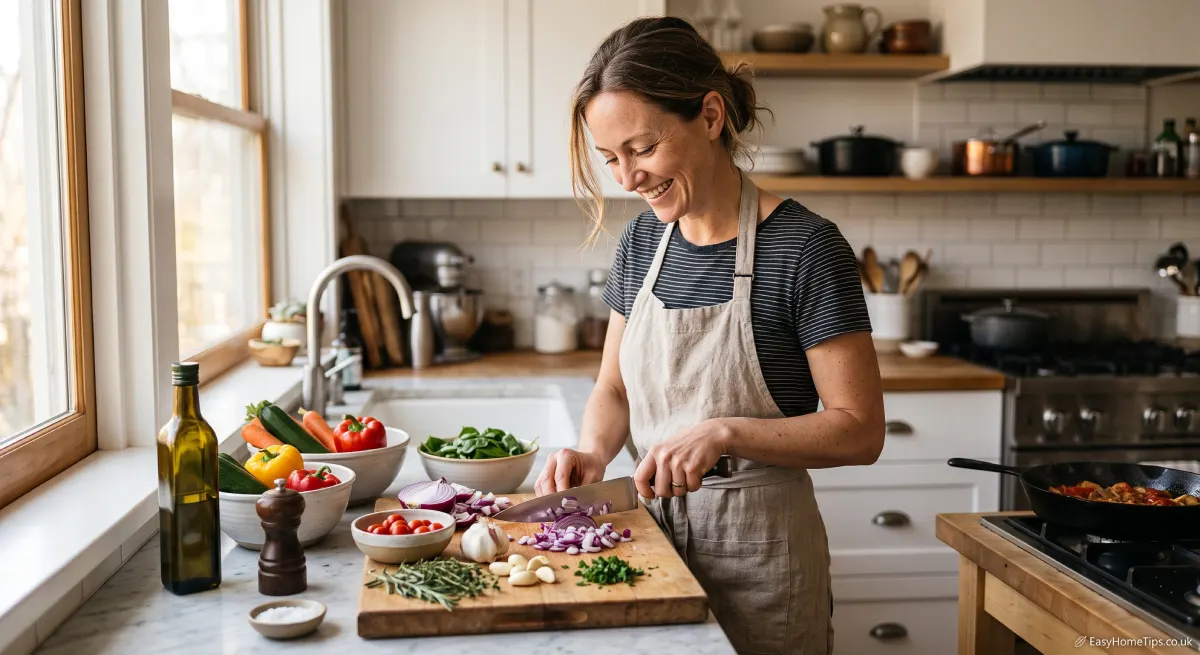
There’s something magical about walking into a kitchen that smells like real food. Cooking from scratch means making meals using raw, whole ingredients instead of relying on boxed mixes or pre-made sauces.
It sounds intimidating at first. But once you learn the basics, cooking from scratch becomes second nature.
This guide breaks down everything you need to know — from must-have tools to time-saving hacks. By the end, you’ll feel confident stepping away from processed shortcuts and into your own kitchen.
Whether you’re a total beginner or just want to sharpen your skills, cooking from scratch is one of the best habits you can build. Let’s dig in.
What Does Cooking From Scratch Really Mean?
At its core, cooking from scratch means preparing food using raw ingredients rather than pre-packaged or processed products. Instead of a jarred pasta sauce, you simmer tomatoes, garlic, and herbs yourself.
This approach relies on whole food cooking methods. You control every ingredient that goes into your meal, which means no hidden preservatives, added sugars, or mystery additives.
Many people confuse homemade cooking with simply reheating a frozen dinner. That’s not quite the same thing. True cooking from scratch starts with base ingredients — flour, vegetables, meat, dairy — and builds a dish from there.
Think of it this way:
- Making bread from yeast, flour, and water = cooking from scratch
- Baking a boxed bread mix = semi-homemade
- Buying a loaf at the store = not scratch cooking at all
The beauty of cooking from scratch is flexibility. You can adjust spices, swap ingredients, and tailor every dish to your taste or dietary needs. It’s a skill that grows the more you practice it, and it connects directly to better kitchen skills for beginners and seasoned cooks alike.
Why Cooking From Scratch Is Worth the Effort
You might be wondering if the extra time is really worth it. The short answer is yes, and the benefits go far beyond flavor.
Health Benefits of Scratch Cooking
When you cook from scratch, you decide exactly what goes into your food. There’s no unpronounceable ingredient list. This makes it easier to reduce sodium, sugar, and unhealthy fats, which supports healthy homemade cooking habits long-term.
Cooking from scratch also lets you control portion sizes and nutritional balance far better than any packaged meal ever could.
Money-Saving Advantages
Buying raw ingredients in bulk is almost always cheaper than pre-made meals or takeout. Over a month, scratch cooking on a budget can save a family hundreds of dollars.
Better Taste and Freshness
Fresh herbs, real butter, and ripe produce simply taste better than processed alternatives. Once you experience the difference, it’s hard to go back.
A Rewarding Life Skill
Learning from scratch cooking tips builds confidence in the kitchen. It’s a skill you’ll use for the rest of your life, and it often becomes something you enjoy sharing with family meals from scratch traditions.
Essential Kitchen Tools for Cooking From Scratch
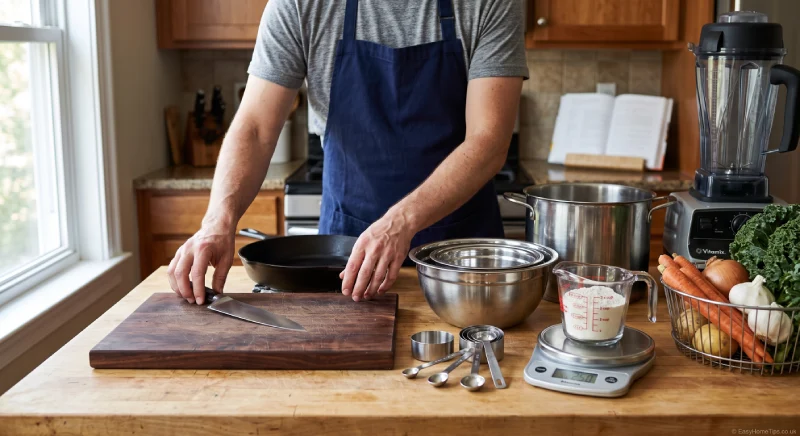
You don’t need a fancy kitchen to start cooking from scratch. A handful of reliable tools will cover almost everything you need.
| Kitchen Tool | Primary Use | Why It Matters for Scratch Cooking |
|---|---|---|
| Chef’s knife | Chopping, slicing, dicing | Speeds up prep for homemade meals from scratch |
| Cutting board | Safe food prep surface | Protects countertops and knife edges |
| Cast iron skillet | Searing, frying, baking | Builds flavor and lasts a lifetime |
| Mixing bowls | Combining ingredients | Essential for baking bread from scratch |
| Stockpot | Soups, stews, broths | Great for batch cooking from scratch |
| Measuring cups/spoons | Accurate portions | Keeps recipes consistent |
| Food scale | Precise ingredient weight | Improves results in baking |
| Blender or food processor | Purees, sauces, dough | Speeds up homemade sauces from scratch |
Starting with just five or six of these tools is enough to tackle most from scratch dinner recipes. You can always add specialty equipment later as your interest grows.
How Do You Start Cooking From Scratch as a Beginner?
Getting started doesn’t require a culinary degree. It just requires patience and a willingness to learn a few cooking basics for beginners.
Start With Simple Recipes
Choose dishes with five ingredients or fewer. A basic tomato sauce, roasted vegetables, or a simple soup are perfect first projects for scratch cooking for beginners.
Stock a Basic Pantry
Keep staples like olive oil, salt, pepper, garlic, onions, rice, and pasta on hand. These form the backbone of countless easy scratch cooking meals.
Learn Core Techniques
Master a few key skills first:
- Sautéing vegetables
- Simmering sauces
- Roasting meat or produce
- Making a basic vinaigrette
Once these feel natural, you can branch into more advanced quick from scratch recipes with confidence.
Practice Consistently
Like any skill, cooking from scratch improves with repetition. Cook a new dish every week, and don’t worry about mistakes — they’re part of learning.
Smart Time-Saving Hacks for Cooking From Scratch
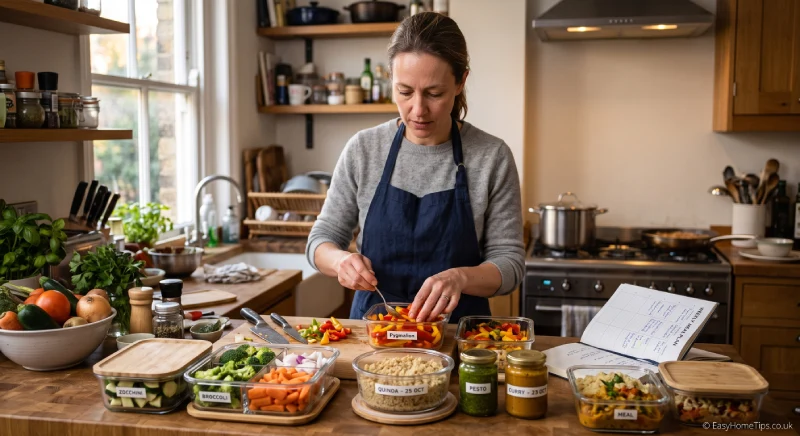
One common myth is that cooking from scratch always takes hours. In reality, smart planning makes it just as fast as grabbing takeout.
| Hack | Benefit |
|---|---|
| Batch cooking on weekends | Saves time during busy weekdays |
| Pre-chopping vegetables | Cuts daily prep time in half |
| Freezing homemade sauces | Ready-to-use meals anytime |
| Using a slow cooker | Hands-off cooking while you work |
| One-pot meals | Less cleanup, faster dinners |
Meal prep from scratch is one of the biggest time-savers available. Spend two hours on Sunday prepping proteins, grains, and chopped produce, and weeknight cooking becomes almost effortless.
Another smart trick is scratch cooking meal planning — mapping out your week’s meals in advance so you only shop once and never scramble for ideas at 6 p.m.
Doubling recipes and freezing half is another proven hack. It turns one cooking session into two ready-made dinners, which is especially useful for family meals from scratch.
Common Mistakes to Avoid When Cooking From Scratch
Even enthusiastic beginners run into a few predictable pitfalls. Knowing them in advance saves frustration.
- Skipping the recipe read-through — Always read the full recipe before starting so you’re not caught off guard mid-cook.
- Under-seasoning food — Salt and acid (like lemon juice or vinegar) bring homemade dishes to life.
- Overcrowding the pan — This traps steam and prevents proper browning.
- Not tasting as you go — Adjust flavors throughout, not just at the end.
- Ignoring prep work (mise en place) — Chopping and measuring everything first makes cooking smoother.
Avoiding these mistakes helps your homemade cooking results improve dramatically, and it keeps the process enjoyable rather than stressful.
Frequently Asked Questions
1. Is cooking from scratch healthier than buying pre-made meals?
Generally, yes. Cooking from scratch gives you full control over ingredients, portion sizes, and added sugars or sodium. Pre-made meals often contain preservatives and hidden additives that scratch cooking naturally avoids.
2. How much time does cooking from scratch actually take?
It varies by dish, but many easy scratch cooking meals take 30 minutes or less. With meal prep from scratch strategies, weeknight cooking can be just as fast as ordering takeout.
3. What are the best beginner recipes for cooking from scratch?
Simple soups, roasted vegetables, homemade pasta sauce, and basic baked goods are great starting points. These from scratch dinner recipes require few ingredients and forgiving techniques.
4. Is cooking from scratch more expensive than buying processed food?
Usually not. Buying raw ingredients in bulk and batch cooking from scratch typically costs less per meal than packaged or takeout alternatives, especially over time.
5. What tools do I really need to start cooking from scratch?
A chef’s knife, cutting board, one good pan, and a few mixing bowls cover most basics. You can build your collection gradually as your kitchen skills for beginners improve.
Conclusion
Cooking from scratch isn’t about perfection — it’s about progress. Every chopped vegetable and simmered sauce builds real, lasting skill.
You’ve learned what cooking from scratch truly means, why it benefits your health and wallet, and which tools and hacks make it manageable. You’ve also seen common mistakes to avoid along the way.
Now it’s your turn. Pick one simple recipe this week and give cooking from scratch a try. Your future self — and your taste buds — will thank you.