



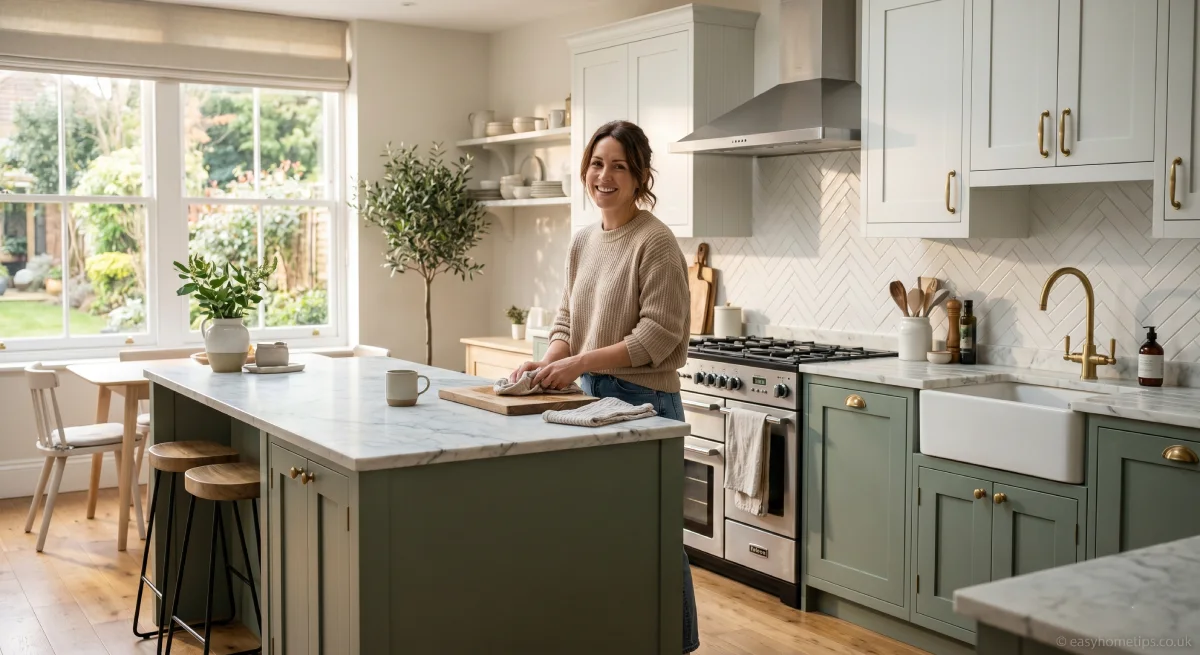
You’ve stared at those cabinets long enough. Maybe they’re dated oak, builder-grade white, or a color that made sense five years ago but doesn’t anymore. Whatever brought you here, you’re in the right place.
Choosing the best color for kitchen cabinets is one of the most impactful — and most stressful — home decisions you’ll make. The wrong choice can make your kitchen feel cramped, cold, or chaotic. The right one? It can make the whole house feel like it finally came together.
This guide breaks down the top recommended kitchen colors, what actually works in real homes (not just Pinterest boards), and how to match your cabinet color to your lifestyle, lighting, and layout.
Why Cabinet Color Is the Most Powerful Design Decision in Your Kitchen
Most homeowners obsess over countertops or backsplash. But designers know the truth: your cabinet color sets the entire tone of the room.
Cabinets cover more square footage than any other element in the kitchen. They’re the first thing guests notice and the last thing you stop noticing every morning. Getting this decision right is about more than aesthetics — it affects how spacious the room feels, how easy it is to clean, and how the space photographs.
The best color for kitchen cabinets isn’t just about what’s trendy. It’s about what works for your specific kitchen — the natural light you get, the flooring underneath, the countertop material you already have or plan to install, and the vibe you’re going for. Whether you want timeless elegance or bold personality, colors kitchen paint choices have never been more exciting.
There’s also resale value to consider. Certain cabinet colors are proven to attract buyers and increase perceived home value. We’ll cover all of that.
Classic White: Still the Most Proven Choice for Kitchen Cabinets
Let’s start with the obvious one — because it’s obvious for a reason.
White kitchen cabinets have dominated American kitchens for decades, and they’re not going anywhere. If you’re looking for the single safest, most universally loved choice, white wins. It works in farmhouses, modern spaces, coastal cottages, and urban lofts equally well.
But not all whites are created equal. There’s a significant difference between a cool, blue-toned white like Benjamin Moore Chantilly Lace and a warm, creamy white like Sherwin-Williams Alabaster. Cool whites look crisp and fresh in kitchens with lots of natural light. Warm whites work better in kitchens with warm-toned flooring or limited sunlight.
Why white is one of the best colors for kitchen cabinets:
- Makes small kitchens feel larger
- Pairs with virtually any countertop or hardware finish
- Photographs beautifully for resale listings
- Timeless — never feels dated
The downside? White shows dirt and scuffs faster than any other color. If you have kids or heavy cooking traffic, consider a satin or semi-gloss finish, which wipes clean easily. Or explore off-white options that hide wear better without sacrificing that light, airy feel.
Navy Blue: The Bold, Elegant Choice Designers Love
If white is the safe bet, navy blue kitchen cabinets are the sophisticated upgrade.
Navy has become one of the most popular colours to paint your kitchen cabinets over the last three years — and for good reason. It adds depth, drama, and a sense of luxury without feeling overwhelming. Paired with white or marble countertops and brass or gold hardware, it looks genuinely expensive.
It’s especially popular as a lower-cabinet color in two-tone kitchen designs, where upper cabinets stay white or off-white to keep the space feeling open. This is a smart, designer-approved move that balances boldness with brightness.
Top navy picks: Benjamin Moore Hale Navy, Sherwin-Williams Naval, and Farrow & Ball Hague Blue.
Best for: Traditional kitchens, coastal homes, transitional styles, and anyone who wants a statement kitchen without going full maximalist.
Just know that navy cabinets can make a small or dark kitchen feel enclosed. If your kitchen is tight on natural light, pair navy lowers with white uppers and add undercabinet lighting to compensate.
Sage Green: The Trending Color That Feels Timeless
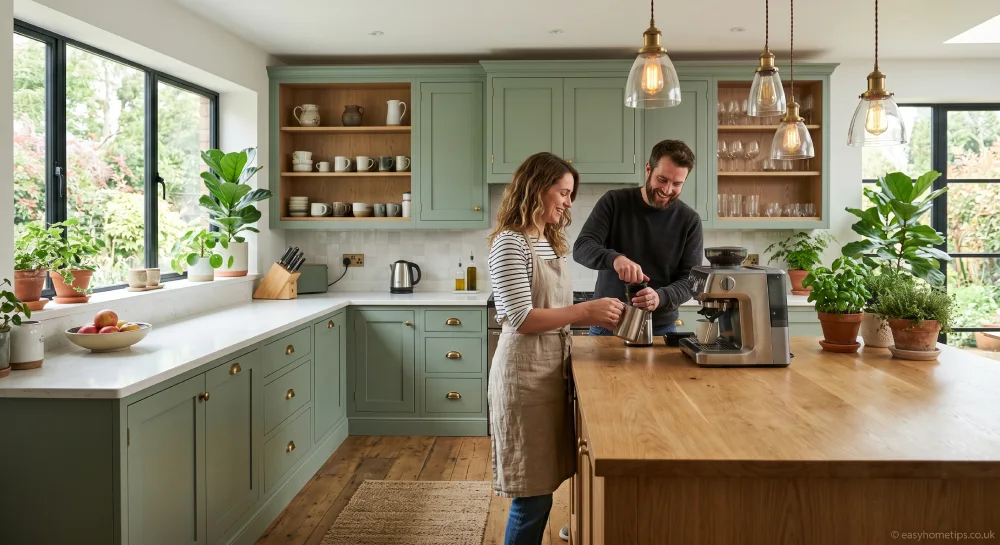
Sage green has had a moment — and honestly, it deserves it.
Unlike trendy colors that feel dated in five years, sage green kitchen cabinets tap into something deeper: the human instinct to feel calm, grounded, and connected to nature. It’s warm enough to feel cozy but muted enough to feel sophisticated.
As one of the top recommended kitchen colors right now, sage pairs beautifully with wood tones, white countertops, and almost any metal hardware. It works in both modern farmhouse aesthetics and contemporary designs.
Popular shades include Sherwin-Williams Sage, Benjamin Moore Dried Thyme, and Behr Pressed Fern.
The real beauty of sage? It doesn’t compete. It lets your countertops, backsplash, and hardware shine rather than demanding all the attention.
Pro tip: If you’re nervous about going full sage, paint just the kitchen island first. It’s a low-commitment way to test how the color works in your actual space before committing to every cabinet.
Warm Gray: The Sophisticated Neutral That Replaced Builder Beige
For a long time, gray kitchens felt cold and clinical. Then designers figured out how to do it right.
Warm gray kitchen cabinets — think greige, mushroom, or warm taupe undertones — have replaced beige as the go-to neutral for homeowners who want sophistication without color commitment. These shades work because they’re versatile enough to blend with almost any design style while still having more personality than plain white.
They’re also among the best colors kitchen paint choices for resale because they appeal to the widest range of buyers.
Look for grays with warm, brownish, or slightly golden undertones. Avoid cool blue-grays unless your kitchen gets tons of warm afternoon light — they can feel sterile under artificial lighting.
Good options: Sherwin-Williams Agreeable Gray, Benjamin Moore Revere Pewter, and Farrow & Ball Elephant’s Breath.
Two-Tone Cabinets: The Expert Move for Maximum Impact
This isn’t exactly one color — it’s a strategy. And it’s one of the smartest painting kitchen cabinets ideas you’ll come across.
Two-tone kitchens use different colors for upper and lower cabinets, typically pairing a lighter shade on top with a deeper or bolder shade below. The effect is grounded, visually interesting, and lets you enjoy a bold color without overwhelming the space.
Classic two-tone combinations:
- White uppers + Navy lowers
- Cream uppers + Forest green lowers
- Light gray uppers + Charcoal lowers
- Off-white uppers + Sage green lowers
This approach works especially well in larger kitchens where the full cabinet run can handle the visual weight. In smaller kitchens, keep the contrast subtle — a soft white on top with a warm cream or light gray below adds dimension without closing the space in.
The island is another opportunity. Paint it a contrasting color while keeping perimeter cabinets neutral — it acts like furniture in the room and adds personality without full commitment.
Black Kitchen Cabinets: Bold, Dramatic, and Surprisingly Livable
Black kitchen cabinets might sound extreme, but in the right space, they’re absolutely stunning.
All-black or near-black cabinets work best in larger kitchens with generous natural light, high ceilings, or light-colored flooring to balance the drama. Paired with warm wood countertops or white marble, black cabinets feel editorial without feeling cold.
They’re also incredibly practical — black hides grease, fingerprints, and daily wear far better than white. If you cook frequently, this matters more than you might think.
As one of the boldest best color for kitchen walls and cabinets options, black delivers maximum visual impact. But if you’re going this route, invest in good lighting. Undercabinet lights and statement pendants aren’t optional — they’re essential.
Soft Blue and Greens: Calm, Welcoming Kitchen Colors
Beyond navy and sage, there’s a whole spectrum of softer blues and greens that work beautifully in kitchens.
Powder blue, seafoam, dusty teal, and muted eucalyptus all bring a calm, welcoming energy to the kitchen — a place where people tend to gather. These colours to paint your kitchen feel fresh without being aggressive, and they photograph well in listings too.
They’re especially effective in coastal, cottage, or Scandinavian-style kitchens where the palette leans light and airy.
Pair these softer shades with white subway tile, butcher block or white quartz countertops, and simple brushed nickel or matte black hardware for a look that’s breezy without feeling casual.
Color Comparison: Cabinet Colors at a Glance
| Cabinet Color | Best Kitchen Style | Natural Light Needed | Resale Appeal | Hides Dirt Well |
|---|---|---|---|---|
| White / Off-White | Any style | Low to High | ⭐⭐⭐⭐⭐ | Low |
| Navy Blue | Traditional, Coastal | High | ⭐⭐⭐⭐ | High |
| Sage Green | Farmhouse, Modern | Medium | ⭐⭐⭐⭐ | Medium |
| Warm Gray | Contemporary, Classic | Medium | ⭐⭐⭐⭐⭐ | Medium |
| Two-Tone | Any style | Medium to High | ⭐⭐⭐⭐ | Varies |
| Black / Charcoal | Modern, Industrial | High | ⭐⭐⭐ | High |
| Soft Blue / Green | Coastal, Cottage | Medium | ⭐⭐⭐ | Medium |
How to Choose the Best Kitchen Cabinet Color for Your Home
Before you commit to any color, run through these five questions.
1. How much natural light does your kitchen get? Dark colors shrink spaces with limited light. If your kitchen faces north or lacks windows, stick with lighter shades — white, cream, warm gray, or soft sage.
2. What’s your countertop situation? Your cabinet color should complement — not compete with — your countertops. Busy stone like granite or quartz with movement needs calmer cabinet colors. Plain white quartz or butcher block can handle bold cabinets.
3. What’s your flooring color and material? Light floors pair with both light and dark cabinets. Dark floors + dark cabinets = cave. If your floors are dark, go lighter on the cabinets.
4. What’s your hardware finish? Brass and gold hardware pops against navy, sage, and black. Chrome and nickel look fresh with white, gray, and soft blue. Matte black works with nearly everything.
5. Are you planning to sell within 5 years? If yes, stick to proven crowd-pleasers: white, off-white, warm gray, or a two-tone with navy. Bold or highly personalized colors can narrow your buyer pool.
Once you’ve answered these honestly, the best color for kitchen cabinets in your home will be a lot clearer.
Internal Linking Opportunities
- Anchor: “how to prep kitchen cabinets before painting” → link to cabinet prep guide
- Anchor: “best kitchen hardware finishes for 2026” → link to hardware trends article
- Anchor: “kitchen renovation on a budget” → link to budget kitchen makeover post
- Anchor: “how to paint kitchen cabinets without brush marks” → link to DIY painting tutorial
- Anchor: “Best paint brands for kitchen cabinets” → link to paint brand review article
FAQ: Best Color for Kitchen Cabinets
Q: What is the most popular color for kitchen cabinets right now? White and off-white remain the most popular overall, but sage green and navy blue have surged significantly in the last two years. Warm gray is consistently popular for its versatility and broad buyer appeal. The best choice depends on your personal style and your kitchen’s light conditions, but any of these three will serve you well.
Q: What color kitchen cabinets make a kitchen look bigger? Light colors — especially white, cream, and soft gray — make a kitchen appear larger by reflecting light and reducing visual weight. High-gloss or satin finishes amplify this effect. Avoid dark colors on all cabinets in a small space; if you want depth, use a darker color only on a lower island while keeping surrounding cabinets light.
Q: What is the best color for kitchen cabinets to sell a house? White and warm gray are widely considered the safest choices for resale value. They appeal to the broadest range of buyers and photograph well in listing photos. Navy with white two-tone combinations have also performed strongly in real estate markets. Avoid highly specific colors — terracotta, mustard yellow, or vivid red — as they can polarize buyers.
Q: Should kitchen cabinet color match the walls? Not necessarily. In fact, contrast is often more visually interesting and effective. A common approach is to paint cabinets a deeper or bolder color and keep walls neutral — white, light gray, or soft cream. This lets the cabinets anchor the room while the walls recede. If your cabinets are white or very light, walls in a warm greige or pale blue can add warmth and dimension.
Q: Is it better to paint kitchen cabinets or replace them? Painting is almost always the smarter financial decision. A professional paint job typically costs $1,000–$4,000 depending on kitchen size and location. Full cabinet replacement can run $10,000–$30,000+. If your cabinet boxes are structurally sound, painting them (and optionally replacing doors and hardware) delivers a dramatic transformation at a fraction of the cost.
Conclusion: The Best Color for Kitchen Cabinets Is the One You’ll Love Long-Term
Here’s the honest truth: there’s no single right answer. The best color for kitchen cabinets is the one that works with your space, your lifestyle, and your taste — not just the color that’s trending on social media this season.
That said, you now have a clear framework. White and warm gray are timeless and safe. Navy and sage are bold but proven. Two-tone strategies give you flexibility. And black, while dramatic, is more livable than most people expect.
Before you buy a single drop of paint, get samples. Live with them for a week. Look at them in the morning light, the afternoon sun, and under your artificial kitchen lighting at night. Color behaves differently in every space.
When you find the right shade, you’ll know. Your kitchen will feel less like a room you use and more like a room you love.
Ready to start? Grab three or four sample pots this weekend — and take the first real step toward a kitchen that finally looks the way it should.