




You open the door to your apartment and there it is that tiny, cramped space everyone keeps calling a kitchen. Maybe it barely fits one person, let alone a full meal prep. If you are nodding right now, you already know the frustration of cooking in a compact kitchen that feels more like a closet than a culinary hub.
Here is the good news: millions of Americans are living and cooking in small spaces, and the most resourceful ones have figured out hacks that genuinely work. In this guide, you will discover 7 proven strategies for compact kitchen success, covering everything from clever small kitchen design ideas to the game-changing sink stove refrigerator combo units that are quietly taking over studio apartments and tiny homes across the country.
Whether you are dealing with a studio apartment, a basement unit, a guest cottage, or a tiny home, this article will show you exactly how to get the most out of every square inch. Let’s dive in.
1. Rethink What a Compact Kitchen Actually Needs
Before you start buying gadgets or tearing out cabinets, step back and ask yourself: what does a functional compact kitchen really require? Most people overestimate what they need and underestimate how clever layout decisions can solve almost everything.
A truly efficient compact kitchen needs four things: a cooking surface, a cold storage option, a water source with drainage, and workspace. That is it. Everything else is a bonus. Once you strip your thinking down to these core elements, you will start seeing creative solutions that were invisible before.
Start With a Space Audit
Walk through your kitchen with fresh eyes. Look for dead zones, wasted vertical space, and items you never actually use. Studies from the National Kitchen and Bath Association show that most home cooks use fewer than 20% of their kitchen tools on any given week. If you are working with limited square footage, every inch needs to earn its place.
Make a list of what you cook most often. Do you meal prep on weekends? Do you mostly reheat or cook simple one-pan meals? Your cooking habits should dictate your compact kitchen layout, not the other way around.
2. The All-in-One Kitchenette Is a Game Changer
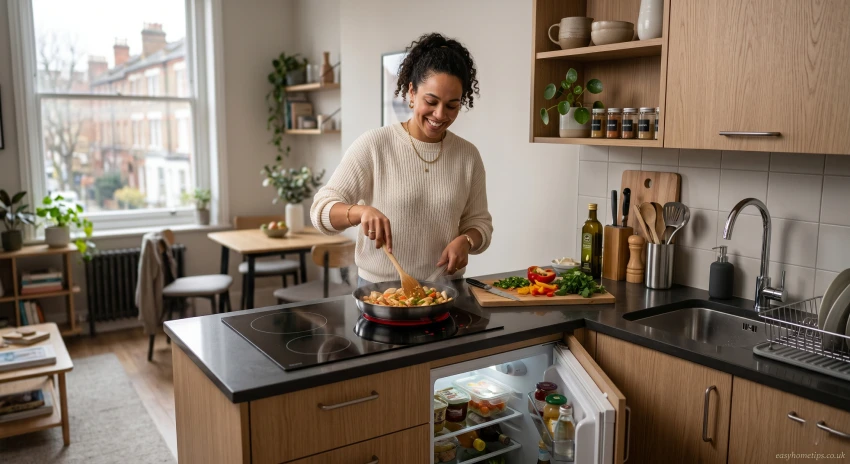
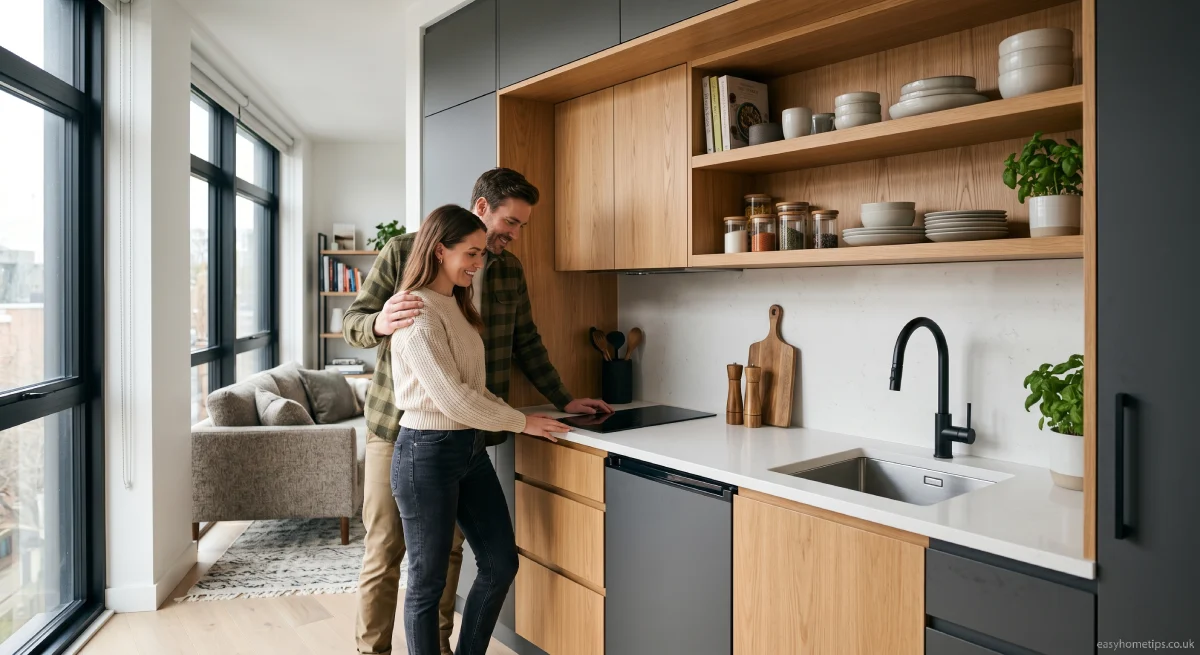
[IMAGE: Modern all in one kitchenette unit showing integrated sink, stovetop, and compact refrigerator in a small kitchen design]
Caption: An all in one kitchenette consolidates your cooking essentials without sacrificing style or function.
If you have never heard of an all in one kitchenette unit, you are about to have your mind blown. These are purpose-built compact kitchen solutions that integrate your stovetop, sink, and refrigerator into a single, streamlined cabinet unit.
The efficiency kitchenette model has been popular in Europe for decades, but it is quickly gaining momentum in the United States as urban apartments shrink and tiny home living goes mainstream. A quality all in one kitchenette can fit in as little as 30 to 60 inches of wall space while giving you everything you need to cook real meals.
What to Look for in an All-in-One Kitchenette
- Integrated countertop space, even if minimal
- Energy-efficient mini refrigerator with a usable freezer compartment
- Two-burner electric or induction cooktop (induction is safer and easier to clean)
- Stainless steel or composite sink with a single-handle faucet
- Built-in storage drawer or cabinet underneath
Top brands to explore in 2026 include Avanti, Summit Appliance, and Compact Kitchen Solutions. Prices range from around $800 for basic models to over $3,000 for premium stainless units with more countertop depth.
3. The Sink Stove Refrigerator Combo: Is It Right for You?
The sink stove refrigerator combo is the ultimate expression of compact kitchen efficiency. Unlike a modular all in one kitchenette that can be customized, a true sink stove refrigerator combo integrates all three appliances into a single pre-engineered cabinet unit.
These units are especially popular in:
- Studio and micro apartments under 400 square feet
- Accessory dwelling units (ADUs) and in-law suites
- Tiny homes and mobile homes
- Dorm rooms and student housing
- Office break rooms and small commercial spaces
Sink Stove Refrigerator Combo Pros and Cons
The biggest advantage of a sink stove refrigerator combo is the dramatic space savings. You are replacing what would typically require 8 to 10 linear feet of kitchen space with a unit that fits in 4 to 6 feet. Installation is also simpler since plumbing, electrical, and gas connections are all concentrated in one area.
The downside? Counter space is extremely limited. If you do serious cooking or bake regularly, a sink stove refrigerator combo alone may not cut it. Consider pairing it with a fold-down countertop extension or a rolling butcher block cart to give yourself more prep room when you need it.
4. Vertical Space: The Most Underused Compact Kitchen Asset
When floor space runs out, look up. Vertical space is the most underused resource in small kitchen design ideas, and it can genuinely transform how your compact kitchen feels and functions.
The average ceiling height in a US kitchen is 8 to 9 feet. If your cabinets stop at 7 feet, that top 1 to 2 feet is dead space you are paying for every month. Here is how to reclaim it.
Vertical Storage Hacks That Work
- Open floating shelves: Install two or three rows of simple floating shelves above your counter. They cost less than $50 per shelf at any home improvement store and can hold a surprising amount.
- Magnetic knife strips: Move your knives off the counter and onto a magnetic wall strip. You save a knife block footprint and always know where your knives are.
- Pegboards: A pegboard painted to match your backsplash can hold pots, pans, utensils, and even small planters. It is a workhorse in small kitchen design and incredibly affordable.
- Ceiling pot racks: If your ceiling can handle it, a hanging pot rack frees up entire cabinets while making your compact kitchen look professional and intentional.
- Inside-cabinet door organizers: The inside of cabinet doors is prime real estate. Tension rod organizers, small wire baskets, and spice racks all mount here for almost zero cost.
5. Smart Appliance Choices for Kitchen Design Ideas in Small Kitchens
In a compact kitchen, every appliance has to justify its existence. The question is not just whether an appliance works well, but whether it earns its counter space on a daily basis. Here are the appliances that make the most sense in small spaces.
Appliances That Earn Their Place
The most space-efficient cooking tools for a compact kitchen include:
- Induction cooktop (two burner): Slim, safe, and doubles as extra counter space when not in use
- Countertop convection oven or air fryer toaster oven combo: Replaces a full oven at a fraction of the footprint
- Instant Pot or multi-cooker: One pot that slow cooks, pressure cooks, sautes, and steams
- Compact dishwasher (countertop model): Connects to your faucet and holds a full day’s dishes
- Mini refrigerator with top freezer: Specifically designed for efficiency kitchenette setups
Appliances to Skip in a Small Kitchen
Some appliances simply do not belong in a compact kitchen setup. Skip these unless you have a specific, frequent need:
- Full-size stand mixer (use a hand mixer instead, stores in a drawer)
- Large blenders (opt for a personal blender that stores in a cabinet)
- Dedicated bread makers, waffle irons, or panini presses unless used weekly
- Full-size dishwasher (unless you have a genuine cavity for one in a built-in compact kitchen)
The rule of thumb in any small kitchen design is: if you do not use it at least three times a week, it does not belong on your counter.
6. Lighting and Color: The Secret Weapons of Small Kitchen Design Ideas
[IMAGE: Bright white compact kitchen with under-cabinet lighting and light color palette illustrating kitchen design ideas for small kitchens]
Caption: Light colors and layered lighting make this compact kitchen feel airy and significantly larger than its actual footprint.
Two of the most powerful transformations you can make in a compact kitchen cost less than $200 combined: changing your lighting and refreshing your color palette. Interior designers who specialize in small spaces swear by these two tactics because the results are immediate and dramatic.
Lighting That Opens Up a Compact Kitchen
Natural light is your best friend in a small space. If you have a window, keep it unobstructed and use light, sheer treatments instead of heavy curtains. For artificial lighting, the key in any small kitchen design is layers.
- Under-cabinet lighting: LED strip lights installed under cabinets eliminate shadows and make prep surfaces feel brighter and larger.
- Recessed ceiling lights: These flush against the ceiling and avoid eating into visual headroom the way pendant lights do.
- Reflective surfaces: Glossy cabinet fronts, stainless appliances, and mirrored backsplashes all bounce light around the room.
Color Strategy for Small Kitchen Design
Light, cool colors make a compact kitchen feel more open. Think soft whites, pale grays, sage greens, and warm creams. Dark colors work in large spaces but can make a tight kitchen feel like a cave.
If you want contrast, apply it as an accent, not the dominant tone. Dark grout or a dark island (if you have one) can add visual interest without closing the space in. Many designers working with kitchen design ideas for small kitchens recommend painting walls, upper cabinets, and ceiling the same light color to eliminate visual breaks and create the illusion of more height and width.
7. Workflow and Organization: Making Every Square Inch Count
Even the most beautifully designed compact kitchen will frustrate you if the workflow is off. Workflow refers to the logical triangle between your refrigerator, cooking surface, and sink, and how smoothly you move between them during meal prep and cleanup.
The Compact Kitchen Work Triangle
In a standard kitchen, designers plan around a work triangle connecting the three main zones. In a compact kitchen or efficiency kitchenette, this triangle is often compressed into a single counter run or an L-shape, which can actually be very efficient if organized correctly.
The goal is to have everything you reach for most frequently within arm’s reach of your primary prep area. Store pots and pans near the stove, keep everyday dishes near the sink, and place your most-used ingredients at eye level in your pantry zone.
Organization Systems That Work in Small Spaces
- Drawer dividers for utensils: Avoid jumbled drawers that waste time every single meal
- Clear containers for dry goods: You see what you have at a glance and waste less food
- Zone-based storage: Group everything by use case, not by type. Breakfast items together, dinner prep tools together
- Lazy Susan corner units: If your compact kitchen has any corner cabinets, a turntable organizer reclaims almost all of that awkward space
- Over-the-door pantry organizers: The pantry door can hold 20 to 30 items with the right rack system
Frequently Asked Questions About Compact Kitchens
What is the difference between a compact kitchen and an efficiency kitchenette?
A compact kitchen is a general term for any kitchen designed for limited space, typically under 100 square feet. An efficiency kitchenette specifically refers to a pre-assembled or purpose-designed unit that integrates cooking, refrigeration, and sink functions into a very small footprint, often seen in studio apartments, hotel rooms, and tiny homes. Both serve similar goals, but an efficiency kitchenette is a specific product category while compact kitchen is a broader design concept.
How much does a sink stove refrigerator combo unit typically cost?
In the United States, a basic sink stove refrigerator combo unit starts at around $700 to $900 for entry-level models. Mid-range options with better build quality and more features run from $1,200 to $2,200. Premium stainless steel units from brands like Summit Appliance or Avanti can reach $2,500 to $4,000. Installation costs vary depending on your plumbing and electrical setup but typically add $200 to $600 to the total project.
What are the best small kitchen design ideas for renters who cannot make permanent changes?
Renters have more options than you might think. Freestanding compact kitchen units require no permanent installation. Command strips and removable adhesive hooks can support lightweight shelving. Rolling carts add mobile prep and storage space. Magnetic organizers on your refrigerator door keep frequently used items accessible. Countertop appliances like a two-burner induction cooktop or a compact convection oven can supplement limited cooking surfaces without any modifications to the space.
Can a compact kitchen work for a family or is it only for single people?
A compact kitchen absolutely can work for a small family with the right planning. The key is choosing appliances that handle volume efficiently, like a multi-cooker that replaces several pots, and building smart storage systems so nothing is wasted. Many tiny home families cook full meals for three to four people in under 50 square feet of kitchen space by focusing on workflow, vertical storage, and multi-purpose tools. The limiting factor is usually counter space, which can be addressed with fold-down or rolling extensions.
Is induction cooking better than gas in a compact kitchen?
For most compact kitchen situations in the United States, induction is the better choice. Induction cooktops produce no open flame and no combustion byproducts, which matters more in a small enclosed space. They are faster than gas for boiling water, easier to clean since the surface stays cool, and the flat surface doubles as counter space when turned off. The main consideration is that induction requires compatible magnetic cookware, so if you are transitioning from gas, you may need to replace some pots and pans.
Conclusion: Your Compact Kitchen Can Be Your Best Kitchen
Living and cooking in a compact kitchen is not a compromise. It is a choice to be more intentional, more creative, and ultimately more efficient about how you use your space and your tools. From the space-saving magic of an all in one kitchenette to the clever vertical hacks that can transform any small kitchen design, the strategies in this guide have been proven in real homes across America.
The most important step is the first one: commit to seeing your compact kitchen as a design challenge worth solving, not a problem to endure. Whether that means investing in a sink stove refrigerator combo, overhauling your lighting, or simply clearing out the appliances that are stealing your counter space, every small change adds up to a kitchen that genuinely works for your life.
Start with one hack from this list this week. Pick the one that addresses your biggest daily frustration. Then build from there. Your compact kitchen is waiting to surprise you.
Ready to Transform Your Small Kitchen?
Browse our full resource library for more kitchen design ideas for small kitchens, including product reviews, before-and-after case studies, and step-by-step installation guides for all in one kitchenette units. Pin this article, share it with a friend in a small space, and let us know in the comments which hack you are trying first.