




If you’ve noticed small holes in your yard with tiny bees hovering nearby, you’re dealing with ground-nesting bees. Knowing how to get rid of ground bees is easier than most people think — and in many cases, you don’t even need harsh chemicals.
Ground bees are more common than you’d expect. They’re actually one of the most widespread types of solitary bees in North America. While they look alarming, they’re generally non-aggressive and rarely sting unless seriously provoked.
This guide walks you through everything — from identifying the problem to choosing the smartest, safest removal method for your yard.
What Are Ground Bees and Why Are They in Your Yard?
Before you figure out how to get rid of ground bees, it helps to understand what you’re dealing with.
Ground-nesting bees are a large category of solitary bee species that dig small burrows in the soil to lay their eggs. Unlike honeybees or yellow jackets, they don’t build hives or colonies. Each female digs her own individual tunnel, which is why you’ll often see dozens of small holes clustered in the same area.
Why Do Ground Bees Choose Your Lawn?
Ground bees love dry, loose, or bare soil patches with good sun exposure. If your yard has:
- Sparse grass or thin lawn coverage
- Sandy or sandy loam soil
- Sunny, south-facing slopes
- Dry soil conditions
…then your yard is basically a five-star hotel for ground-nesting insects.
Common species you might encounter include mining bees (Andrena spp.), sweat bees, and digger bees. These are all native pollinators and actually benefit your garden ecosystem. That said, it’s completely understandable if you want them gone.
Are Ground Bees Dangerous? Know Before You Act
Many homeowners panic when they spot bee holes in the ground, but here’s the good news: most ground-nesting bee species are extremely docile.
Male ground bees don’t have stingers at all. Female ground bees do have stingers but are unlikely to use them unless you step directly on a nest or handle them roughly.
That said, there are exceptions. Yellow jackets and some ground hornets also nest underground and can be aggressive. Always identify what you’re dealing with before acting.
Signs of a Ground Bee Infestation
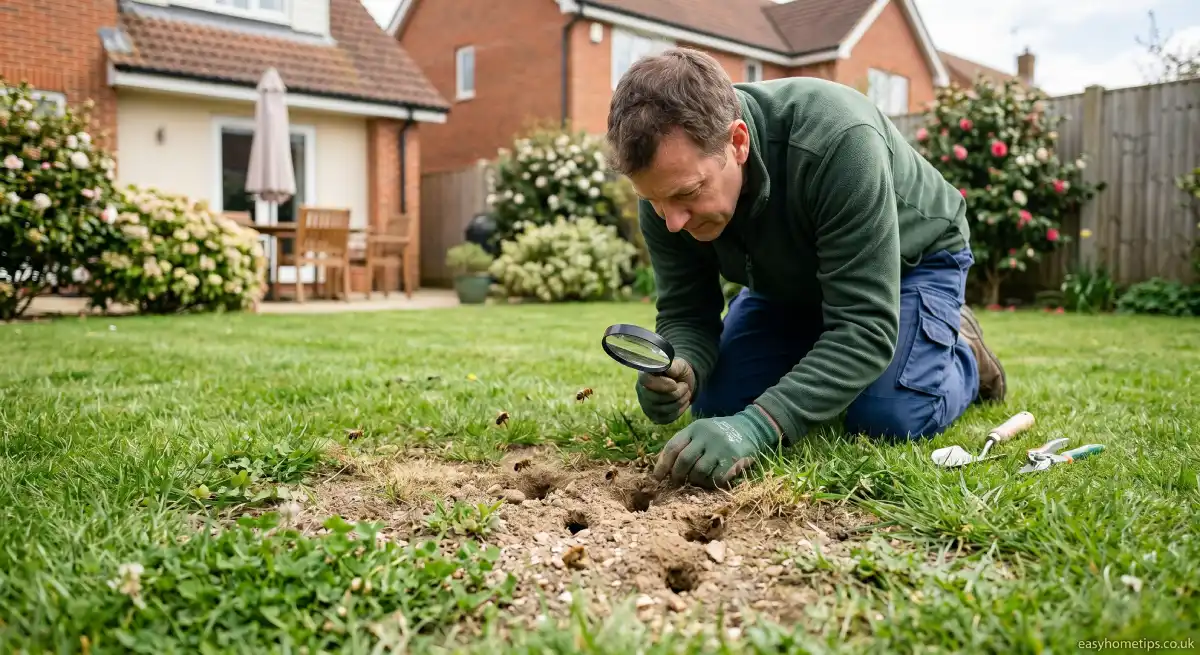
- Small mounds of loose dirt with a central hole (about the size of a pencil)
- Bees hovering low over the ground, especially in spring
- Multiple holes clustered in a 1–3 foot radius
- Bees flying in and out of the same holes repeatedly
If you see these signs during late spring to early summer, you almost certainly have ground-nesting bees rather than yellow jackets (which are more common in late summer and fall).
How to Get Rid of Ground Bees Naturally (Best First Steps)
If you’re looking for ways on how to get rid of ground bees without chemicals, you have several powerful options. Natural bee removal is always the preferred starting point, especially since many ground bee species are beneficial pollinators.
1. Water Your Lawn Regularly
This is the easiest fix. Ground bees prefer dry soil for nesting. By keeping your lawn consistently moist, you make the area uninhabitable for them.
- Water the affected areas deeply 2–3 times per week
- Focus on the zones where you’ve spotted bee burrows
- Continue for at least 2–3 weeks to discourage new nesting
2. Improve Lawn Density
Thick, healthy grass is a natural deterrent. Ground bees need access to bare soil to dig. If you overseed thin areas and maintain dense turf, they’ll struggle to set up nests.
- Overseed bare patches in fall or early spring
- Apply a layer of mulch over garden beds
- Use ground covers like clover or creeping thyme in garden areas
3. Use Cinnamon or Vinegar
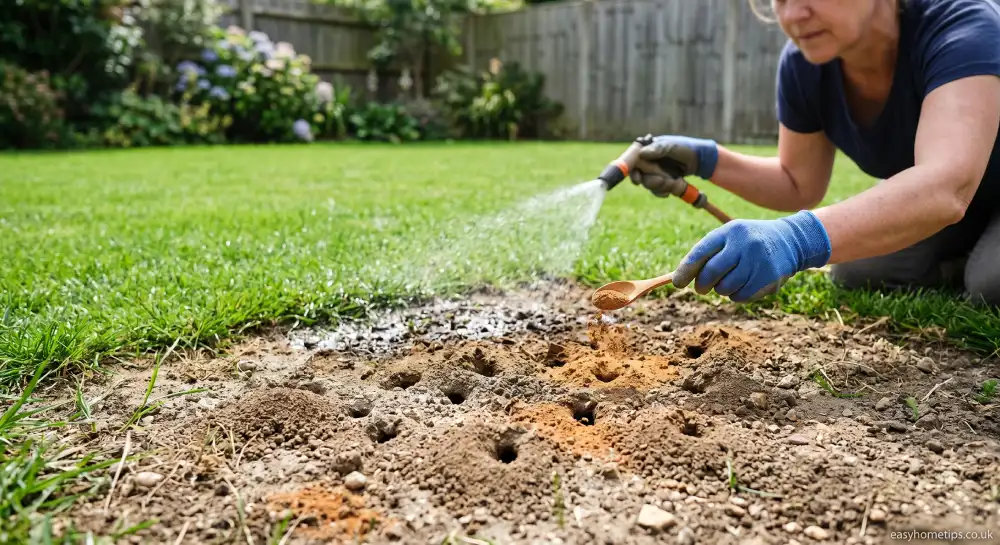
Both work as natural bee repellents. Sprinkle ground cinnamon directly around nest entrance holes each morning for a week. Alternatively, pour a mixture of equal parts white vinegar and water into the burrow entrance at night when bees are inactive.
How to Get Rid of Ground Bees With Proven Chemical Methods
Sometimes natural methods aren’t enough, especially for a large bee infestation in the yard. When that’s the case, targeted chemical treatment can be your smartest move.
Dust Insecticides
Insecticidal dust (such as carbaryl or permethrin-based products) is one of the most effective treatments for underground bee nests. Dust products work well because they penetrate the burrow and coat the bee as it enters and exits.
How to apply:
- Wait until dusk or nighttime, when bees are in the nest
- Apply dust directly into the nest opening
- Do not block the entrance yet — let bees move through the dust
- Repeat after 3–5 days if activity continues
Liquid Insecticide Sprays
Pyrethrin-based sprays or bifenthrin sprays can be applied directly to the soil surface around nest entrances. These are widely available at garden centers.
- Apply in the evening for best results
- Soak the soil around the burrow openings
- Wear protective clothing during application
⚠️ Safety Note: Always read product labels carefully and keep children and pets away from treated areas until the product dries completely.
Ground Bee Removal Methods: A Quick Comparison
Here’s a handy comparison of the most popular methods, so you can choose what works best for your situation:
| Method | Effectiveness | Safety | Cost | Best For |
|---|---|---|---|---|
| Regular Watering | Medium | Very Safe | Free | Small infestations |
| Cinnamon/Vinegar | Low–Medium | Very Safe | Low ($2–5) | Mild infestations |
| Lawn Overseeding | High (long-term) | Very Safe | Medium ($10–30) | Prevention |
| Insecticidal Dust | Very High | Use with care | Low ($8–15) | Large infestations |
| Pyrethrin Spray | High | Moderate | Low ($10–20) | Active bee colonies |
| Professional Exterminator | Very High | Safe (pros handle it) | High ($150–$400) | Severe infestations |
When to Call a Professional for Ground Bee Removal
Most ground bee problems can be handled with DIY methods. But sometimes, calling a professional pest control service is the smartest choice.
Consider professional help if:
- You’re dealing with yellow jackets or ground hornets (which are far more aggressive)
- The infestation is very large or spread across multiple areas
- Someone in your household has a bee sting allergy
- DIY methods haven’t worked after 2–3 treatment cycles
A licensed pest control technician can correctly identify the species, use commercial-grade treatments, and ensure the nest is fully eliminated. The average cost for professional bee nest removal ranges from $150 to $400, depending on location and nest size.
How to Prevent Ground Bees From Coming Back
Once you’ve dealt with the immediate problem, you’ll want to make sure those bees don’t return next season. Here are the most effective ground bee prevention strategies:
Long-Term Prevention Tips
- Maintain a dense, healthy lawn — thick grass blocks access to soil
- Mulch all bare garden areas — 2–3 inches of mulch removes their favorite nesting spots
- Fix drainage issues — improve soil moisture to keep it consistently damp
- Avoid over-tilling — disturbed, loose soil is an open invitation for ground-nesting insects
- Apply a pre-emergent treatment in early spring before nesting season begins
Seasonal Timing Matters
Most ground bee species are active from March through June. This is your window to act. Treat problem areas in late winter or early spring, before the bee nesting season kicks off, for maximum prevention impact.
Safe Ground Bee Removal Around Kids and Pets
If you have young children or pets running around the yard, safety becomes your top priority when figuring out how to get rid of ground bees.
Kid- and Pet-Safe Options
- Boiling water: Pouring boiling water directly into the burrow at night is chemical-free and surprisingly effective. Repeat daily for one week.
- Diatomaceous earth (food grade): Sprinkle this natural powder around nest entrances. It damages the bees’ exoskeletons without toxic chemicals. It’s safe around kids and pets once it settles.
- Temporary fencing: While treatment is ongoing, fence off the affected area to keep curious kids and pets away.
Avoid using chemical insecticides near sandboxes, play areas, or vegetable gardens. Always opt for the mildest effective method first.
FAQ: How to Get Rid of Ground Bees
1. What is the fastest way to get rid of ground bees?
The fastest method is applying insecticidal dust directly into the burrow entrance at night. This contacts bees as they move in and out, and can significantly reduce the bee colony in the ground within 48–72 hours. For the very fastest results, combine dust treatment with a follow-up spray of pyrethrin around the nest perimeter.
2. Will vinegar kill ground bees?
Vinegar won’t kill ground-nesting bees outright, but it does work as a deterrent. A 50/50 white vinegar and water solution poured into burrow entrances disrupts their environment enough to discourage nesting. It works best as a preventive measure or for very small infestations, rather than as a cure for a large underground bee nest.
3. How do I know if I have ground bees or yellow jackets?
Ground bees (like mining bees or digger bees) are typically fuzzy, move slowly, and are active in spring. Yellow jackets are smooth, shiny, wasp-like, and become aggressive if disturbed — especially in late summer. Yellow jacket nests also tend to be larger and deeper. If you’re unsure, keep your distance and contact a pest control professional for safe identification.
4. Is it safe to leave ground bees alone?
In many cases, yes. Most solitary ground bees are harmless beneficial pollinators that will naturally abandon their nests after 4–6 weeks. If the nest is far from foot traffic and no one in your household has a bee sting allergy, leaving them alone is actually the best approach. However, if the nest is near a play area, driveway, or entryway, removal is the smarter choice.
5. Do ground bees come back to the same spot every year?
Unfortunately, yes — ground bees often return to the same spots year after year if conditions remain favorable. This is because nesting females leave behind chemical cues that attract future generations to the same site. The best way to prevent this is to change the nesting environment: keep soil moist, improve lawn density, and apply mulch to make the area unsuitable for ground bee nesting.
Conclusion: Take Action Against Ground Bees the Smart Way
Dealing with a bee infestation in your yard doesn’t have to be stressful. Now that you know how to get rid of ground bees using everything from simple watering to targeted insecticidal dust, you have a full toolkit at your disposal.
Start with the gentlest method that fits your situation. If you have a small, low-traffic infestation, try regular watering or cinnamon first. For larger or more stubborn underground bee nests, move to chemical treatments or call a professional.
Most importantly, act early. Treating the problem in early spring, before the bee nesting season is in full swing, will save you time, money, and hassle. With the right approach, you can reclaim your yard — safely, effectively, and without harming your family or the environment.