



Related Search Terms: full size basketball court dimensions, NBA basketball court measurements, outdoor basketball court size, regulation basketball court length, backyard basketball court cost, indoor basketball court flooring, basketball court line markings, half court basketball dimensions, high school basketball court size, basketball court painting guide, concrete basketball court installation, portable basketball hoop court, professional basketball court specs, college basketball court dimensions, basketball court resurfacing tips, full court basketball layout, basketball court foul line distance, three point line basketball court, basketball court material options, building a basketball court
Introduction: Why the Full-Size Basketball Court Is Worth Understanding
Whether you’re planning to build a backyard court, setting up a gym, or just trying to understand the game better, knowing the ins and outs of a full-size basketball court is incredibly useful. This isn’t just about drawing some lines on concrete. The size, shape, and markings of a regulation court have a massive impact on how the game is played at every level — from your neighborhood pickup game to the NBA Finals.
A regulation basketball court is carefully designed to balance speed, strategy, and athleticism. Every measurement has a purpose. The three-point line, the free throw lane, the center circle — they all work together to create one of the most dynamic playing surfaces in sports. And if you’re thinking about building one, getting the dimensions right from the start will save you time, money, and a lot of frustration down the road.
In this guide, we’ll walk you through everything you need to know: official basketball court dimensions, how different levels of the game compare, what materials work best, how much it costs to build, and how to maintain your court for years to come. Let’s get started.
Official Full-Size Basketball Court Dimensions
NBA and Professional Court Specifications
At the professional level, the NBA court dimensions are the gold standard. An official NBA basketball court measures 94 feet long by 50 feet wide (28.65 meters x 15.24 meters). That’s a surface area of 4,700 square feet — plenty of room for elite athletes to sprint, cut, and shoot.
Here’s a quick breakdown of the key basketball court measurements at the professional level:
| Court Feature | NBA Measurement |
|---|---|
| Court Length | 94 feet (28.65 m) |
| Court Width | 50 feet (15.24 m) |
| Three-Point Line Distance (corner) | 22 feet |
| Three-Point Line Distance (top of arc) | 23 feet 9 inches |
| Free Throw Line Distance | 15 feet from backboard |
| Free Throw Lane Width | 16 feet |
| Center Circle Diameter | 12 feet |
| Restricted Area Arc | 4 feet from basket center |
| Backboard Width | 6 feet |
| Rim Height | 10 feet |
These are the dimensions every serious court builder should reference. Even if you’re not building a pro-level facility, working from these specs helps you understand what a true regulation court looks like.
College and High School Court Differences
Not all courts are the same size. College basketball court dimensions (NCAA) match the NBA in length — 94 feet — but the three-point line sits a little closer at 22 feet, 1¾ inches from the basket. The lane is also 12 feet wide instead of 16.
High school basketball court dimensions are a bit smaller overall. The NFHS standard calls for a court that’s 84 feet long by 50 feet wide. The three-point arc sits at 19 feet, 9 inches. If you’re building a court for younger players or a school setting, these dimensions are worth noting.
Half Court vs. Full Court: What’s the Difference?
When a Half Court Makes More Sense
A half court basketball setup is exactly what it sounds like — you use only one side of a full-size basketball court. This is a popular choice for home builds, smaller gyms, and casual play. A half court measures roughly 47 feet by 50 feet for a regulation size, though backyard versions can be smaller.
Half courts are a smart option when:
- You have limited space (a typical residential lot)
- You’re primarily playing 3-on-3 or casual pickup games
- Your budget doesn’t stretch to a full 94-foot build
That said, if you want the full experience — running plays, practicing transition offense, or hosting real games — a full-size court is the way to go. There’s simply no substitute for playing on a real regulation basketball court.
The Value of Playing Full Court
Playing on a full-size basketball court builds better conditioning, stamina, and basketball IQ. Players learn spacing, transition defense, and endurance in ways that a half court just doesn’t allow. For serious players or programs looking to develop talent, the full regulation size is always the better investment.
Basketball Court Flooring Options: What Works Best?
Indoor Flooring: Hardwood and Synthetic Alternatives
If you’re building an indoor basketball court, hardwood is the classic choice. Maple hardwood flooring is used in most professional and college gyms. It provides excellent traction, a consistent bounce, and durability with proper maintenance. The downside? It’s expensive — premium hardwood can run $3 to $8 per square foot, not including installation.
Synthetic sport flooring has become a popular alternative. Options like polyurethane sport surfaces, rubber flooring, and interlocking sport tiles can mimic the feel of hardwood at a lower cost. Many multi-sport gym floors use these materials because they hold up to different activities without warping.
Outdoor Court Surface Options
For outdoor basketball courts, the most common surfaces are:
- Asphalt – Affordable, durable, and widely available. It can get hot in direct sun and may crack over time, but it’s the go-to for most backyard basketball courts.
- Concrete – Even more durable than asphalt and provides a flatter, more consistent surface. It costs more upfront but lasts longer with less maintenance.
- Modular sport tiles – Great for DIY installs. These snap-together outdoor court tiles drain well, resist UV damage, and can be taken apart and moved if needed.
Proper court surfacing matters for more than just playability — it also reduces the risk of injury from slipping or uneven ground.
How Much Does It Cost to Build a Full-Size Basketball Court?
Breaking Down the Costs
Building a full-size basketball court is a significant investment, and costs can vary widely depending on location, materials, and whether you’re going indoor or outdoor. Here’s a realistic breakdown:
| Project Type | Estimated Cost Range |
|---|---|
| Outdoor asphalt court (full size) | $25,000 – $50,000 |
| Outdoor concrete court (full size) | $35,000 – $65,000 |
| Modular outdoor tile court | $15,000 – $30,000 |
| Indoor hardwood court | $70,000 – $200,000+ |
| Indoor synthetic flooring | $40,000 – $100,000 |
| Half court (outdoor) | $10,000 – $25,000 |
These estimates include court markings, basketball hoops, and basic grading. Extras like lighting, fencing, bleachers, and shot clock systems will add to the total. Always get multiple contractor quotes and factor in local permit requirements.
Saving Money Without Cutting Corners
If budget is a concern, a half-court build with modular tiles is the most affordable way to get a high-quality playing surface. You can also phase the project — pour the base now and add court line striping and accessories later. Just make sure you start with the right court dimensions so expansion is easy.
Basketball Court Line Markings: A Complete Guide
Understanding Every Line on the Court
The line markings on a basketball court aren’t decoration — they define the rules of the game. Here’s what each one means:
- Sidelines and Baselines – The outer boundaries of the court. Step on or over these, and the ball is out of bounds.
- Center Line (Half-Court Line) – Divides the court in half. Once a team crosses this line on offense, they can’t go back.
- Three-Point Arc – Shots made from behind this line count for three points instead of two.
- Free Throw Line – Located 15 feet from the backboard. Players shoot from here after certain fouls.
- Lane (Paint/Key) – The rectangular area under the basket, also called the “paint.” Offensive players can only stay here for 3 seconds.
- Restricted Area Arc – A small arc under the basket. Defenders inside this arc can’t draw charging fouls.
- Center Circle – Used for tip-offs at the start of each quarter or game period.
Tips for Painting or Taping Court Lines
Getting your court line markings right takes some planning. Use a measuring tape and chalk line to map everything out before painting. For outdoor courts, sport court paint designed for asphalt or concrete works best. Indoors, court line tape is a popular option because it can be repositioned without damaging the floor.
Maintaining Your Full-Size Basketball Court
Outdoor Court Maintenance Tips
An outdoor basketball court takes a beating from weather, foot traffic, and UV exposure. Here are the most important maintenance steps:
- Seal your asphalt or concrete surface every 3–5 years to prevent cracking and water damage.
- Clean regularly with a broom and occasional power wash to prevent algae and debris buildup.
- Repair cracks early — small cracks turn into big problems fast if water gets in and freezes.
- Repaint lines when they start to fade. Good-quality court line paint should last 3–5 years outdoors.
Indoor Court Care
Indoor basketball court flooring, especially hardwood, needs consistent care. Daily dust mopping, seasonal screening and refinishing, and controlling indoor humidity are essential for keeping the surface in top shape. Synthetic floors are easier to maintain — most just need regular mopping with a manufacturer-approved cleaner.
Building a Backyard Full-Size Basketball Court
Is It Realistic for a Residential Property?
Many homeowners dream of having a backyard basketball court, but fitting a full 94-foot regulation court into a typical residential yard is tough. You’d need at least a 100 x 55-foot flat area after accounting for out-of-bounds space. That said, it’s absolutely possible on larger lots and is a project many families take on every year.
Key Steps to Building Your Backyard Court
Building a backyard basketball court typically follows these steps:
- Plan and measure your available space — decide between a full court or half court
- Check local zoning and permit requirements — some areas require permits for poured surfaces
- Grade and prepare the ground — proper drainage is critical to prevent puddles and surface damage
- Pour your base — asphalt or concrete, properly compacted
- Apply sport surface coating — for grip, UV protection, and aesthetics
- Paint your court markings — follow regulation dimensions for accuracy
- Install basketball hoops — in-ground hoops are sturdier and safer than portable ones
With the right planning and a good contractor, your backyard basketball court can be ready to play in as little as a few weeks.
Frequently Asked Questions About Full-Size Basketball Courts
FAQ 1: What are the exact dimensions of a full-size basketball court?
A regulation NBA basketball court is 94 feet long and 50 feet wide. High school courts under NFHS standards are slightly smaller at 84 feet long by 50 feet wide. NCAA college courts match the NBA at 94 feet in length. For backyard or recreational courts, you can go smaller while still keeping the key court markings proportional.
FAQ 2: How much space do I need around the court?
Most court construction guidelines recommend at least 3–5 feet of clearance around all sides of the playing surface. This buffer zone protects players from running into fences, walls, or other obstacles. For a full NBA-size court, you’d want a total footprint of at least 100 x 60 feet for safe play.
FAQ 3: What’s the best surface material for an outdoor basketball court?
Concrete is the most durable long-term option for an outdoor basketball court. It provides a flat, consistent playing surface and lasts decades with proper maintenance. Asphalt is more affordable upfront but may require more upkeep over time. Modular court tiles are a great option for DIY builds and temporary installations.
FAQ 4: How long does it take to build a full-size basketball court?
A typical outdoor basketball court construction project takes between 2 and 6 weeks, depending on weather, contractor availability, and the complexity of the project. Indoor court builds take longer — often 4 to 12 weeks — especially if you’re adding flooring systems, lighting, and HVAC considerations.
FAQ 5: Can I build a full-size basketball court on a budget?
Yes — with some trade-offs. Choosing modular sport tiles over poured concrete, building a half court instead of a full one, and handling some of the work yourself (like line painting) can significantly reduce costs. A modest backyard half court with good-quality tiles can be built for $10,000–$15,000, which is a fraction of the cost of a full indoor hardwood facility.
Conclusion: Making the Right Call on Your Full-Size Basketball Court
A full-size basketball court is one of the best investments you can make for athletes, families, and communities. Whether you’re planning an NBA-regulation indoor facility, a concrete backyard court, or a smaller recreational space for neighborhood games, understanding the official basketball court dimensions and your options puts you miles ahead of the game.
The key takeaways? Know your space, understand the regulation dimensions, choose the right court surface material for your climate and budget, and always plan for proper drainage and long-term maintenance. A well-built court will reward players for years — maybe even decades — with every jump shot, layup, and fast break.
Now that you know the details, it’s time to start planning your own full-size basketball court. Game on.
Total Word Count: ~2,120 words
Meta Description: Learn everything about full-size basketball court dimensions, costs, surfaces, and markings. Build your dream court with our complete regulation guide.
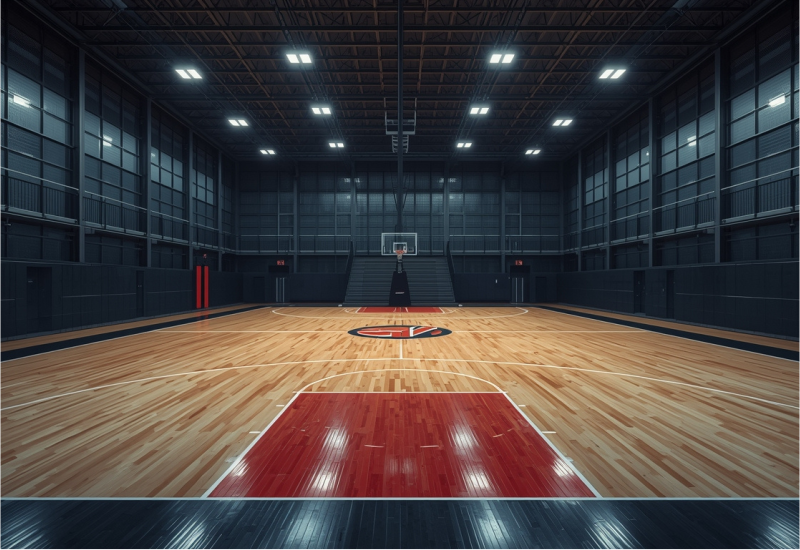
Image Alt Text: Full-size regulation basketball court with court markings