



Have you ever flipped a light switch at the top of the stairs only to find you can’t turn it off at the bottom — because someone wired it wrong? Or maybe you’re staring at a tangle of wires in a junction box wondering how it all connects? Understanding the electrical diagram 3 way switch is one of the most practical skills a homeowner or DIY enthusiast can have. And honestly, once it clicks, it’s not nearly as confusing as it looks.
A 3 way switch wiring setup lets you control one light (or a group of lights) from two different locations. Think stairwells, long hallways, or large rooms with entries on both ends. This guide breaks down everything you need to know — from how the three way switch circuit works, to reading the actual wiring schematic, to avoiding the most common mistakes people make. Let’s get into it.
What Is a 3 Way Switch and How Does It Work?
Before you can read an electrical diagram 3 way switch, you need to understand what makes a three way switch different from a regular single-pole switch.
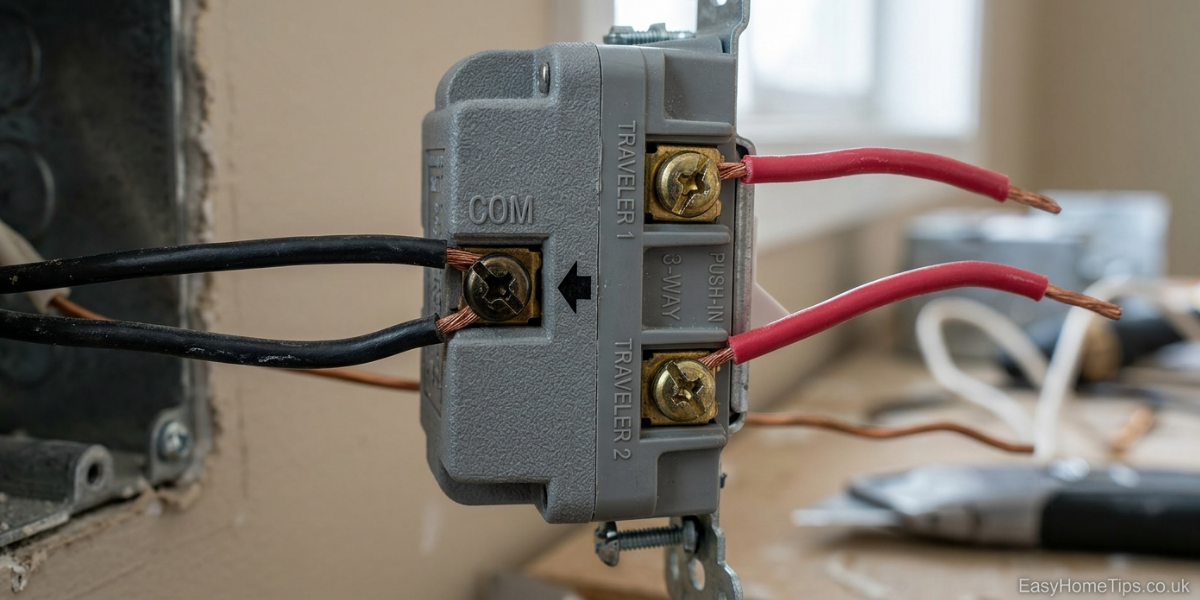
A standard switch has two terminals — it’s either ON or OFF. A 3 way switch has three terminals: one common terminal (usually darker or labeled “COM”) and two traveler terminals. The common terminal is the key player. It either connects to the power source (hot wire coming in) or to the light fixture, depending on its position in the circuit.
The two traveler wires run between the two switches. They create the pathway that allows either switch to break or complete the circuit, regardless of what the other switch is doing. This is why you can turn the light on or off from either end of a hallway.
Here’s a simple way to think about it: imagine the two traveler wires are two roads between two towns. The common terminal at each switch decides which road is being used. When both switches choose the same road, the circuit is complete and the light turns on. When they pick different roads, the circuit breaks and the light goes off.
Understanding this basic concept makes reading any 3 way switch wiring diagram much easier. The diagram is just a visual map of these connections — showing you exactly where each wire needs to go.
Reading an Electrical Diagram 3 Way Switch
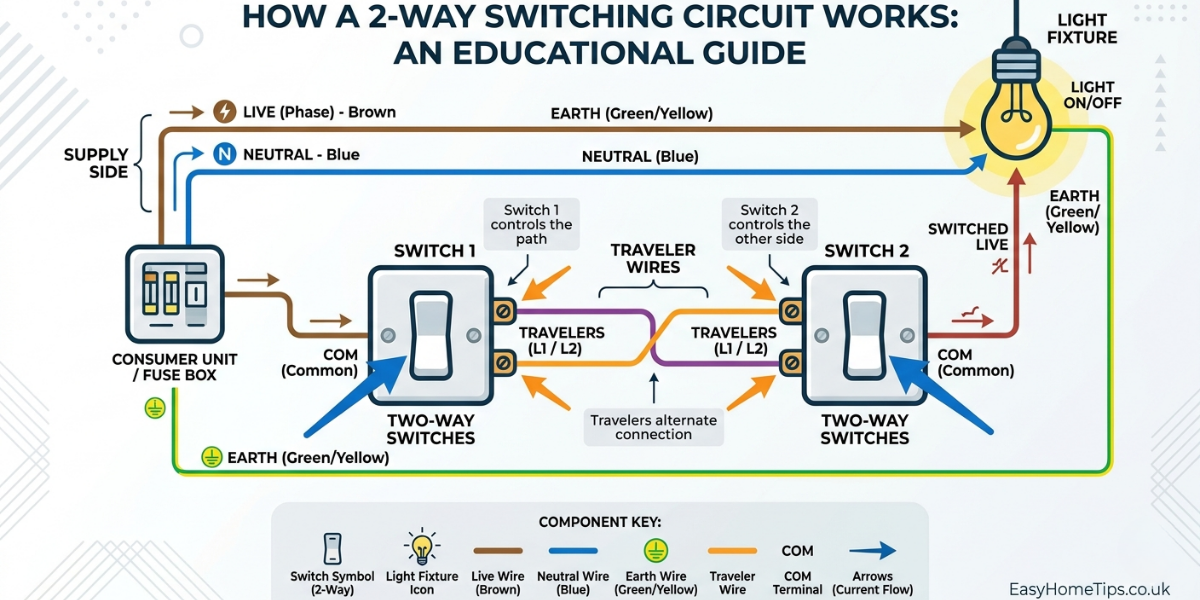
An electrical diagram 3 way switch might look intimidating at first glance, but it follows a consistent logic. Once you know what the symbols and lines represent, it becomes like reading a simple road map.
Key Components in the Diagram
Here’s what you’ll typically see in a 3 way switch wiring schematic:
| Symbol / Component | What It Represents |
|---|---|
| Solid black line | Hot wire (usually black) |
| White line (sometimes marked black at ends) | Neutral wire |
| Green or bare copper line | Ground wire |
| Two traveler lines | Wires running between both switches |
| “COM” terminal | Common terminal — connects to hot or light |
| Box with switch symbol | Each 3 way switch location |
| Circle with lines | Light fixture |
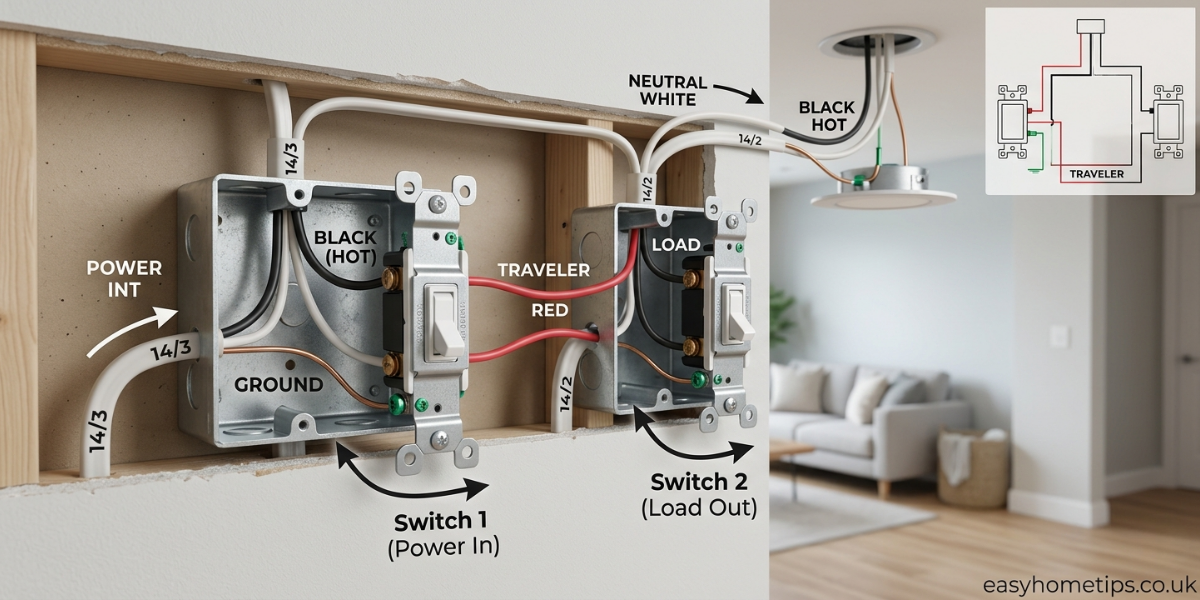
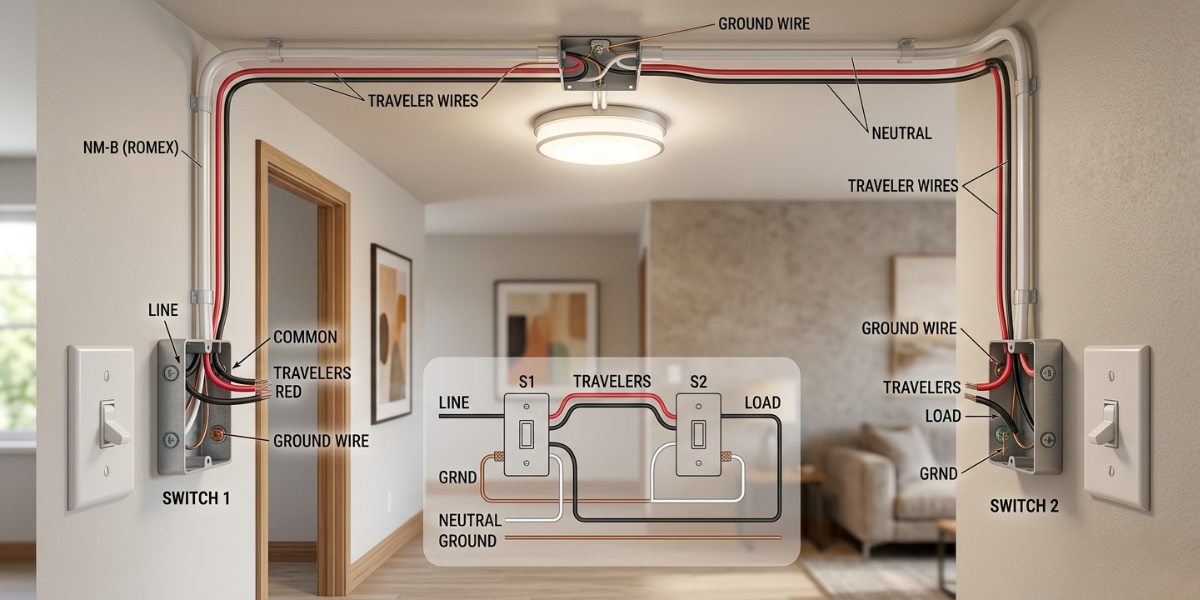
In most residential 3 way switch wiring diagrams, power enters at the first switch box. The black (hot) wire connects to the common terminal of Switch 1. The two traveler wires run to Switch 2. The common terminal of Switch 2 then connects to the light fixture, and the neutral (white) wire returns directly from the fixture to the power source.
Some diagrams show power entering at the light fixture instead of the switch. This is called the “dead end” or “California” 3 way switch wiring method, and it’s more common in older homes. In this case, the wiring path looks different, but the switch connections follow the same logic.
Always look for the common terminal first when reading any 3 way switch circuit diagram — it anchors everything else.
The Three Main Wiring Methods for a 3 Way Switch
There isn’t just one way to wire a 3 way switch. Depending on where the power enters the circuit, your electrical diagram 3 way switch will look different. Here are the three main methods:
Method 1: Power at Switch 1 (Most Common)
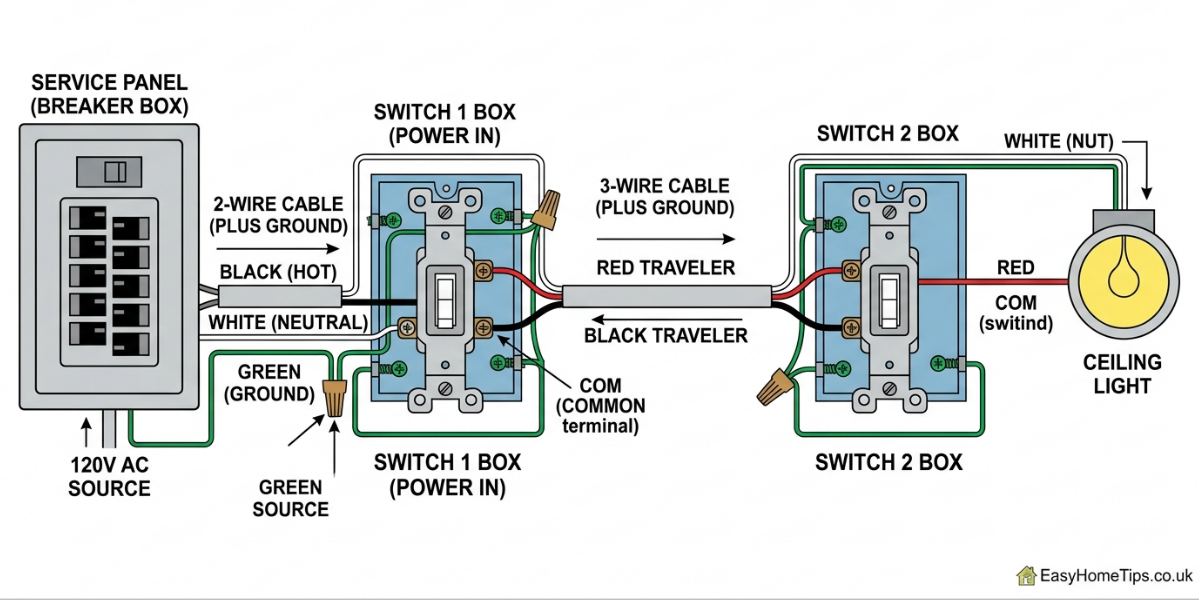
This is the most straightforward layout and what you’ll find in most modern homes.
- Power (hot + neutral) enters at Switch Box 1
- Black wire connects to the COM terminal of Switch 1
- Two traveler wires (often red and black in a 3-wire cable) run from Switch 1 to Switch 2
- At Switch 2, travelers connect to the traveler terminals
- The COM terminal of Switch 2 connects via a black wire to the light
- The neutral wire runs through (or is pigtailed) from the panel all the way to the fixture
This setup is clean and easy to follow. Most 3 way switch wiring diagrams for new construction use this method.
Method 2: Power at the Light Fixture
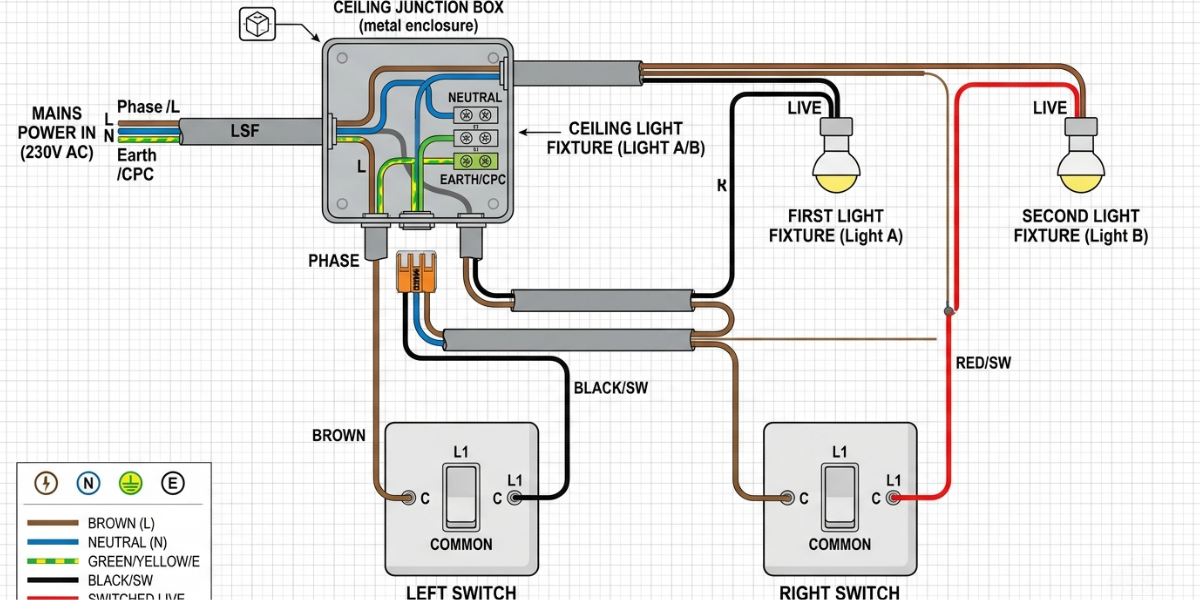
In this layout, power enters the ceiling box where the light is installed.
- The hot wire goes from the fixture box, back to Switch 2’s COM terminal
- Travelers run between the two switches
- The neutral stays at the light and doesn’t need to travel through the switch boxes
- The NEC wiring code (National Electrical Code) now requires a neutral wire in switch boxes — this older method sometimes doesn’t meet current code
Method 3: Power at Switch 2 (Far Switch)
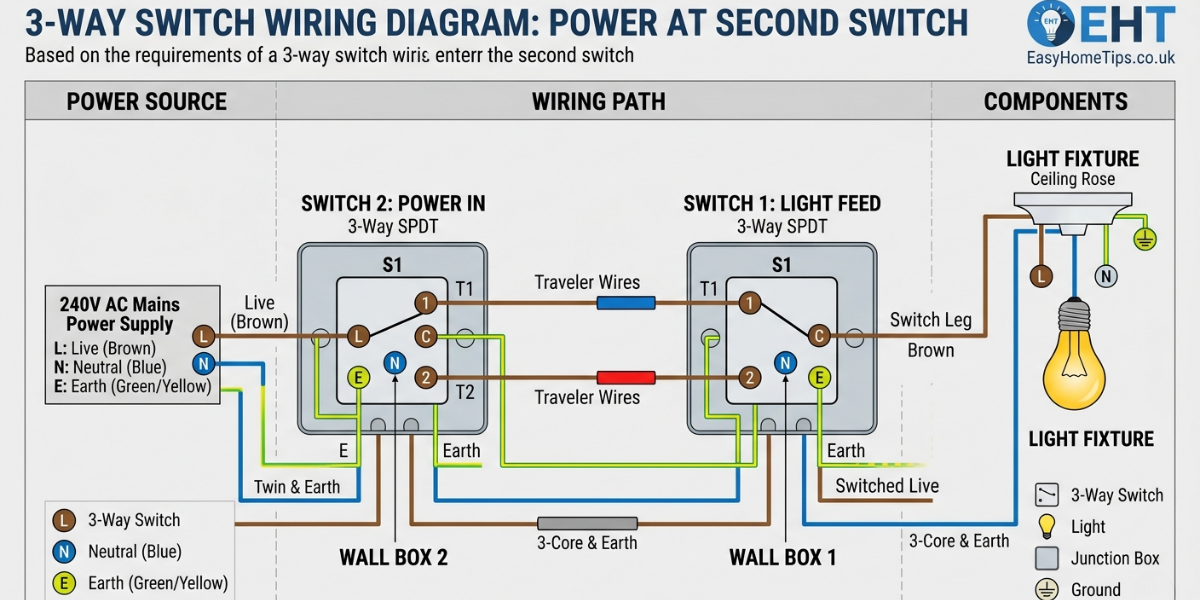
Similar to Method 1, but reversed. Power enters at the switch farthest from the fixture.
- Travelers run from Switch 2 back to Switch 1
- Switch 1’s COM connects to the light
Knowing which method applies to your situation helps you pick the right 3 way switch wiring schematic before you start.
Wire Colors and What They Mean
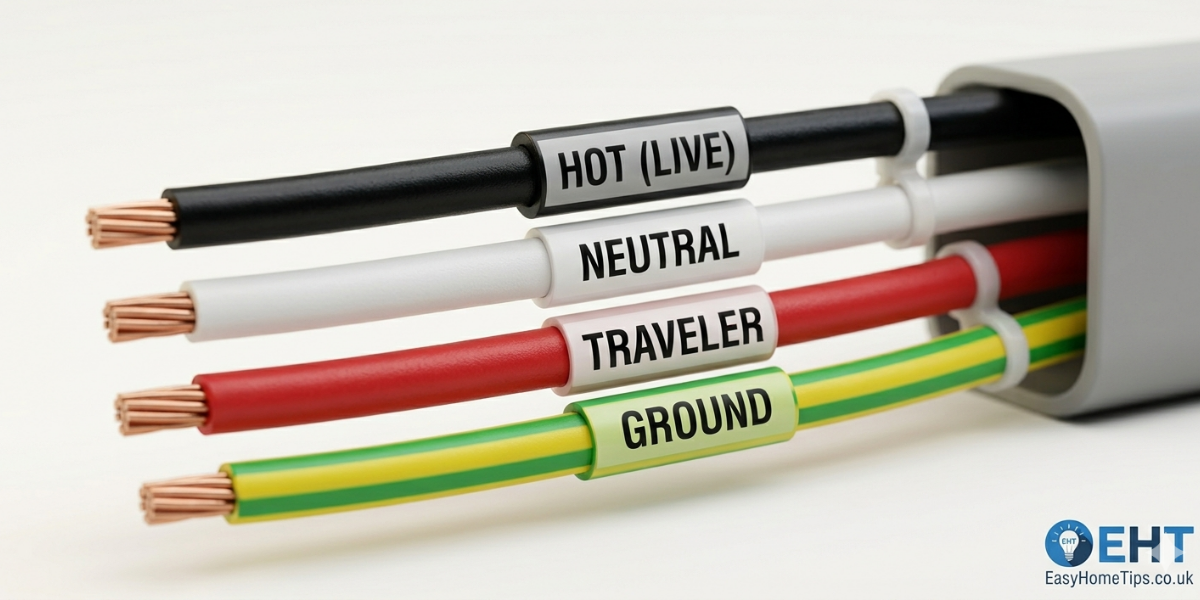
Wire color coding is a crucial part of understanding any electrical diagram 3 way switch. Mixing up wire colors is one of the most common causes of wiring failures and safety hazards.
Here’s a breakdown of standard 3 way switch wiring color codes in the US:
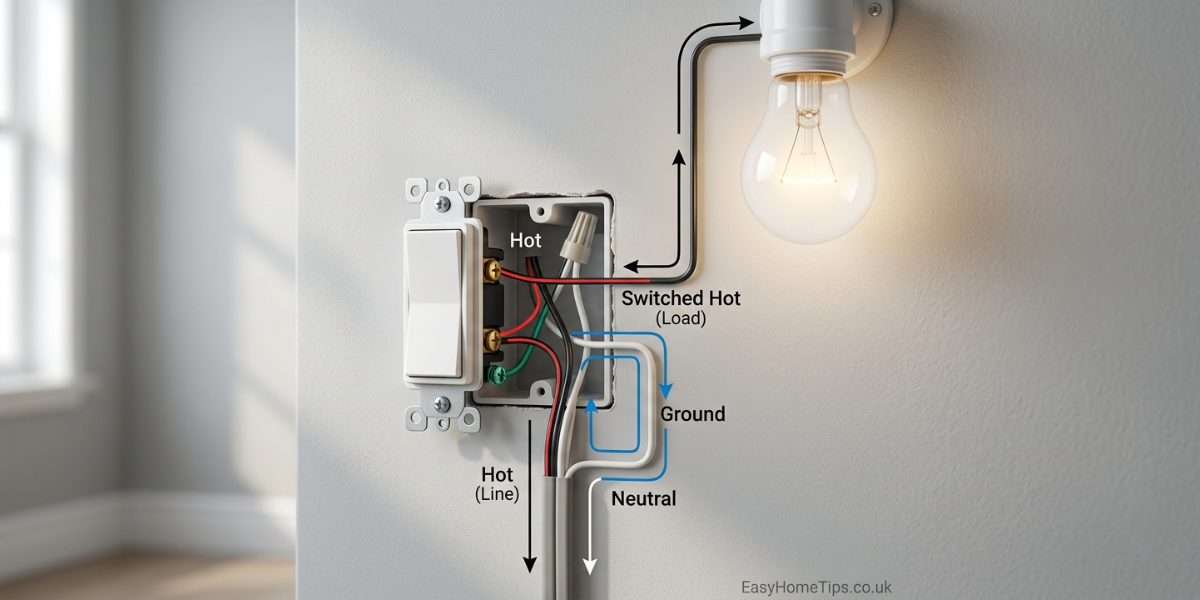
- Black wire — Always the hot (live) wire. Connects to the common terminal at the power end.
- White wire — Neutral wire. Should run straight from the power source to the fixture without interruption. If used as a hot wire (which sometimes happens in 3-wire cable setups), it must be marked with black tape at both ends.
- Red wire — One of the traveler wires between the two switches.
- Black wire (second one in 3-wire cable) — The second traveler wire.
- Green or bare copper — Ground wire. Must connect to the ground terminal on every switch and fixture.
When your 3 way switch requires a 3-wire cable (also called 14/3 or 12/3 depending on circuit amperage), it contains black, white, red, and ground wires. The red and black become your two traveler wires, while white handles the neutral.
If you’re working in an older home with outdated aluminum wiring or non-standard colors, always verify with a non-contact voltage tester before touching anything.
Step-by-Step Guide to Wiring a 3 Way Switch
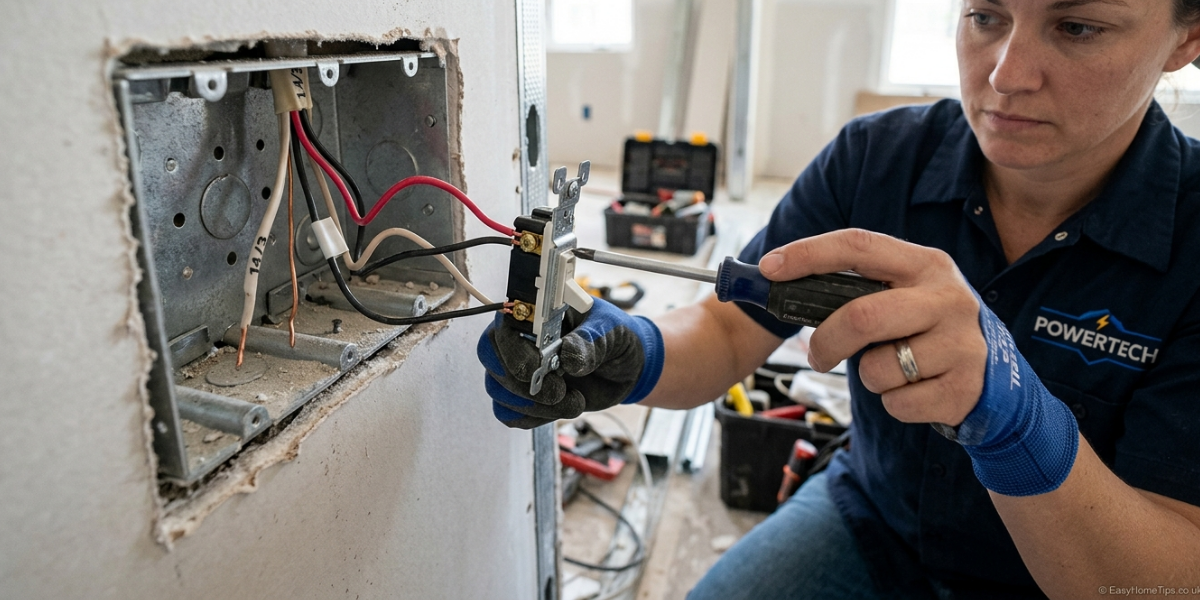
Now that you can read an electrical diagram 3 way switch, here’s how to actually do the wiring safely and correctly.
Safety First
- Turn off the circuit breaker for the circuit you’re working on
- Use a non-contact voltage tester to confirm power is off
- Never assume a wire is dead just because a switch is off
Tools You’ll Need
- Non-contact voltage tester
- Wire stripper
- Needle-nose pliers
- Flathead and Phillips screwdrivers
- Electrical tape and wire nuts
- 3 way switches (two of them)
- 14/3 or 12/3 NM cable (depending on your circuit)
Wiring Steps (Power at Switch 1)
- Run 14/2 cable from the panel to Switch Box 1
- Run 14/3 cable from Switch Box 1 to Switch Box 2
- Run 14/2 cable from Switch Box 2 to the light fixture
- At Switch 1: Connect the black (hot) wire from the panel to the COM terminal. Connect the red and black travelers to the two traveler terminals. Connect ground wires together and to the switch.
- At Switch 2: Connect red and black travelers to the traveler terminals. Connect the black wire going to the light to the COM terminal. Connect grounds.
- At the fixture: Connect black to the fixture’s black, white to white, and ground to ground.
- Restore power and test
If the light doesn’t work or only works from one switch, double-check your common terminal connections — that’s almost always the culprit.
Common Mistakes to Avoid When Wiring a 3 Way Switch
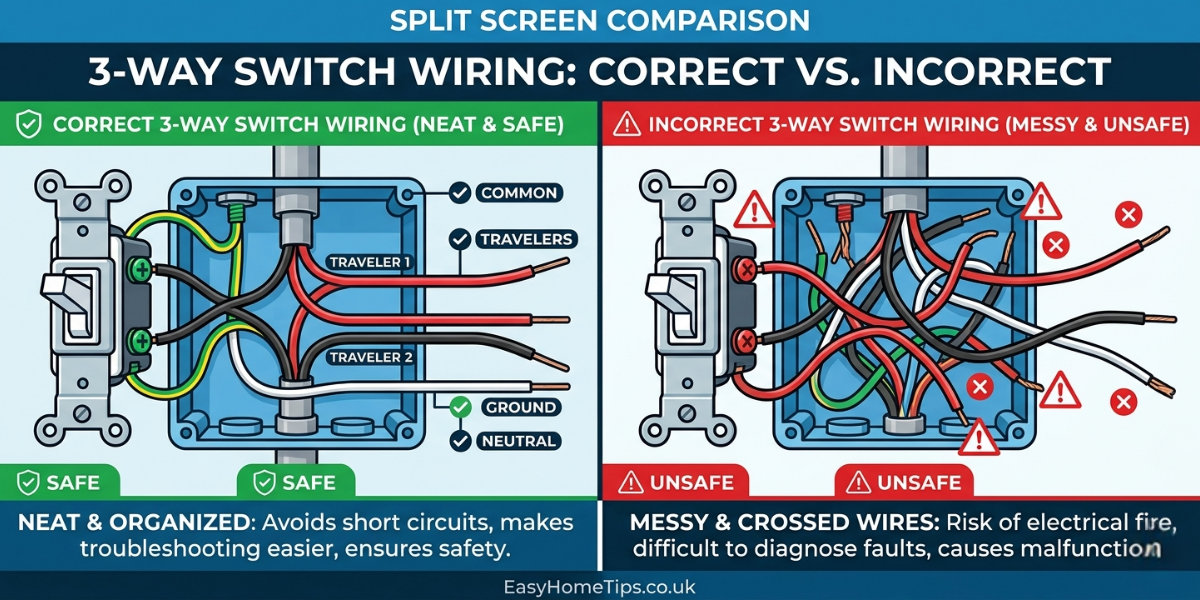
Even experienced DIYers make mistakes with 3 way switch circuit wiring. Here are the ones that show up most often:
Connecting travelers to the wrong terminals is the number one issue. The travelers must go to the traveler terminals, not the common. The COM terminal only ever connects to either the hot wire or the wire going to the light.
Not marking re-purposed white wires causes confusion later. When a white wire is used as a hot wire in a switch leg, it must be marked with black electrical tape at both ends. This is required by the NEC electrical code.
Skipping the ground wire is both a code violation and a safety hazard. Always connect the bare copper ground to the green screw on each switch.
Using the wrong cable type is another common error. Standard two-wire cable (14/2) doesn’t work between the two switches. You need three-wire cable (14/3) for the traveler wires.
Reversing common terminals at one of the switches causes the light to work “backwards” — it’ll be on when it should be off. Double-check which terminal is labeled COM on both switches.
Troubleshooting a 3 Way Switch Circuit
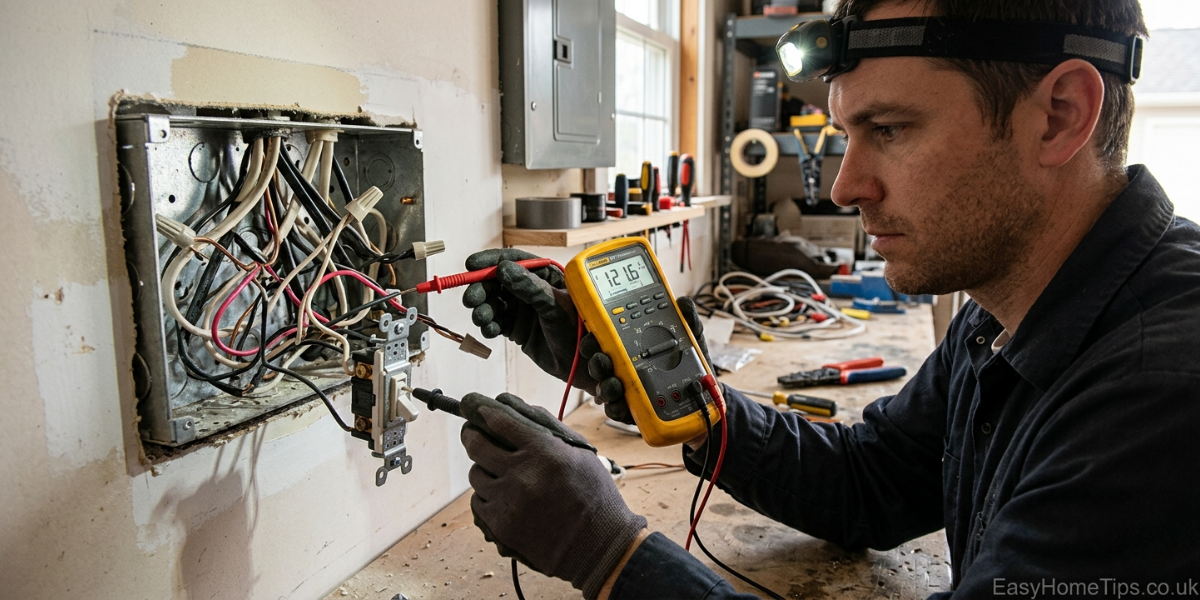
If your 3 way switch wiring isn’t working after installation, don’t panic. Troubleshooting is straightforward when you work systematically.
Quick Troubleshooting Checklist
- Light doesn’t turn on at all: Check that breaker is on, verify COM connections at both switches, test the bulb
- Only one switch controls the light: Travelers are likely connected to the wrong terminals at one switch
- Light flickers: Loose connection at a wire nut or terminal screw — tighten everything
- Switch feels warm: Overloaded circuit or wrong switch type — verify the switch’s amperage rating
- Breaker trips immediately: A wire is touching ground or neutral somewhere it shouldn’t be
Use a multimeter to test continuity through the travelers if you’re not sure which wire is which. Set it to continuity mode and probe each wire at both ends — this tells you exactly which wire goes where, regardless of color.
3 Way Switch Wiring With a Dimmer
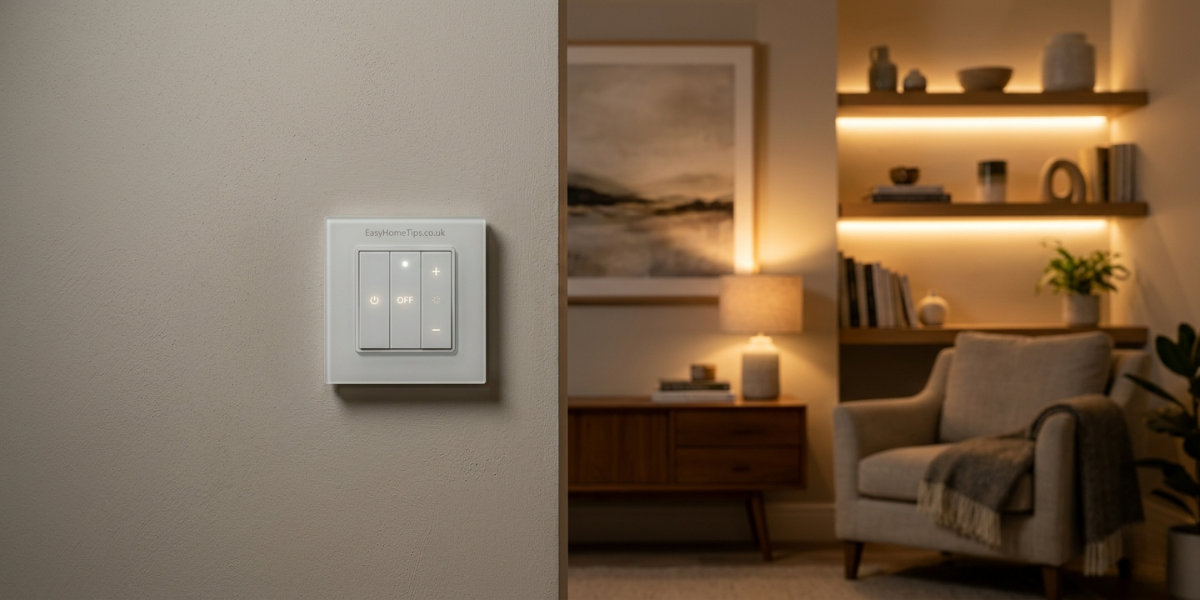
Many people want to replace one of their 3 way switches with a 3 way dimmer switch. This works, but there are important rules.
Only one switch can be a dimmer — the other must remain a standard 3 way switch. Putting dimmers at both ends causes flickering and can damage the dimmer module.
Make sure the dimmer is rated for 3 way use — not all dimmers are. Look for one labeled “3-way compatible” or designed to work with a companion switch.
The wiring diagram for a 3 way dimmer switch is largely the same as a standard setup — the COM and traveler terminals connect the same way. Just follow the manufacturer’s diagram included with your specific dimmer, as some brands have slightly different configurations.
LED bulbs also require a LED-compatible dimmer. Using an old incandescent dimmer with LEDs causes flickering or buzzing — always check compatibility.
Frequently Asked Questions About 3 Way Switch Wiring
Q1: What happens if I connect the travelers to the wrong terminals on a 3 way switch?
If the traveler wires are connected to the COM terminal or to each other incorrectly, the switch will either not work at all or only one of the two switches will control the light. The fix is to identify the COM terminal (usually marked or a different color screw) and make sure the travelers connect only to the two matching traveler terminals.
Q2: Can I use a regular (single-pole) switch in a 3 way circuit?
No. A single-pole switch only has two terminals and cannot function in a 3 way switch circuit. You must use switches specifically designed and labeled as 3 way switches, which have three terminals: one common and two travelers.
Q3: Do I need a neutral wire in the switch box for a 3 way switch?
Traditional 3 way switch wiring doesn’t require a neutral at the switch box — only the hot, travelers, and ground are needed. However, the 2023 NEC code requires a neutral conductor in switch boxes for new construction and renovations. This allows for smart switches and dimmers that need neutral to operate. Check your local code requirements.
Q4: How do I know which terminal is the “common” terminal on a 3 way switch?
The common terminal is usually identified in one of three ways: it’s labeled “COM” or “COMMON” on the switch body, it has a black or darker-colored screw (while traveler screws are gold or brass), or it’s a single terminal on one end while the two travelers are together on the other end. Always check the packaging or diagram that came with your specific switch.
Q5: Can I wire multiple lights on a 3 way switch circuit?
Yes, you can control multiple lights with a 3 way switch setup. The additional lights are simply wired in parallel — connected between the same hot and neutral wires as the first fixture. All fixtures will turn on and off together from either switch. Just make sure the total wattage of all fixtures doesn’t exceed the switch and circuit’s rated capacity.

Conclusion
Understanding the electrical diagram 3 way switch opens up a whole world of DIY electrical work you can tackle safely and confidently. Once you know how the common terminal, traveler wires, and circuit path all connect, the diagram stops looking like a mystery and starts making perfect sense.
Whether you’re installing a brand-new 3 way switch setup in a hallway, replacing an old switch, or troubleshooting why one switch stopped working, following the right wiring schematic makes all the difference. Always start by turning off power, double-check your wire color codes, and identify the COM terminal before connecting anything.
Electrical work doesn’t have to be intimidating — it just has to be done right. With the right 3 way switch wiring diagram in hand and a little patience, you’ve got this.

Other Articles

3 Way Switch Wiring: Easy Step-by-Step Instructions