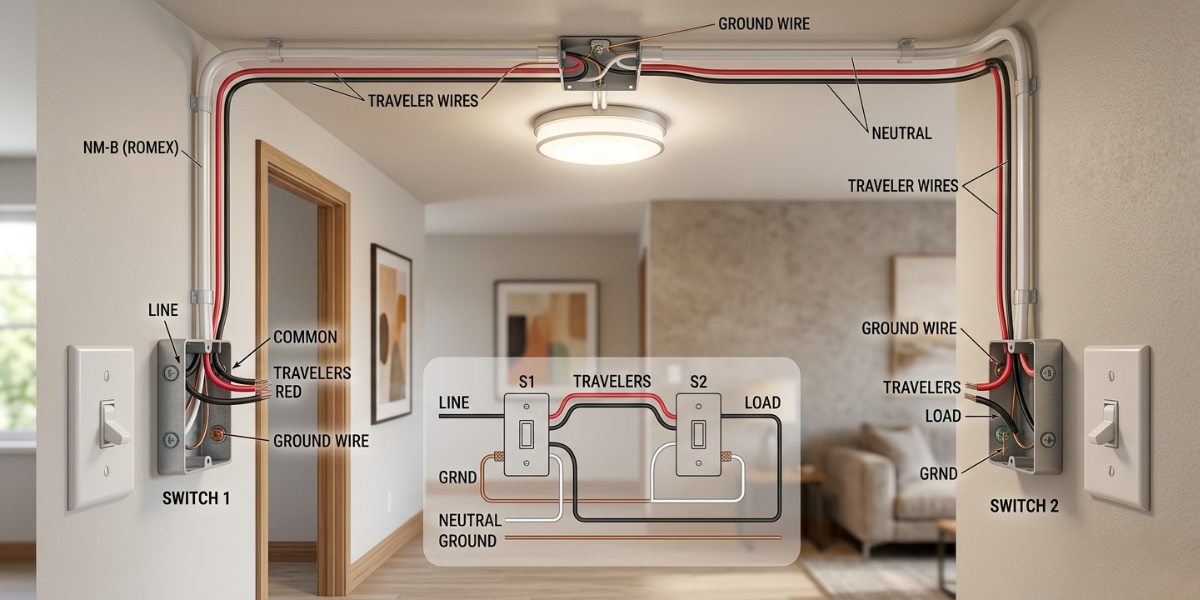



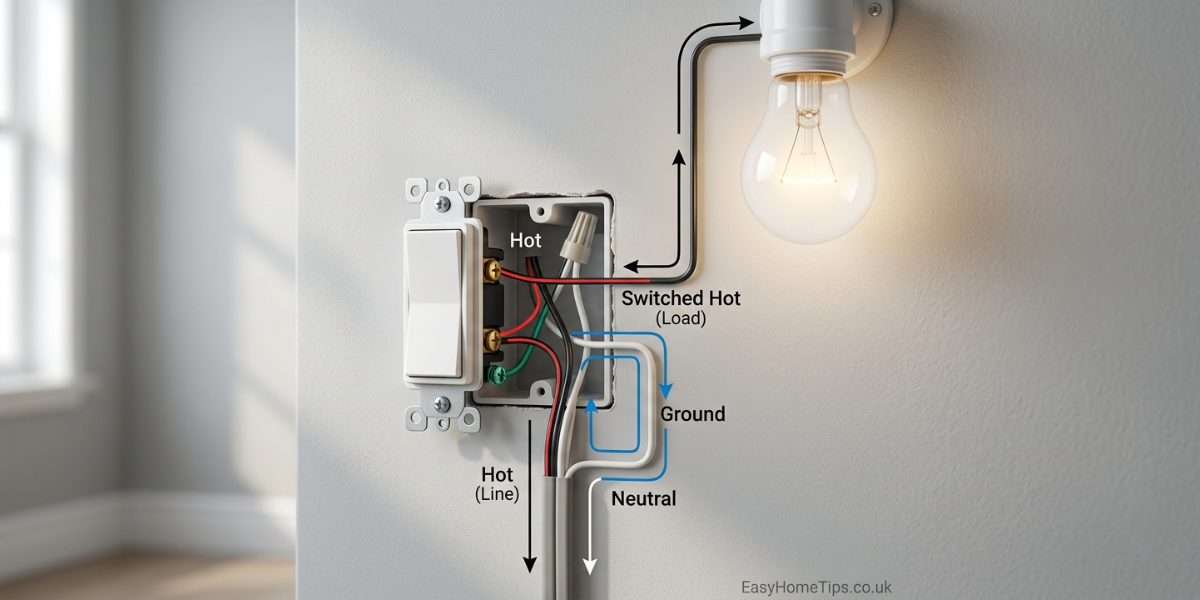

Have you ever wondered how you can turn a light on at the bottom of the stairs and turn it off at the top — from two completely different spots? That’s 3 way switch wiring in action. It’s one of the most useful setups in any home, and it looks complicated at first glance. But once you break it down wire by wire, it actually makes a lot of sense.
This guide will walk you through everything — what a 3-way switch actually is, which wires do what, how to wire it correctly, and how to troubleshoot when things don’t go as planned. Whether you’re replacing an old switch or installing a brand new one, this article has you covered from start to finish.
Just remember: electricity is serious. Always turn off the power at the breaker before touching any wires. Safety first, always.
What Is a 3-Way Switch and Why Do You Need One?
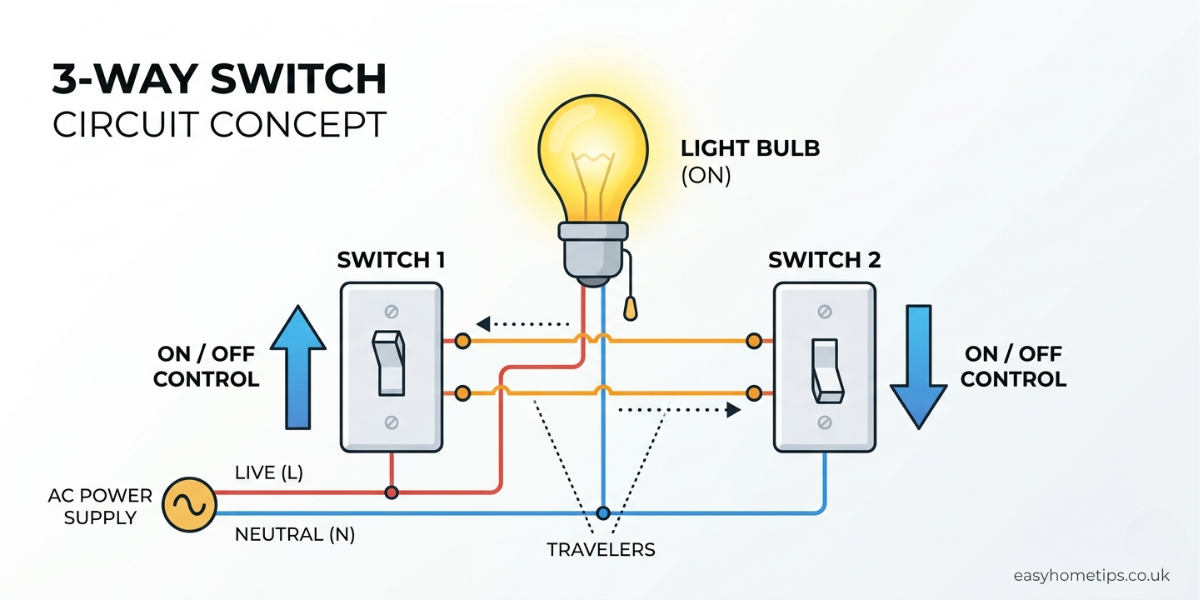
A 3-way switch is a special type of light switch that lets you control a single light fixture from two different locations. You’ll usually find these in hallways, stairways, large rooms, or anywhere that has two entry points.
Unlike a regular single-pole switch (which just has ON and OFF), a 3-way switch doesn’t have those labels. Instead, it has three terminals: one common terminal (usually darker in color) and two traveler terminals. It’s the combination of both switches working together that controls the light.
Here’s a simple way to think about it: imagine two people controlling a single light from opposite ends of a room. Either person can flip the light on or off, regardless of what the other person did. That’s exactly how a 3-way switch circuit works.
If you’re replacing an existing 3-way switch, take a photo of the original wiring before disconnecting anything. This gives you a reference if you get confused later.
The Difference Between a 2-Way and 3-Way Switch
A standard 2-way switch (also called a single-pole switch) has two terminals and simply breaks or completes the circuit. A 3-way switch has three terminals and works as part of a pair — meaning you always need two 3-way switches to make the circuit work properly.
Using just one 3-way switch in a single-pole application won’t give you the right result. They’re designed to work in pairs, with a 3-wire cable (usually 14/3 or 12/3 Romex) running between the two switch boxes.
Tools and Materials You’ll Need
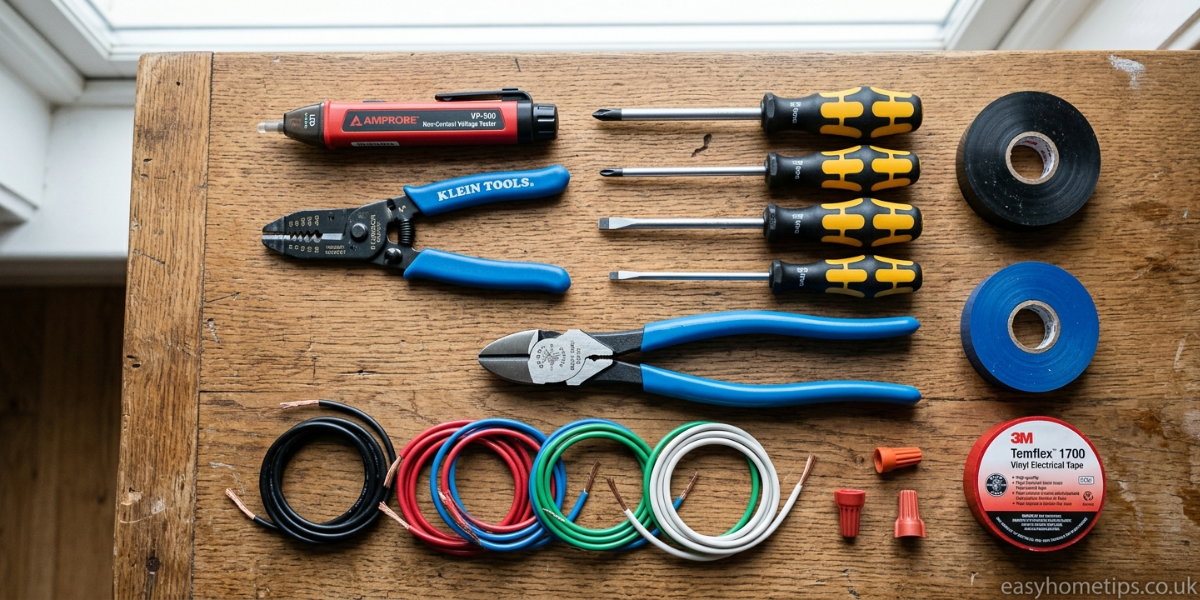
Before you start any wiring project, gather everything you need ahead of time. Running back and forth to the hardware store mid-project is frustrating — and leaving live wires exposed while you’re gone is dangerous.
| Tool / Material | What It’s For | Notes |
|---|---|---|
| Voltage tester (non-contact) | Confirm power is OFF before working | Essential safety tool — never skip this |
| Flathead & Phillips screwdrivers | Loosen/tighten terminal screws | Have both sizes handy |
| Wire stripper | Strip insulation from wire ends | Set to correct gauge (12 or 14) |
| Needle-nose pliers | Bend wire hooks around terminals | Helps with tight spaces |
| 14/3 or 12/3 NM cable (Romex) | Wire between the two 3-way switches | Match gauge to your circuit (15A = 14, 20A = 12) |
| Two 3-way switches | The actual switches | Look for the “3-Way” label on the box |
| Electrical tape | Re-marking re-used white wire | Wrap with black tape to indicate hot |
| Wire nuts (connectors) | Joining wires together | Use correct size for wire count |
Always verify the circuit is off using a non-contact voltage tester even after flipping the breaker. Mislabeled breakers are more common than you’d think. Test before you touch any wire.
Understanding 3-Way Switch Wiring Diagrams
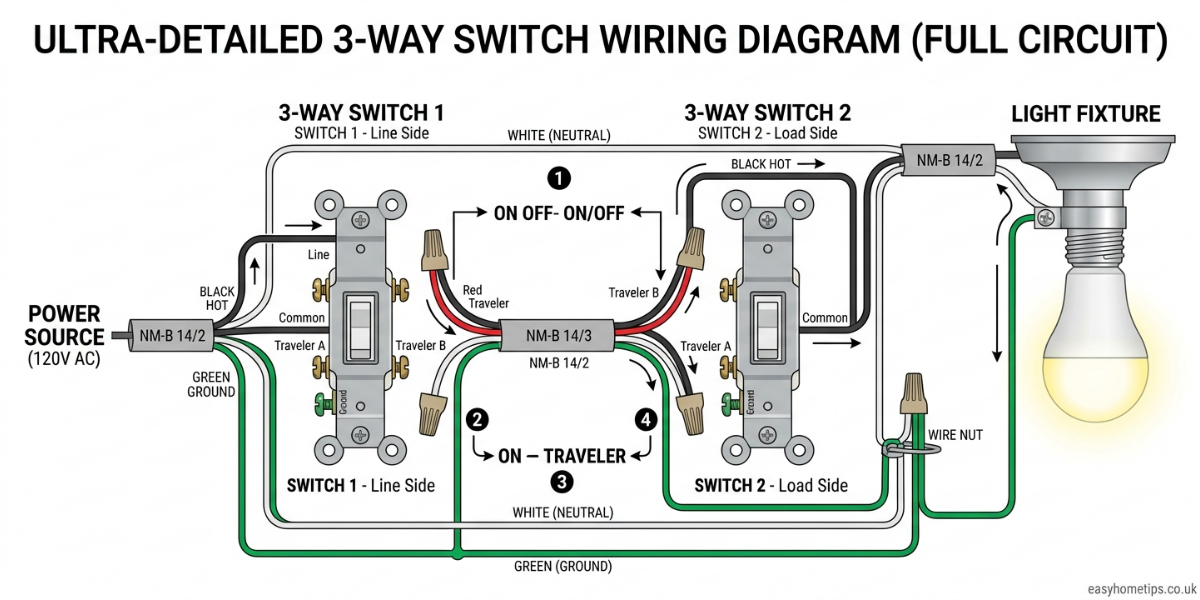
A 3-way switch wiring diagram might look intimidating at first. You see wires going every direction and color coding that seems confusing. But once you learn what each wire does, the diagram starts making perfect sense.
Here’s what you’ll typically work with in a standard 3-way switch circuit:
- Black wire (hot): Carries electricity from the power source to the first switch’s common terminal.
- White wire: Normally the neutral wire, but in 3-way switch wiring it can sometimes act as a traveler wire. If it’s being used as hot, it must be re-labeled with black electrical tape.
- Red wire: The second traveler wire running between the two switches.
- Bare copper or green wire: The ground wire. Always connect this for safety.
POWER (Black Hot) ──→ [Switch 1 COMMON]
↓
Traveler 1 (Red) ──────────────→ [Switch 2 Traveler A]
Traveler 2 (White/Black) ───→ [Switch 2 Traveler B]
↓
[Switch 2 COMMON] ──→ Black ──→ Light Fixture ──→ White (Neutral) ──→ Panel
Ground (bare copper) ──→ Both switches + fixture
The Common Terminal — The Most Important Connection
The common terminal is the single most critical part of 3-way switch wiring. Get this wrong and the circuit won’t work — or worse, you’ll create a dangerous condition. The common terminal on the first switch connects to the hot wire from the power source. The common terminal on the second switch connects to the wire going to the light.
Most 3-way switches mark the common terminal with a darker screw (usually black or copper-colored), while the traveler terminals have lighter-colored screws. Always check the switch’s labeling to be sure before making connections.
How to Wire a 3-Way Switch: Step-by-Step
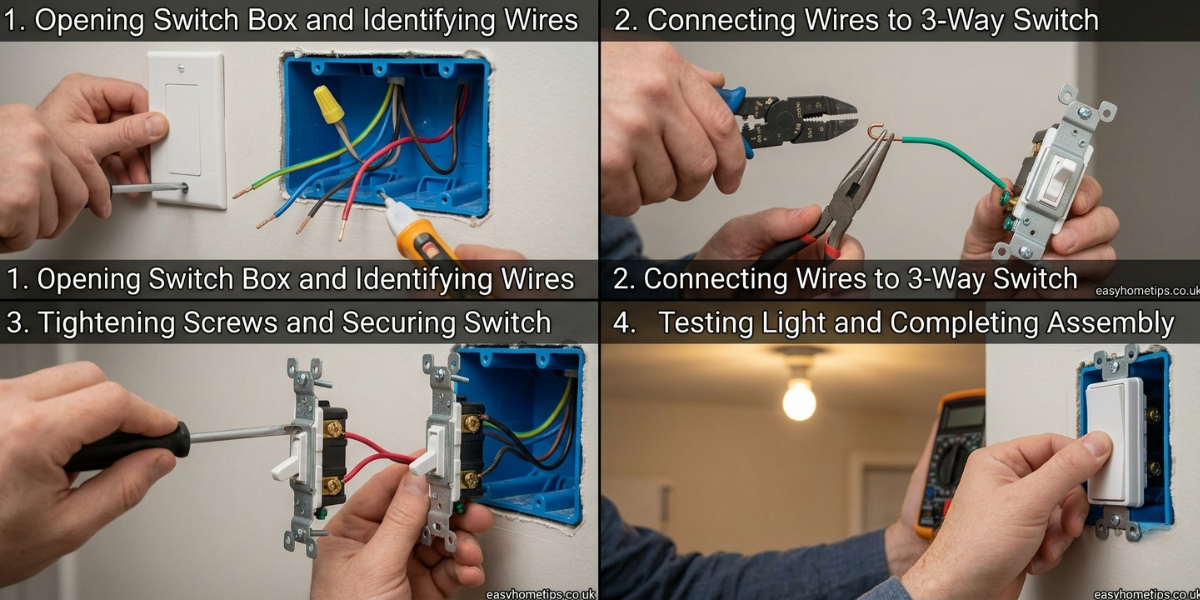
Now let’s get into the actual wiring process. This follows the most common setup: power enters at the first switch box, travels to the second switch box, and then continues up to the light fixture. This is called power-to-switch wiring.
- Turn off the breaker. Go to your electrical panel and flip the breaker controlling that circuit. Then use a non-contact voltage tester to confirm there’s no live current at the switch box before you touch anything.
- Remove the old switch (if replacing). Unscrew the cover plate, pull the switch out of the box, and photograph all existing connections before removing any wires. Label them if needed.
- Identify your cables. In the first switch box, you’ll have a 2-wire cable (black/white) from the power source and a 3-wire cable (black/white/red) heading toward the second switch. In the second switch box, you’ll have that same 3-wire cable and a 2-wire cable continuing to the light.
- Connect the first switch. Attach the black (hot) wire from the power source to the common terminal (dark screw). Connect the red wire and the re-labeled white wire (marked with black tape) to the two traveler terminals. Connect the ground wire to the green grounding screw.
- Connect the second switch. Connect the red and white/black traveler wires from the 3-wire cable to the two traveler terminals. Connect the black wire heading toward the light fixture to the common terminal. Attach the ground wire to the grounding screw.
- Connect at the light fixture. Attach the black (hot) wire to the black wire from the fixture, the white neutral wire to the white wire from the fixture, and the bare copper ground to the fixture’s ground terminal.
- Test before closing up. Restore power at the breaker. Flip each switch and confirm the light turns on and off from both locations before screwing everything back into place.
Always make a small clockwise hook at the end of your wire with needle-nose pliers before wrapping it around a terminal screw. This ensures a solid connection that won’t slip loose over time.
3-Way Switch Wiring With Power at the Light First
In older homes especially, you might find a setup where the power goes to the light fixture first, then runs down to the switches. This is called power-to-light wiring, and it’s a bit trickier to work with but still totally doable.
In this configuration, the neutral wire connects directly at the light. A switched hot must then travel down to the switches and back. This is where a 3-wire cable between the light and the first switch box becomes necessary.
The key difference here is that the white wire in the cable from the light to the first switch gets re-marked with black tape — because it’s carrying hot current, not acting as a neutral. This re-marking is required by most electrical wiring codes and helps anyone working on the wiring in the future understand what’s going on.
When to Use a 4-Wire Cable
In some scenarios — especially when you need to add a dimmer or smart switch to a 3-way switch circuit — you may need a 4-wire cable (black/white/red/ground) between the switch boxes. This is because smart 3-way switches often require a neutral wire at both switch locations, which standard 3-wire cable setups can’t always provide.
Check the requirements of any smart switch you’re buying before starting the project. Many newer options like the Lutron Caseta or Leviton Decora Smart have specific wiring needs that differ from traditional mechanical switches.
Common 3-Way Switch Wiring Problems and How to Fix Them
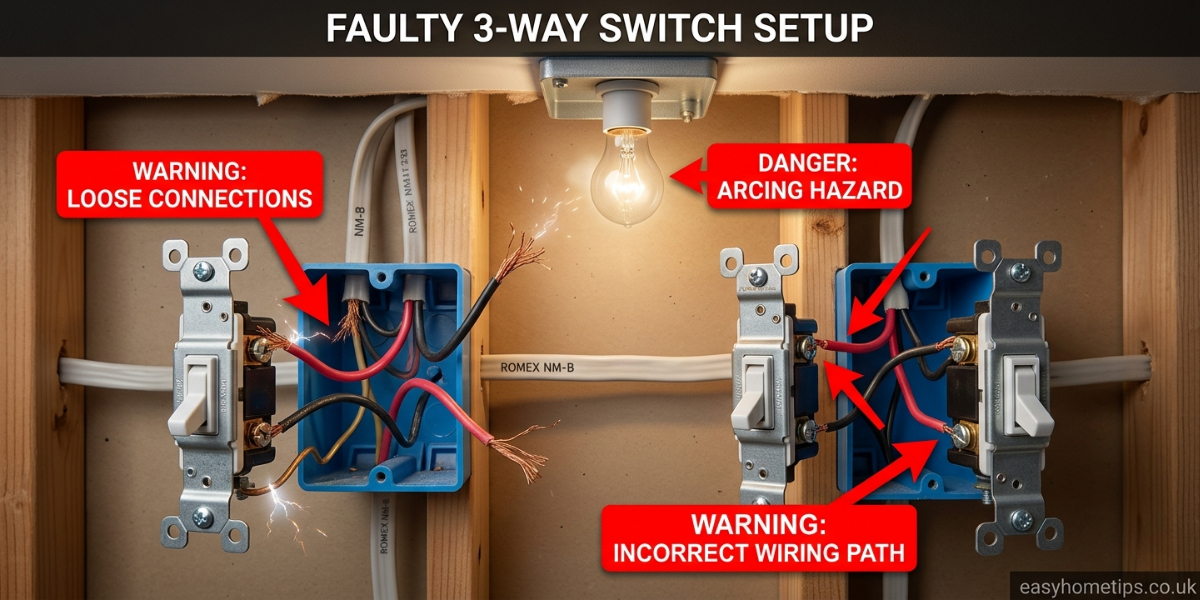
Even when you follow the instructions carefully, things don’t always work right the first time. Here are the most common issues and what’s likely causing them:
- Light doesn’t turn on at all: Most likely the common terminal connection is loose or attached to the wrong wire. Double-check that the hot wire from the power source goes to the common terminal on switch 1, and the wire going to the light goes to the common on switch 2.
- Light is always on and won’t turn off: This usually means the travelers are crossed — you’ve connected the same wire to both traveler terminals on one switch, or mixed up the connections between the two switches.
- Only one switch controls the light: This typically means both traveler wires are connected to the same terminal on one of the switches, so the second switch has no control over the circuit.
- Flickering or buzzing: Loose wire connections at the terminals or a failing switch. Turn off power, tighten all connections, and test again. If the switch itself is old or faulty, replace it.
- Breaker trips immediately: This is a sign of a short circuit. You may have a wire touching the metal box, or the ground is touching a hot wire. Turn everything off and inspect all connections carefully before retesting.
If you’re unsure what’s causing the problem — especially if you smell burning or see scorch marks — stop immediately and call a licensed electrician. Some issues go beyond a simple DIY fix.
Installing a Smart 3-Way Switch: What’s Different
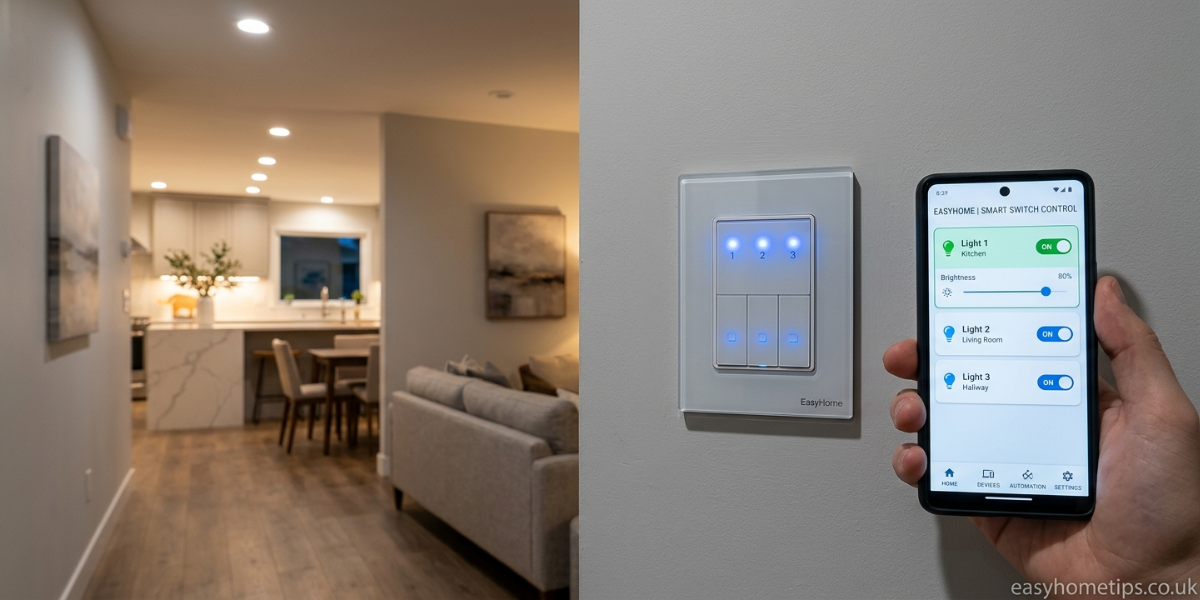
Smart home upgrades are more popular than ever, and swapping out a standard 3-way switch for a smart version is a great place to start. But smart switches have some important differences you should know about before you buy.
Most smart 3-way switches come in a set — a “master” switch and an “add-on” or “auxiliary” switch. The master does the actual smart work (Wi-Fi, app control, voice control), while the add-on just sends a signal to the master. They communicate through the traveler wires, but the wiring configuration is often different from a traditional mechanical setup.
Some brands like Kasa by TP-Link, GE Enbrighten, and Leviton Decora Smart require a neutral wire at the master switch location. Others, like Lutron Caseta, don’t — which makes them more flexible for older homes that may lack neutral wires in the switch boxes.
Tips for Smart Switch Installation
- Always read the wiring diagram that comes with the specific smart switch you’re installing — don’t assume it matches standard 3-way wiring.
- Check whether your switch box has a neutral wire available before purchasing. Pull the switch out and look for a bundle of white wires tucked in the back — that’s usually where the neutral bundle is.
- With smart 3-way systems, you typically do NOT use both traveler terminals the same way as traditional switches. Follow the brand’s diagram precisely.
- Make sure your Wi-Fi router reaches the switch location with a strong signal before completing the install.
3-Way Switch Wiring Codes and Safety Standards
Electrical work in your home is regulated by the National Electrical Code (NEC) in the United States, and most local jurisdictions adopt this code with minor variations. While homeowners are often allowed to do their own electrical work, many areas require a permit for new wiring installations.
Here are a few key code points that apply to 3-way switch wiring:
- Wire gauge must match the circuit breaker: 15-amp circuits use 14 AWG wire; 20-amp circuits use 12 AWG. Mixing these is a code violation and a fire hazard.
- Re-identify re-purposed wires: Any white wire used as a hot conductor must be re-marked with black or red tape at both ends where it’s visible.
- Grounding is required: All switches and outlets must be properly grounded. Never skip this step, even in older homes.
- Boxes must be accessible: Don’t bury electrical boxes in walls without access panels. All junction boxes must remain accessible per NEC code.
- No wire splices outside of boxes: All wire connections must happen inside an approved electrical box. No hidden splices inside walls.
If you’re doing this work as part of a larger renovation, check with your local building department about whether a permit is needed. An inspector checking your work is actually a good thing — it confirms everything is safe and up to code.
Frequently Asked Questions
Conclusion
3-way switch wiring is one of those things that sounds way more complicated than it actually is. Once you understand what the common terminal does and how the two traveler wires create a path that either switch can break or complete, the whole system clicks into place.
The key takeaways: always turn off the power and verify it with a tester, connect the common terminal to the correct wires on each switch, and use the right cable type (14/3 or 12/3) between the two switch boxes. Whether you’re installing a traditional mechanical switch or upgrading to a smart system, the fundamentals are the same.
Take your time, double-check each connection before restoring power, and don’t hesitate to call a licensed electrician if something doesn’t look right. A well-wired 3-way switch setup will serve your home reliably for decades.